
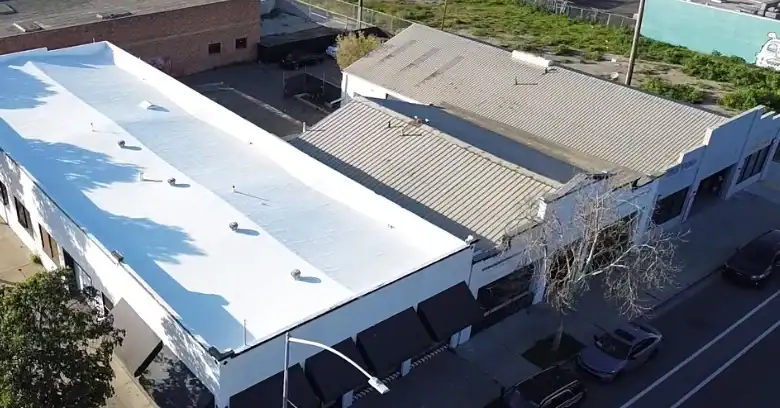
Sourcing Commercial Roofing Repair Across Sacramento California?
Creative Roofing looks after the roof over a business, from a small storefront to a large building, throughout Sacramento California and the towns nearby.
Call 805-723-2381 and describe what is happening up there.
Why a Building Roof Is a Different Animal
A roof over a business is usually flat or nearly flat, and that changes almost everything about it, and the materials are chosen with that in mind. Water that stays on a roof for long finds every weakness in the membrane, and there is little margin for sloppy work.
Water coming through a commercial roof can reach inventory, electrical gear and computers, and a little care goes a long way.
What Building Roofs Are Made Of
Rolled single-ply sheets are widely used because they are light, reflective and quick to install, and none of them is right for every building. Built-up roofs use alternating layers of asphalt and reinforcing fabric, finished with a surface of gravel or a cap sheet, and the surface can be renewed with a coating or cap. Coatings over an existing sound roof can extend its life without a tear-off, and that is worth keeping in mind.
Keeping Water Moving
Standing water is the most common enemy of a low-slope roof, and ignoring it tends to shorten the life of the membrane. Drains, scuppers and gutters collect water and carry it away from the building, so clearing drains is the cheapest maintenance on the list.
Equipment Is Where Leaks Start
Every unit on a roof is a potential entry point for water, so those details deserve the most attention in an inspection. A roof that has regular service visits needs protection along the paths, and a few walkway pads cost little compared with a patch.
How the Climate Affects a Building Roof
Direct sun heats a dark roof to a temperature far above the air, and that is worth keeping in mind. Light-colored surfaces bounce much of the sunshine back instead of absorbing it, and local rules may favor reflective surfaces on some projects.
Inspections and Upkeep
Routine care costs a fraction of an emergency repair, and it gives you a record to show a buyer or lender. Maintenance work is mostly cleaning, tightening and resealing, and the results show up in fewer emergency calls.
Choosing the Right Level of Work
A sound roof with surface wear can sometimes be restored with a coating, and a good contractor will show you what they found. Wet insulation stops insulating and adds heavy weight to the structure, and that is worth keeping in mind.
Keeping the Business Running
A good plan keeps customers and staff away from the areas under construction, and early notice prevents most problems. Barriers and warning lines protect pedestrians from falling tools and materials, and a little care goes a long way.
What Should Be in Writing
Look for details about seams, terminations and penetration flashing, and the details are worth a closer look. The paperwork at the end of a job is as important as the work itself, and it is worth requesting before the work starts.
Where the Water Really Gets In
The wet patch indoors only tells you where the water finally escaped, and guessing leads to repairs in the wrong place. Common sources include seams, drains, flashing at walls and the base of every pipe, so the inspection begins at the details. A survey gives facts to base a decision on, and a little care goes a long way.
Edges Are Where Roofs Let Go
A roof that is poorly attached shows the problem at its edges, and loose metal trim is an early warning. Loose trim lets wind get under the membrane and peel it back, and the work is usually quick.
Walls, Parapets and Flashing Details
Flashing at the wall is one of the most failure-prone parts of a low-slope roof, and a gap at the top lets water run down behind the membrane. Sealants at the top of a flashing dry out in strong sun and need redoing, and a repair there often needs more than a bead of caulk.
Coatings Explained
Acrylic, silicone and urethane are the main families of liquid roof coatings, and the right product depends on the existing membrane. Coating over a wet roof is a common and costly mistake, and the details are worth a closer look.
Distribution Centers and Shopping Centers
A roof covering a very large area has special needs for drainage, access and safety, and weather windows matter more at this scale. Multi-tenant buildings call for clear communication with every occupant, and the owner usually coordinates the work. Apartment and multifamily buildings add residents, balconies and shared walkways to the mix, and clear notices help everyone know what to expect.
Spending Wisely on a Flat Roof
A reserve for the eventual replacement keeps the decision calm, and nobody likes a surprise expense. Quality materials and careful installation tend to pay back over time, and ask about the expected service life of each option.
The Layers Below the Surface
Thick boards of insulation do much of the work of holding heat in or out, and wet boards lose most of their value. A sturdier base means fewer punctures and longer service, so many owners include it. Designing the slope into a replacement gives the roof a long-term advantage, and it is a good time to ask about it.
Wind, Rain and Seasonal Readiness
A pre-season checklist includes clearing drains and scuppers, checking seams and flashing, and photographing the condition of the surface, and a dry building is the reward.
Next Steps for Your Commercial Roof
A conversation about Commercial Roofing Repair in Sacramento California usually starts with the age and type of the roof, with 805-723-2381 ready whenever you want to talk. Calling sooner rather than later keeps repair costs and disruption smaller, and the details are worth a closer look. People who manage property tend to value a straight answer about the roof above all, so call when you have a moment. Tenants, lenders and insurers all take an interest in the state of a roof, and that starts with a good first inspection.
Verified

Verified
Verified
Verified
Verified






















