
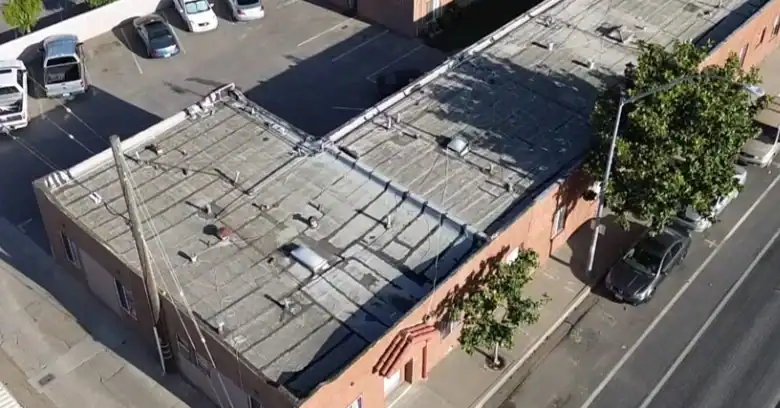
Researching Commercial Roof Maintenance Serving Lompoc California?
Creative Roofing deals with the flat and low-slope roofs that sit above working buildings, serving owners and managers across Lompoc California.
Phone 805-723-2381 and tell us about the building and the roof.
Roofs Over Businesses
A building roof is built around drainage and access rather than steep pitch, and the tradesmen who work on them need specific experience. Flat roofs rely on continuous membranes with welded or glued seams, and a small gap can become a large leak.
The cost of a failed roof is often higher inside the building than on top of it, so planning ahead is the practical approach.
Common Low-Slope Roof Systems
Single-ply roofing arrives in large rolls and is joined at the seams on site, and the details are worth a closer look. Modified bitumen sheets are heated or adhered in overlapping layers to make a durable surface, and the layers add redundancy. Spray foam and fluid-applied coatings are also used in some situations, and each option has conditions where it works best.
Drains, Scuppers and Slope
Every flat roof is only as good as its drainage, and it pays to think it through. Drains, scuppers and gutters collect water and carry it away from the building, and the first heavy rain turns it into a plug.
Air Conditioners, Vents and Curbs
Pipes, conduits and curbs interrupt the membrane in many spots, and many leaks start there rather than in the open field. Walkway pads protect the routes that technicians use most often, and a contractor can mark them on the roof.
Heat Over a Working Building
Direct sun heats a dark roof to a temperature far above the air, so the finish and color are practical choices. A cooler roof surface lowers the strain on air conditioning in hot months, and local rules may favor reflective surfaces on some projects.
Looking After a Roof Between Repairs
A planned visit twice a year is a common routine for building owners, and a written report builds a useful history. Maintenance work is mostly cleaning, tightening and resealing, so the cost is modest.
Choosing the Right Level of Work
The right answer depends on how much of the system is still dry and sound, and testing is better than guessing. Wet insulation stops insulating and adds heavy weight to the structure, and it is better to know the truth sooner.
Keeping the Business Running
Roof work above an operating business needs planning so that normal activity can continue, and communication with tenants is part of the job. Safety at the edge of a roof is a serious matter for the crew and for people below, and plan for parking and deliveries as well.
Comparing Commercial Roofing Proposals
Look for details about seams, terminations and penetration flashing, and ask about anything that seems vague. Ask how the work will be inspected and what documentation will be provided at the end, and a future owner will thank you.
Finding the Source of a Commercial Leak
On a flat roof the spot where water drips inside is rarely the spot where it came in, so a careful inspection is worth the time. Most leaks start at a detail, not in the broad flat area of the membrane, so the inspection begins at the details. Infrared and electronic surveys map wet insulation without cutting the roof apart, so it is worth asking about on a larger roof.
Wind, Fasteners and Roof Edges
Wind lifts a flat roof from the edges and corners first, and repairs there should not wait. Coping and edge flashing should be firmly attached and free of gaps, and a small fix now prevents a large one later.
The Seams That Join Roof to Wall
Where a flat roof stops against a wall, flashing has to turn the membrane up and seal it, and a gap at the top lets water run down behind the membrane. Stucco, masonry and metal walls each need a different kind of termination, and it pays to think it through.
Coatings and What They Can Do
Acrylic, silicone and urethane are the main families of liquid roof coatings, and the preparation matters as much as the product. A coating is not a cure for a failed roof, and the details are worth a closer look.
Distribution Centers and Shopping Centers
Large roofs pose logistical problems that small ones never do, and it is easy to overlook. Shopping centers and strip malls share roofs across several tenants, and tenants appreciate being kept informed. Roofs over housing need extra care to keep people safe and informed, and clear notices help everyone know what to expect.
Thinking About Cost Over the Life of the Roof
People who set aside funds for roof work avoid scrambling when the time comes, so the information from maintenance visits feeds the budget. A cheaper system that fails sooner is not a bargain, and ask about the expected service life of each option.
Insulation and Cover Boards
Most commercial roofs have rigid insulation boards between the deck and the waterproofing, so keeping them dry is essential. Cover boards add a firm surface that protects insulation from foot traffic and hail-free impacts, and the added cost is modest. Designing the slope into a replacement gives the roof a long-term advantage, and it pays to think it through.
A Seasonal Checklist for Managers
Late summer is the right moment to walk a commercial roof, because debris has accumulated through the dry months and the first storms are only weeks away, so schedule it like any other maintenance.
Ready to Look at the Roof
Owners weighing Commercial Roof Maintenance in Lompoc California can reach us by phone, and the number is 805-723-2381. There is no pressure in asking questions about a roof, and the details are worth a closer look. Questions about an aging roof are easier to answer once someone has seen it, and describe what you are seeing. The history of a roof matters when a building is sold or refinanced, and written records show the property has been cared for.
Verified

Verified
Verified
Verified
Verified






















