
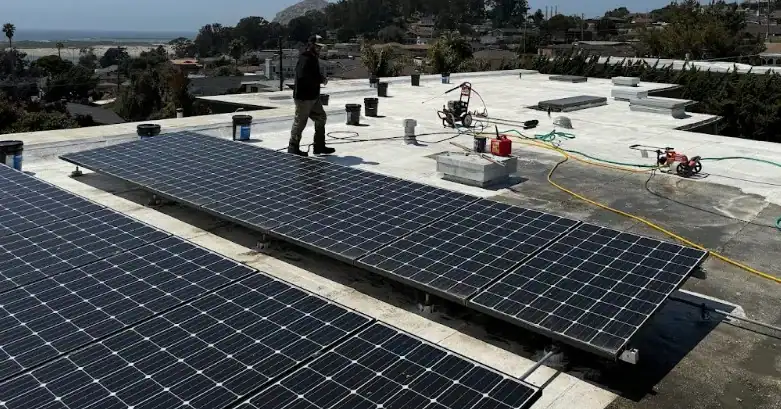
Researching Commercial Roofers for a Building in Guadalupe California?
Creative Roofing works on the roofs of shops, offices, warehouses and apartment buildings, throughout Guadalupe California and the towns nearby.
Call 805-723-2381 and tell us about the building and the roof.
Why a Building Roof Is a Different Animal
A roof over a business is usually flat or nearly flat, and that changes almost everything about it, and the tradesmen who work on them need specific experience. Where a house roof sheds water by gravity, a flat roof depends on seams and drains, so installation craft counts for a great deal.
Water coming through a commercial roof can reach inventory, electrical gear and computers, and regular checks pay for themselves.
Types of Commercial Roofing
TPO, PVC and EPDM are the single-ply families most owners hear about, so the choice affects how repairs are done later. Modified bitumen sheets are heated or adhered in overlapping layers to make a durable surface, and it is easy to overlook. Spray foam and fluid-applied coatings are also used in some situations, and each option has conditions where it works best.
Keeping Water Moving
Water that sits on a membrane ages it faster than water that runs off, and a small amount of tapered insulation can fix ponding. Interior drains, edge scuppers and perimeter gutters each have their own failure points, and the first heavy rain turns it into a plug.
What Sits on the Roof
Heating and cooling units, exhaust fans and vents sit on most commercial roofs, so those details deserve the most attention in an inspection. Walkway pads protect the routes that technicians use most often, and it is easy to overlook.
Strong Sun on a Flat Surface
Long dry summers expose a membrane to strong ultraviolet light month after month, and that is why white and light membranes are so common. A cooler roof surface lowers the strain on air conditioning in hot months, and local rules may favor reflective surfaces on some projects.
Maintenance Programs
A planned visit twice a year is a common routine for building owners, and a written report builds a useful history. A visit usually covers drains, flashing, seams, curbs and the condition of the surface, and tenants never notice because nothing leaks.
Weighing the Options
The right answer depends on how much of the system is still dry and sound, so ask for evidence before agreeing to a plan. Once water has spread through the layers, replacement is the honest answer, and that is worth keeping in mind.
Roofing Without Disrupting Operations
Roofers often work in phases so a store can stay open, and noisy work can be timed around business hours. Access to the roof should be controlled while the work is in progress, so ask how the site will be protected.
Apples to Apples
Look for details about seams, terminations and penetration flashing, so compare the line items one by one. A contractor should be willing to explain how the work will be checked while it is in progress, and it is worth requesting before the work starts.
Leak Detection on a Flat Roof
Tracing a leak on a low slope takes patience, because water wanders, and the real source is usually near equipment or an edge. Most leaks start at a detail, not in the broad flat area of the membrane, and the open field is checked last. Knowing where the water is saves guesswork and wasted effort, and it helps explain the situation to the people who sign the checks.
How Wind Affects a Flat Roof
The edges and corners of a flat roof take the highest wind loads, and repairs there should not wait. Coping and edge flashing should be firmly attached and free of gaps, and it is easy to overlook.
Where the Roof Meets the Building
A parapet is an extra wall that needs its own waterproofing on both faces, and a gap at the top lets water run down behind the membrane. Cracks in a parapet cap or the wall below can feed water into the roof system, and it pays to think it through.
Restoring a Roof Without Tearing It Off
Restoration coatings are meant for roofs that are still basically sound, and a coating is only as good as the surface beneath it. A coating is not a cure for a failed roof, so be wary of anyone who promises it fixes everything.
Scale Changes the Planning
Large roofs pose logistical problems that small ones never do, so coordination with the building operator is essential. Multi-tenant buildings call for clear communication with every occupant, and that is worth keeping in mind. Residents expect notice before work begins above their homes, and clear notices help everyone know what to expect.
The Long View on Roof Spending
Thinking about the roof as a recurring cost makes budgeting easier, so the information from maintenance visits feeds the budget. The total cost covers upkeep, patching and the eventual new roof, so compare what is included before comparing totals.
The Layers Below the Surface
Most commercial roofs have rigid insulation boards between the deck and the waterproofing, and it is easy to overlook. Cover boards add a firm surface that protects insulation from foot traffic and hail-free impacts, and that is worth keeping in mind. Tapered insulation can create slope on a roof that is otherwise dead flat, and the drawings show where the water will go.
Late-Summer Readiness Checks
Rooftop units should be examined for loose panels, failed seals and missing fasteners, since a stray panel can let rain into the system, and a dry building is the reward.
Let Us Know What You Are Dealing With
Owners comparing Commercial Roofers in Guadalupe California can start by describing the building and what concerns them, so dial 805-723-2381 when it suits you. Whether the roof is leaking today or just getting old, an early look gives you more options, so reach out whenever you are ready. A visit to the property turns a general worry into a specific plan, and the conversation can be brief. Tenants, lenders and insurers all take an interest in the state of a roof, and the paperwork can be kept with the building file.
Verified

Verified
Verified
Verified
Verified






















