
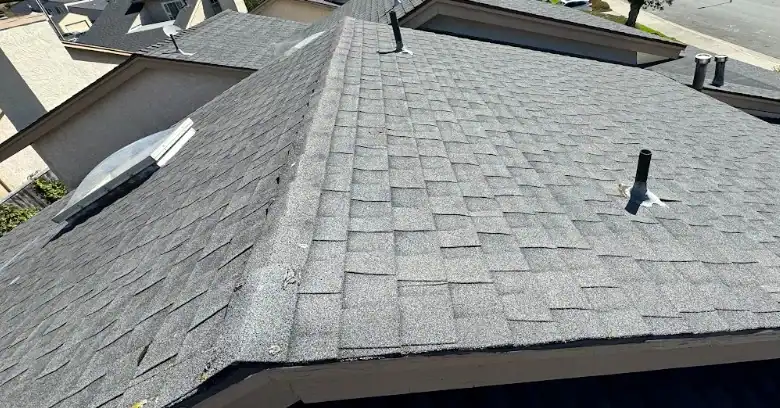
Choosing Shingle Roof Repair in Arroyo Grande California?
Creative Roofing works with layered shingles, starter strips, underlayment and ridge caps, across Arroyo Grande California and nearby.
Ring 805-723-2381 to set up a visit to look at your shingles.
Mat, Asphalt and Granules
The common residential shingle starts as a reinforcing mat, which is coated with asphalt and then surfaced with mineral granules, and the granules protect the asphalt from the sun. Granule loss is the clearest sign that a shingle is wearing out, and the granules end up in the gutters.
Three-Tab, Architectural and Designer Lines
A three-tab shingle has a flat, uniform look and the thinnest profile of any common type, and it remains a reasonable choice in some situations. Laminated shingles are thicker, heavier and more dimensional than flat strip shingles, and the details are worth a closer look. Designer shingles are heavier and carefully styled to resemble natural slate or cedar, and the added weight is a benefit in wind.
How California Weather Wears a Shingle
The sun does more to age a shingle roof in this region than any other force, and that is worth keeping in mind. Blisters appear when trapped moisture or heat pushes up the surface, and the pattern across the roof shows how far the wear has gone.
Color, Reflectivity and Cooling
Color is a practical decision as much as a matter of taste, and a sample held up outdoors shows the shade truthfully. Cool shingle lines are designed to lower roof temperatures without changing the look much, and local rules sometimes encourage them.
Installation Details That Decide Longevity
Nails driven too high or too low weaken the hold of the whole course, so ask how many nails go into each shingle. Offsetting the seams from row to row keeps leaks from lining up, and a straight line of shingles is a sign of care. Special cap products are made to bend without cracking, and a sloppy ridge is a common weak spot.
Seal Strips and Warm Weather
The adhesive bond is what keeps tabs flat against the roof in a strong wind, and checking for lifted tabs after a windy spell is a good habit. Edges and ridges are where wind does the most damage, so a loose shingle should not wait for the next storm.
Keeping the Attic Breathing
Poor ventilation is one of the quietest causes of early shingle failure, and it is easy to overlook. The right combination depends on the shape of the roof and the size of the attic, and that is worth keeping in mind.
The Details Beneath and Beside the Field
The underlayment is the water-resistant layer under the shingles that catches whatever gets past the surface, and it pays to think it through. Chimneys, walls and skylights need step flashing and counterflashing worked into the shingle courses, and these details cause most leaks on shingle roofs.
Is It Time for a New Roof
Granules in the gutters, curling edges and bald spots are the most reliable signs of an aging shingle roof, and a roofer can sort the serious from the cosmetic. Patching makes sense when the damage is limited and the shingles are otherwise healthy, so ask for photographs of the problem areas. Replacement is the sensible answer once the field of shingles has lost its protective surface, and choose the new shingles with care.
Taking Off the Old Shingles
A complete tear-off lets the roofer inspect each sheet of decking and replace any that has been stained, softened or split, and the bare deck is also the moment to check ventilation openings. A roof-over saves effort in the short run, yet it prevents any look at what the old roof has been hiding, and the savings are usually smaller than they seem. Damaged decking is the most common surprise on a roofing job, and a good proposal says how it will be handled, and the cost of a few sheets is rarely large.
Debris, Magnets and Final Sweeps
A shingle tear-off throws old material in every direction, so a careful crew covers plants, vents and the ground before the first piece comes off, and it is easy to overlook. Rolling magnets across the lawn, the driveway and the planting beds collects what a rake and the eye miss, and point out anything that was missed. Downspouts that carry water well away from the house protect both the new roof and the walls beneath it, so make it part of the routine.
Choosing the Right Season for Shingles
Asphalt shingles seal themselves down with heat from the sun, so warm, dry days produce the best bond and the neatest finish, and the busiest months fill up quickly. Crews adjust to the heat by working early and finishing before the worst of the afternoon, which protects the material and the people, and the schedule bends to the weather.
Openings, Brackets and Penetrations
Roofers work around fixed obstacles all the time, but each one adds time and adds a place where water might enter, so list everything on the roof when you ask for proposals. Replacing a roof beneath an existing array is a coordination job involving the roofer and the solar company, so ask both contractors how they would proceed.
Blending New Shingles Into an Older Roof
A roofer can often borrow shingles from a hidden slope or the back of the house to repair a more visible area, which gives the best match, and function matters more than appearance here.
Where Shingles End and Gutters Begin
A drip edge along the eave and the rake guides water into the gutter and keeps it from running behind the fascia, where it would rot the wood, and ask the roofer to flag any rot.
Questions for a Shingle Roofer
The written scope should list tear-off, deck repair, ventilation and cleanup, and a thorough contractor will be happy to explain. A roofer who explains the process clearly is usually one who follows it, and the answers are worth writing down.
Start the Conversation
Those comparing Shingle Roof Repair in Arroyo Grande California can reach us by phone, and the number is 805-723-2381. There is no pressure in asking about a new roof, so reach out whenever you are ready.
Verified

Verified
Verified
Verified
Verified






















