
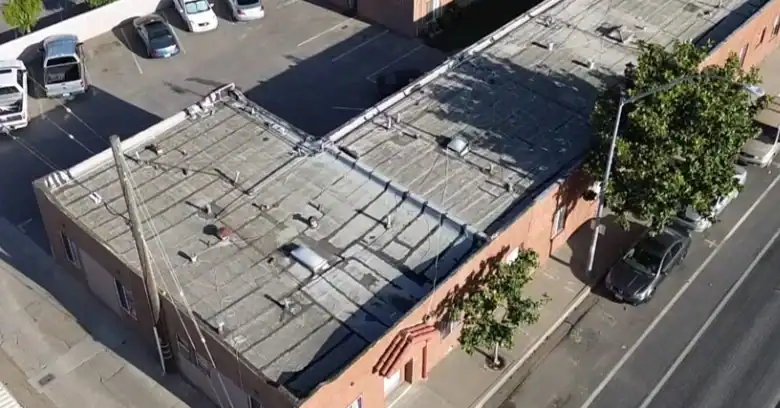
Considering Commercial Roof Services Serving Sacramento California?
Creative Roofing works on the roofs of shops, offices, warehouses and apartment buildings, throughout Sacramento California and the towns nearby.
Dial 805-723-2381 to start planning the work with someone who knows low-slope roofs.
How Building Roofs Differ
Most commercial buildings have low-slope roofs, which shed water slowly and carry equipment, so the finer points carry the weight. Flat roofs rely on continuous membranes with welded or glued seams, and a small gap can become a large leak.
Water coming through a commercial roof can reach inventory, electrical gear and computers, and regular checks pay for themselves.
The Membranes Used on Flat Roofs
Single-ply membranes such as TPO, PVC and EPDM are among the most common coverings on commercial buildings, so the choice affects how repairs are done later. Modified bitumen sheets are heated or adhered in overlapping layers to make a durable surface, and the surface can be renewed with a coating or cap. Standing seam metal panels cover warehouses, schools and retail buildings, and that is worth keeping in mind.
Where the Rain Goes
Water that sits on a membrane ages it faster than water that runs off, so inspections are best scheduled in late summer. Debris collects around drain strainers after the dry months and blocks them in the first storm, and the first heavy rain turns it into a plug.
Working Around Machinery
A roof with a lot of equipment has a lot of penetrations to maintain, and the flashing around each one has to be right. Service technicians walking to equipment can wear a path through a membrane, and it is easy to overlook.
Reflective Roofs and Cooling Costs
Direct sun heats a dark roof to a temperature far above the air, and that is worth keeping in mind. A cooler roof surface lowers the strain on air conditioning in hot months, and it pays to think it through.
Looking After a Roof Between Repairs
Roof maintenance is a habit more than a project, so owners often tie visits to the seasons. Photographs from each visit help track changes over time, and the details are worth a closer look.
When a Roof Reaches the End of Its Life
Not every aging roof needs a full tear-off, and saving a good roof is cheaper than replacing it. Once water has spread through the layers, replacement is the honest answer, so a clear diagnosis matters.
Working in an Occupied Building
Many commercial roofs are replaced in sections so that the building is never left open, and communication with tenants is part of the job. Fall protection is required on commercial roofs, and a professional crew uses it, and a little care goes a long way.
Comparing Commercial Roofing Proposals
Look for details about seams, terminations and penetration flashing, so compare the line items one by one. A contractor should be willing to explain how the work will be checked while it is in progress, and a future owner will thank you.
Where the Water Really Gets In
A stain on a tile may be many feet from the opening in the membrane, and that is worth keeping in mind. Most leaks start at a detail, not in the broad flat area of the membrane, and the open field is checked last. Infrared and electronic surveys map wet insulation without cutting the roof apart, so it is worth asking about on a larger roof.
Edges Are Where Roofs Let Go
Gusts act on a roof like air over an aircraft wing, trying to lift it, so careful edge details are a mark of good work. Coping and edge flashing should be firmly attached and free of gaps, and it is easy to overlook.
Where the Roof Meets the Building
A parapet is an extra wall that needs its own waterproofing on both faces, and that is worth keeping in mind. Counterflashing and termination bars hold the membrane to the wall and keep water out, and a repair there often needs more than a bead of caulk.
Coatings and What They Can Do
Restoration coatings are meant for roofs that are still basically sound, and the preparation matters as much as the product. Surface treatments help sound roofs, not ones that are failing underneath, and the details are worth a closer look.
Distribution Centers and Shopping Centers
A roof covering a very large area has special needs for drainage, access and safety, and the schedule can run many weeks. Shared roofs raise questions about who is responsible and who pays, and tenants appreciate being kept informed. The roof of an apartment building protects many households at once, so schedules are shared in writing.
Spending Wisely on a Flat Roof
A reserve for the eventual replacement keeps the decision calm, and a good report gives a reasonable range of years remaining. The total cost covers upkeep, patching and the eventual new roof, so compare what is included before comparing totals.
The Layers Below the Surface
Thick boards of insulation do much of the work of holding heat in or out, so keeping them dry is essential. Cover boards add a firm surface that protects insulation from foot traffic and hail-free impacts, so many owners include it. Slope built into the insulation is one of the cleanest ways to fix drainage problems, so raise the question before the proposal is final.
A Seasonal Checklist for Managers
A pre-season checklist includes clearing drains and scuppers, checking seams and flashing, and photographing the condition of the surface, and share the results with the owner.
Next Steps for Your Commercial Roof
Managers researching Commercial Roof Services in Sacramento California are welcome to call and ask questions, and the number is 805-723-2381. Even a quick conversation can clarify what the building needs, and the details are worth a closer look. Most building owners find that a short call clears up more than weeks of wondering, and the roof will show the rest. The history of a roof matters when a building is sold or refinanced, and that is worth keeping in mind.
Verified

Verified
Verified
Verified
Verified






















