Ready for Tile Roofing Installation in San Luis Obispo California?
Creative Roofing knows how to walk a fragile surface, find the broken piece and replace it cleanly, throughout San Luis Obispo California and the neighboring communities.
Dial 805-723-2381 and we will explain what is involved.
How These Roofs Are Put Together
Every piece is shaped to channel water downhill and over the piece below, and the system works only when every piece is in place. Each type comes in profiles from rounded barrels to flat slabs and interlocking shapes, and the look varies enormously.
Heavy Roofs Need a Sound Structure
Heavy coverings put real stress on rafters, trusses and walls, which is why the structure is checked first, so a visual check is where the process begins. Even a roof originally built for heavy units can lose strength over time if water has damaged the wood, and the details are worth a closer look.
Underlayment Is the Real Waterproofing
Beneath the visible surface lies a waterproof membrane that does the hard work, and a re-lay is the chance to replace it. Modern synthetic and self-adhering underlayments last longer under high temperatures, and that is worth keeping in mind.
Dry Climate, Durable Roof
The pieces rarely wear out from sun alone, which is why a well-built roof can last so long, and the weight helps with wind as well. Efflorescence, a white powdery bloom, can show on concrete units and is mostly cosmetic, and a roofer can tell the difference.
Why Pieces Break
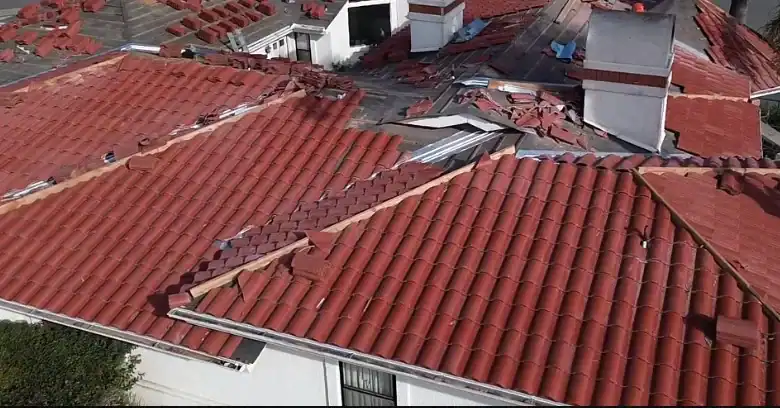
Slipped pieces that have shifted out of line leave gaps that rain can reach, so a close inspection from the roof is the only reliable method. Anyone who walks a roof of this kind needs to know where to step, because the wrong spot breaks the piece, and the cost of a few replacements is small.
The Detail Work on a Heavy Roof
Metal flashing and sealant protect these joints, and both age in strong sun, and that is worth keeping in mind. Ridge and hip pieces are bedded in mortar or fastened with mechanical systems, and the old mortar often fails before the roof does, and the repair is far less costly than water damage.
Holding Heavy Pieces in Place
A roof with loose pieces is a hazard in a windstorm, and edges and ridges deserve the most attention. Keeping the roof and gutters clear of leaves and needles is part of staying safe, and local rules may set requirements for roof assemblies.
Matching the Work to the Condition
A re-lay means lifting the units, replacing the underlayment and flashing, and setting the pieces back in place, so ask for an assessment of the underlayment. A full replacement is a bigger project, but it resets the clock on the entire roof, and a good roofer will lay them out plainly.
How Units Are Bedded and Secured
Older roofs of this kind used mortar to bed the ridge and hip pieces and to seal the edges, and that mortar eventually cracks and crumbles, so ask how the pieces will be held in place. The openings along the bottom edge of a profiled roof need a closure strip, or they become a doorway for pests and debris, and they are often forgotten.
Cleaning a Heavy Roof Without Damaging It
Dark streaks and patches of lichen are common on north faces and under trees, and they are mostly a cosmetic issue, and a clean roof looks years younger. Cleaning is not a substitute for repairs, but it often reveals cracked pieces that were hidden by grime, and a post-cleaning inspection is a good idea.
Selecting the Layer Beneath
Choosing a durable underlayment is one of the best investments in a long-lived roof, since it is the layer that has to outlast the rest, and the choice should be in writing. A sticky rubberized sheet seals around fasteners and clings to the deck, providing waterproofing even if the surface layer is breached, and it adds only modestly to the cost.
Solar Panels, Skylights and Heavy Roofs
Mounting an array on a roof of this type means lifting or cutting units around every bracket and sealing the opening beneath, and a little care goes a long way. A roofer can place a few walkway planks or marked steps to protect the routes that others will use, and the details are worth a closer look. A valley that is clogged with leaves and needles can send water sideways under the units, which they are not designed to handle, and a ladder and a soft broom are often all you need.
Two Materials, Two Personalities
Cast from cement and sand, concrete units take their color from pigment in the mix or from a coating applied to the surface, and compare how they look in daylight. Barrel tiles are laid in alternating channels and caps, while interlocking units are single pieces that lock together along their edges, and take your time with the choice.
How to Weigh Two Bids
Look for details on the underlayment type, the valley metal and the ridge system, and a little care goes a long way. A roofer who has re-laid many roofs knows the pitfalls and can describe them without hesitation, and the details are worth a closer look.
From Lifting the Units to Setting Them Back
Sorting the units as they come off lets the roofer count how many replacements will be needed and order matching pieces, and the result is a roof that looks as it did and performs like new.
Preparing for Dry Winds and Embers
Clearing leaves and needles from valleys, gutters and the back of chimneys removes fuel that could ignite from a flying ember, and a tidy roof is a safer roof.
What to Save After a Restoration
Passing these records to the next owner of the house adds real value and saves them a good deal of guesswork, so ask the roofer for copies.
Ready to Look at Options
Those comparing Tile Roofing Installation in San Luis Obispo California can reach us by phone, so use 805-723-2381 to set up the next step. Whether the roof is leaking now or you are planning ahead, an early conversation keeps your options open, and the first step is just a phone call.
Verified

Verified
Verified
Verified