
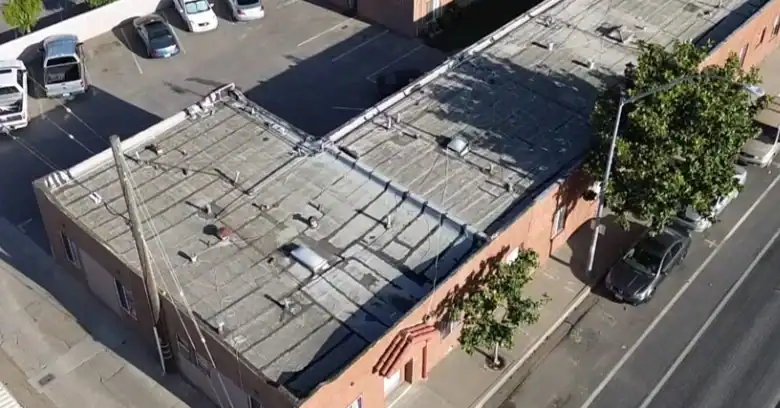
Planning Commercial Roof Replacement Across Central Coast California?
Creative Roofing plans roof work for owners and managers who cannot afford a disruption, throughout Central Coast California and the towns nearby.
Call 805-723-2381 to arrange a visit to the property.
Why a Building Roof Is a Different Animal
The roof on a store or office is a working surface as much as a cover, and the tradesmen who work on them need specific experience. Flat roofs rely on continuous membranes with welded or glued seams, and there is little margin for sloppy work.
Buildings also carry people, stock and equipment that a leak can ruin, and a dry building is the whole point.
The Membranes Used on Flat Roofs
Rolled single-ply sheets are widely used because they are light, reflective and quick to install, and the differences matter when comparing proposals. Layered bitumen roofs remain common on buildings of every age, and it is easy to overlook. Coatings over an existing sound roof can extend its life without a tear-off, and that is worth keeping in mind.
Drainage Is Everything on a Flat Roof
Water that sits on a membrane ages it faster than water that runs off, and ignoring it tends to shorten the life of the membrane. Interior drains, edge scuppers and perimeter gutters each have their own failure points, so clearing drains is the cheapest maintenance on the list.
Air Conditioners, Vents and Curbs
Every unit on a roof is a potential entry point for water, and the flashing around each one has to be right. Repeated traffic on an unprotected membrane leaves it thin and scuffed, and a contractor can mark them on the roof.
How the Climate Affects a Building Roof
Long dry summers expose a membrane to strong ultraviolet light month after month, and the surface slowly dries, chalks and cracks. Light-colored surfaces bounce much of the sunshine back instead of absorbing it, and local rules may favor reflective surfaces on some projects.
Planned Roof Care
Routine care costs a fraction of an emergency repair, so owners often tie visits to the seasons. Photographs from each visit help track changes over time, and the results show up in fewer emergency calls.
Deciding What to Do With an Aging Roof
Not every aging roof needs a full tear-off, and saving a good roof is cheaper than replacing it. Once water has spread through the layers, replacement is the honest answer, so a clear diagnosis matters.
Tenants, Customers and Noise
Many commercial roofs are replaced in sections so that the building is never left open, and it pays to think it through. Anyone entering the roof during construction needs to be accounted for, and a safe site is also an efficient one.
Reading a Roof Proposal
A clear commercial proposal names the system, the thickness and the method of attachment, and the difference is often in what is not mentioned. The paperwork at the end of a job is as important as the work itself, so make it part of the agreement.
Finding the Source of a Commercial Leak
The wet patch indoors only tells you where the water finally escaped, and the roofer has to follow the evidence across the roof. Penetrations and terminations are the usual suspects, and fixing the cause stops the leak for good. A survey gives facts to base a decision on, and the cost is small next to a wrong decision.
Perimeter Details and Attachment
A roof that is poorly attached shows the problem at its edges, and repairs there should not wait. A strip of metal that has come away is an invitation for wind and water, and the work is usually quick.
Where the Roof Meets the Building
Where a flat roof stops against a wall, flashing has to turn the membrane up and seal it, and it is worth checking after every storm season. Mortar joints and wall coatings are part of the roof story, and it pays to think it through.
Fluid-Applied Systems
A coating can seal small cracks, reflect sunlight and slow the aging of the surface, so cleaning and repairing come first. Coating over a wet roof is a common and costly mistake, and the follow-up inspections matter too.
Big Buildings, Big Roofs
Big projects need a plan for storage, staging and phasing, so coordination with the building operator is essential. Shopping centers and strip malls share roofs across several tenants, and the owner usually coordinates the work. Roofs over housing need extra care to keep people safe and informed, and good communication is part of the job.
Thinking About Cost Over the Life of the Roof
Thinking about the roof as a recurring cost makes budgeting easier, so the information from maintenance visits feeds the budget. Choosing on the lowest initial figure alone can cost more over the life of the building, so compare what is included before comparing totals.
What Sits Between the Deck and the Membrane
The insulating layer is part of the roof system, not an afterthought, and they are protected by the membrane above. A thin board over the insulation spreads loads and gives the membrane a better base, and the added cost is modest. Designing the slope into a replacement gives the roof a long-term advantage, so raise the question before the proposal is final.
Late-Summer Readiness Checks
Written notes from each seasonal visit build a record that helps with budgeting and with conversations about replacement, and a little care goes a long way.
Let Us Know What You Are Dealing With
Owners weighing Commercial Roof Replacement in Central Coast California can reach us by phone, so use 805-723-2381 to set up the next step. Calling sooner rather than later keeps repair costs and disruption smaller, and the first step is a simple phone call. Putting off a roof decision seldom makes it simpler, and describe what you are seeing. Tenants, lenders and insurers all take an interest in the state of a roof, and written records show the property has been cared for.






















