
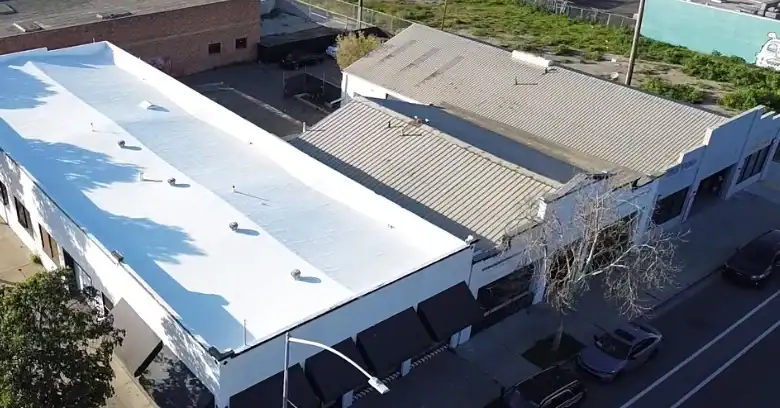
Researching Commercial Roofing Installation Across Lompoc California?
Creative Roofing plans roof work for owners and managers who cannot afford a disruption, wherever a building needs a sound roof around Lompoc California.
Contact us at 805-723-2381 and tell us about the building and the roof.
How Building Roofs Differ
Low slopes make a commercial roof a different problem from a house roof, and that is worth keeping in mind. A low-slope roof has to be sealed, not just overlapped, so installation craft counts for a great deal.
Buildings also carry people, stock and equipment that a leak can ruin, and regular checks pay for themselves.
The Membranes Used on Flat Roofs
Single-ply membranes such as TPO, PVC and EPDM are among the most common coverings on commercial buildings, and the differences matter when comparing proposals. Older buildings often have built-up roofing, with several layers laid over one another, and they suit many situations where traffic and equipment are heavy. Coated metal panels have become common on newer low-rise construction, and the right answer depends on what is already on the roof.
Drains, Scuppers and Slope
Every flat roof is only as good as its drainage, so inspections are best scheduled in late summer. Interior drains, edge scuppers and perimeter gutters each have their own failure points, so clearing drains is the cheapest maintenance on the list.
What Sits on the Roof
Every unit on a roof is a potential entry point for water, and many leaks start there rather than in the open field. A roof that has regular service visits needs protection along the paths, and a few walkway pads cost little compared with a patch.
How the Climate Affects a Building Roof
A flat roof takes the full force of the sun for most of the day, so the finish and color are practical choices. Cooling load is one of the practical reasons building owners choose a reflective roof, and no roof saves everything it promises.
Looking After a Roof Between Repairs
Roof maintenance is a habit more than a project, and a little care goes a long way. Photographs from each visit help track changes over time, and the details are worth a closer look.
Repair, Coat or Replace
Localized damage can be repaired without touching the rest of the roof, and it is easy to overlook. Wet insulation stops insulating and adds heavy weight to the structure, and it is better to know the truth sooner.
Scheduling and Safety
Roofers often work in phases so a store can stay open, and it pays to think it through. Anyone entering the roof during construction needs to be accounted for, so ask how the site will be protected.
Making Sense of Competing Bids
Look for details about seams, terminations and penetration flashing, and the details are worth a closer look. Ask how the work will be inspected and what documentation will be provided at the end, and it is worth requesting before the work starts.
Where the Water Really Gets In
A stain on a tile may be many feet from the opening in the membrane, so a careful inspection is worth the time. Open seams, cracked sealant and failed flashings account for a large share of leaks, and the open field is checked last. Moisture scans and core samples can show how far water has spread inside the roof, and the cost is small next to a wrong decision.
Wind, Fasteners and Roof Edges
The edges and corners of a flat roof take the highest wind loads, and the details are worth a closer look. Edge metal, copings and fascia need to be fastened securely and sealed at the joints, and it is easy to overlook.
Terminations and Transitions
The junction of roof and wall is where movement and water meet, and that is worth keeping in mind. Cracks in a parapet cap or the wall below can feed water into the roof system, and it pays to think it through.
Coatings and What They Can Do
Coating is a way to protect a roof before it fails rather than after, and the right product depends on the existing membrane. Coatings cannot fix a roof with wet insulation or widespread damage, so be wary of anyone who promises it fixes everything.
Scale Changes the Planning
Materials arrive by the truckload and are lifted to the roof with cranes, and it is easy to overlook. Common areas, walkways and canopies add their own details, and the owner usually coordinates the work. The roof of an apartment building protects many households at once, so schedules are shared in writing.
Planning a Roof Budget Without Surprises
A commercial roof is a major capital item that is best planned years ahead, and a good report gives a reasonable range of years remaining. A cheaper system that fails sooner is not a bargain, and the details are worth a closer look.
Insulation Under the Membrane
Thick boards of insulation do much of the work of holding heat in or out, and wet boards lose most of their value. Cover boards add a firm surface that protects insulation from foot traffic and hail-free impacts, and it is worth asking about. Slope built into the insulation is one of the cleanest ways to fix drainage problems, and it is a good time to ask about it.
Late-Summer Readiness Checks
Late summer is the right moment to walk a commercial roof, because debris has accumulated through the dry months and the first storms are only weeks away, and a little care goes a long way.
Next Steps for Your Commercial Roof
Anyone sorting out Commercial Roofing Installation in Lompoc California is one call away from a straight answer, and the number is 805-723-2381. There is no pressure in asking questions about a roof, and the roof will tell the story once someone looks. A visit to the property turns a general worry into a specific plan, and the conversation can be brief. The history of a roof matters when a building is sold or refinanced, and written records show the property has been cared for.
Verified

Verified
Verified
Verified
Verified






















