
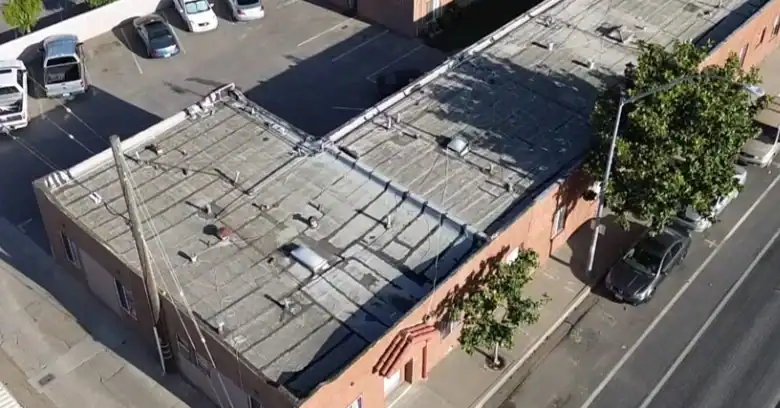
Researching Commercial Roof Services Across Santa Barbara California?
Creative Roofing works on the roofs of shops, offices, warehouses and apartment buildings, wherever a building needs a sound roof around Santa Barbara California.
Call 805-723-2381 to start planning the work with someone who knows low-slope roofs.
Commercial Roofs Are Not Bigger Houses
Low slopes make a commercial roof a different problem from a house roof, and the failure modes are different too. Flat roofs rely on continuous membranes with welded or glued seams, and there is little margin for sloppy work.
Water coming through a commercial roof can reach inventory, electrical gear and computers, and a dry building is the whole point.
The Membranes Used on Flat Roofs
TPO, PVC and EPDM are the single-ply families most owners hear about, and none of them is right for every building. Modified bitumen sheets are heated or adhered in overlapping layers to make a durable surface, and they suit many situations where traffic and equipment are heavy. Metal roofing is used on some commercial buildings, particularly those with a steeper pitch, and that is worth keeping in mind.
Drainage Is Everything on a Flat Roof
Water that sits on a membrane ages it faster than water that runs off, so inspections are best scheduled in late summer. Drains, scuppers and gutters collect water and carry it away from the building, so clearing drains is the cheapest maintenance on the list.
Rooftop Equipment and Penetrations
Pipes, conduits and curbs interrupt the membrane in many spots, and the details are worth a closer look. Service technicians walking to equipment can wear a path through a membrane, and it is easy to overlook.
Sun, Heat and Energy Use
Direct sun heats a dark roof to a temperature far above the air, so the finish and color are practical choices. A cooler roof surface lowers the strain on air conditioning in hot months, and local rules may favor reflective surfaces on some projects.
Small Jobs That Prevent Big Ones
Routine care costs a fraction of an emergency repair, and the best times are before and after the rainy season. Small repairs made early keep water out and extend the life of the membrane, and tenants never notice because nothing leaks.
Repair, Coat or Replace
The right answer depends on how much of the system is still dry and sound, and saving a good roof is cheaper than replacing it. When insulation is soaked, the roof has usually reached the end of its useful life, and it is better to know the truth sooner.
Scheduling and Safety
A good plan keeps customers and staff away from the areas under construction, so the schedule is shared in advance. Access to the roof should be controlled while the work is in progress, and that is a reasonable thing to discuss in advance.
What Should Be in Writing
Look for details about seams, terminations and penetration flashing, and the cheapest-looking option may leave things out. The paperwork at the end of a job is as important as the work itself, and it is easy to overlook.
Where the Water Really Gets In
Water travels along decking, insulation and ductwork before it shows up on a ceiling, and guessing leads to repairs in the wrong place. The edges and the corners are where a flat roof tends to give way first, and fixing the cause stops the leak for good. Infrared and electronic surveys map wet insulation without cutting the roof apart, and a clear map makes planning easier.
Holding the Roof Down
Wind lifts a flat roof from the edges and corners first, and loose metal trim is an early warning. Loose trim lets wind get under the membrane and peel it back, so it deserves a look after any windy spell.
Terminations and Transitions
A parapet is an extra wall that needs its own waterproofing on both faces, and that is worth keeping in mind. Stucco, masonry and metal walls each need a different kind of termination, and a repair there often needs more than a bead of caulk.
Coatings Explained
A coating can seal small cracks, reflect sunlight and slow the aging of the surface, and a little care goes a long way. Coatings cannot fix a roof with wet insulation or widespread damage, and the follow-up inspections matter too.
Big Buildings, Big Roofs
Large roofs pose logistical problems that small ones never do, and weather windows matter more at this scale. A leak in one unit may start above the next one down the line, and tenants appreciate being kept informed. Planning around families and daily routines matters on a residential property, and good communication is part of the job.
Thinking About Cost Over the Life of the Roof
Thinking about the roof as a recurring cost makes budgeting easier, and nobody likes a surprise expense. A cheaper system that fails sooner is not a bargain, and the details are worth a closer look.
The Layers Below the Surface
Foam or fiberboard panels are laid over the deck and covered by the membrane, and it is easy to overlook. Adding a cover board is a common upgrade during a re-roof, and that is worth keeping in mind. A tapered plan can be drawn for any roof and installed with the new membrane, and the drawings show where the water will go.
A Seasonal Checklist for Managers
Rooftop units should be examined for loose panels, failed seals and missing fasteners, since a stray panel can let rain into the system, and a little care goes a long way.
Start With a Conversation
Owners comparing Commercial Roof Services in Santa Barbara California can start by describing the building and what concerns them, so dial 805-723-2381 when it suits you. Even a quick conversation can clarify what the building needs, and the roof will tell the story once someone looks. Most building owners find that a short call clears up more than weeks of wondering, so call when you have a moment. Tenants, lenders and insurers all take an interest in the state of a roof, and that is worth keeping in mind.
Verified

Verified
Verified
Verified
Verified






















