
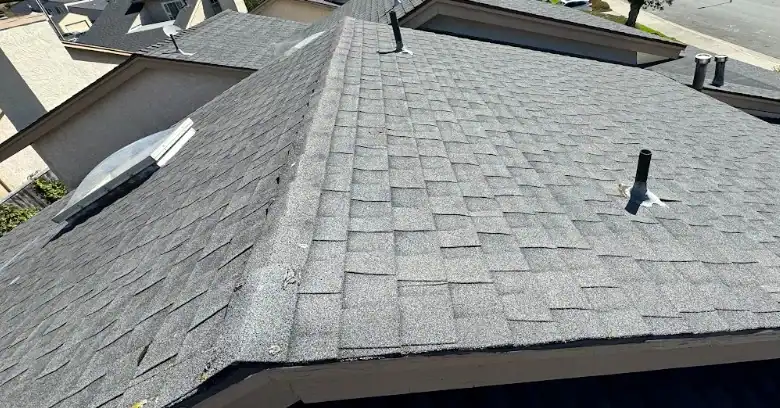
Ready for Shingle Roof Repair in San Luis Obispo California?
Creative Roofing lays asphalt, architectural and designer shingles over carefully prepared decks, from San Luis Obispo California out to the surrounding area.
Phone 805-723-2381 and ask about a shingle roof for your house.
What a Shingle Roof Is Made Of
Behind the familiar look is a layered construction, and that is worth keeping in mind. The granules do more than add color, because they shield the asphalt from ultraviolet light, and bare patches show up as dark spots.
Three-Tab, Architectural and Designer Lines
Flat shingles of this style are economical but wear out sooner than thicker kinds, so many homeowners compare it with thicker lines. Laminated shingles are thicker, heavier and more dimensional than flat strip shingles, and colors come in a wide range. The top of the range offers the richest textures and the greatest thickness, and the framing should be checked before choosing the heaviest types.
Heat Is the Slow Enemy
Long dry summers bake a shingle roof for months with very little relief from rain, and the difference shows how much the sun contributes. A shingle that has begun to curl no longer lies flat against the roof, and the pattern across the roof shows how far the wear has gone.
Picking a Shade That Works in the Sun
The color of a roof affects both its appearance and its temperature, and nearby roofs offer a useful preview. Some manufacturers offer cool-roof shingles with special granules that reflect more infrared light, and the difference is most noticeable in the hottest months.
Installation Details That Decide Longevity
Nails driven too high or too low weaken the hold of the whole course, and overdriven nails cut the mat and create weak spots. A starter strip along the eave and the rake gives the first course a sealed edge and extra grip, and that is worth keeping in mind. Special cap products are made to bend without cracking, and the ventilation opening below the cap should stay clear.
Gusts and Loose Tabs
Seal strips need warmth to activate, which is why roofs installed in cool weather may take longer to bond, and the nails hold the rest. Strong seasonal winds can lift tabs that have lost their seal and tear them off the roof, and a roofer can reseal tabs with a dab of roofing cement.
Air Movement Under the Deck
Poor ventilation is one of the quietest causes of early shingle failure, and ridge vents work well with soffit intake. Adding insulation without maintaining airflow can make an attic hotter in summer, and fixing ventilation is far easier during a re-roof.
Flashing, Valleys and Underlayment
Self-adhering membranes at the eaves and valleys give extra protection where leaks start, and a better underlayment costs little in the whole job. Chimneys, walls and skylights need step flashing and counterflashing worked into the shingle courses, so quality work here matters a great deal.
When a Shingle Roof Is Telling You Something
Look for lines of shadow where shingles have lifted and for stains inside the house, so take the whole picture into account. Repairing a small area costs far less than a full replacement when the surrounding roof is sound, and it is easy to overlook. When the whole roof is brittle, curling and shedding granules, repairs become a losing game, and choose the new shingles with care.
The Deck Decides What Happens Next
Removing every old layer is the usual starting point, since it exposes the deck and shows whether anything underneath needs repair, and the bare deck is also the moment to check ventilation openings. Overlaying is a shortcut that a careful roofer will explain before agreeing to it, so ask for both options in writing. Agreeing on how replacement boards are measured and charged prevents a dispute halfway through the job, so ask how surprises will be handled.
Keeping the Yard Safe During a Shingle Job
Tarps along the walls, plywood over delicate plantings and a bin positioned below the edge keep the mess contained, so ask how the yard will be protected. A professional crew checks the ground more than once, including the gutters, where granules and nails often collect, and it is reasonable to inspect it together. Checking the gutters after the first big rain is a good habit, and it takes only a few minutes, and it pays to think it through.
Dry Months and Warm Days
Most replacements here are scheduled for the long dry season, which gives the roof time to settle before the first winter storm, and the busiest months fill up quickly. Shade, water and early starts are the usual ways of coping with the heat on a dark roof, and the details are worth a closer look.
Working Around Things That Share the Roof
Each opening in a shingle roof needs flashing built in layers with the courses, and the work is easier when the roof is already open, and mention any plans to add more later. Replacing a roof beneath an existing array is a coordination job involving the roofer and the solar company, and a little planning saves a lot of expense.
Blending New Shingles Into an Older Roof
New shingles set into a sun-faded roof usually look a shade darker or brighter, and the contrast softens only after a season or two of weather, and a small color difference is not a defect.
The Edge Details That Finish a Shingle Roof
A drip edge along the eave and the rake guides water into the gutter and keeps it from running behind the fascia, where it would rot the wood, and fixing it now costs less than later.
Getting Specific About the Product
Look for the product by name so that you can compare it with another bid, and a thorough contractor will be happy to explain. Check what happens if damaged sheathing is found once the old roof is off, so take notes during the conversation.
Ready to Compare Options
Homeowners weighing Shingle Roof Repair in San Luis Obispo California can begin by describing the house and the look they want, with 805-723-2381 ready whenever you want to talk. There is no pressure in asking about a new roof, and that is worth keeping in mind.
Verified

Verified
Verified
Verified
Verified






















