
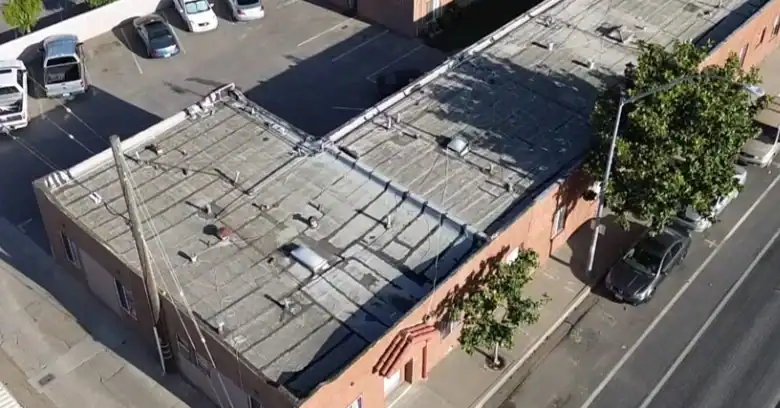
Considering Commercial Roof Replacement in San Luis Obispo California?
Creative Roofing deals with the flat and low-slope roofs that sit above working buildings, throughout San Luis Obispo California and the towns nearby.
Ring 805-723-2381 and describe what is happening up there.
Why a Building Roof Is a Different Animal
Low slopes make a commercial roof a different problem from a house roof, so the finer points carry the weight. Where a house roof sheds water by gravity, a flat roof depends on seams and drains, and the quality of those seams decides how long it lasts.
A roof leak above a store, warehouse or office damages more than the ceiling, and regular checks pay for themselves.
Common Low-Slope Roof Systems
Single-ply membranes such as TPO, PVC and EPDM are among the most common coverings on commercial buildings, and the differences matter when comparing proposals. Layered bitumen roofs remain common on buildings of every age, and it is easy to overlook. Standing seam metal panels cover warehouses, schools and retail buildings, and that is worth keeping in mind.
How Water Leaves a Building Roof
Water that sits on a membrane ages it faster than water that runs off, and ignoring it tends to shorten the life of the membrane. Drains, scuppers and gutters collect water and carry it away from the building, and the first heavy rain turns it into a plug.
What Sits on the Roof
A roof with a lot of equipment has a lot of penetrations to maintain, so those details deserve the most attention in an inspection. Repeated traffic on an unprotected membrane leaves it thin and scuffed, and it is easy to overlook.
Heat Over a Working Building
Long dry summers expose a membrane to strong ultraviolet light month after month, and the surface slowly dries, chalks and cracks. Owners often look at reflective roofing for the savings on cooling, and the details of the benefit depend on the building.
Looking After a Roof Between Repairs
Roof maintenance is a habit more than a project, and it gives you a record to show a buyer or lender. A visit usually covers drains, flashing, seams, curbs and the condition of the surface, and the details are worth a closer look.
When a Roof Reaches the End of Its Life
Localized damage can be repaired without touching the rest of the roof, and saving a good roof is cheaper than replacing it. Once water has spread through the layers, replacement is the honest answer, and that is worth keeping in mind.
Scheduling and Safety
Roofers often work in phases so a store can stay open, and it pays to think it through. Safety at the edge of a roof is a serious matter for the crew and for people below, and plan for parking and deliveries as well.
What Should Be in Writing
A good proposal should say what will be removed, what will be installed and how the edges will be finished, and the difference is often in what is not mentioned. Ask how the work will be inspected and what documentation will be provided at the end, and a future owner will thank you.
Where the Water Really Gets In
Water travels along decking, insulation and ductwork before it shows up on a ceiling, so a careful inspection is worth the time. Most leaks start at a detail, not in the broad flat area of the membrane, and it pays to think it through. Infrared and electronic surveys map wet insulation without cutting the roof apart, and it helps explain the situation to the people who sign the checks.
Holding the Roof Down
Gusts act on a roof like air over an aircraft wing, trying to lift it, so careful edge details are a mark of good work. A strip of metal that has come away is an invitation for wind and water, so it deserves a look after any windy spell.
The Seams That Join Roof to Wall
The junction of roof and wall is where movement and water meet, and that is worth keeping in mind. Cracks in a parapet cap or the wall below can feed water into the roof system, and a repair there often needs more than a bead of caulk.
Coatings Explained
Restoration coatings are meant for roofs that are still basically sound, and the right product depends on the existing membrane. Coatings cannot fix a roof with wet insulation or widespread damage, and the details are worth a closer look.
Big Buildings, Big Roofs
A roof covering a very large area has special needs for drainage, access and safety, and the roof can be done in sections. Multi-tenant buildings call for clear communication with every occupant, and a single contractor for the whole roof keeps things simple. Apartment and multifamily buildings add residents, balconies and shared walkways to the mix, so schedules are shared in writing.
Thinking About Cost Over the Life of the Roof
Treating the roof as an asset with a lifespan is the smart approach, and a good report gives a reasonable range of years remaining. The cheapest proposal is not always the best value, and the details are worth a closer look.
What Sits Between the Deck and the Membrane
Most commercial roofs have rigid insulation boards between the deck and the waterproofing, and wet boards lose most of their value. Extra layers under the membrane help it resist wear from equipment and walking, and it is worth asking about. Slope built into the insulation is one of the cleanest ways to fix drainage problems, and few owners regret it.
Late-Summer Readiness Checks
A pre-season checklist includes clearing drains and scuppers, checking seams and flashing, and photographing the condition of the surface, so schedule it like any other maintenance.
Start With a Conversation
Owners comparing Commercial Roof Replacement in San Luis Obispo California can start by describing the building and what concerns them, with 805-723-2381 ready whenever you want to talk. Even a quick conversation can clarify what the building needs, so reach out whenever you are ready. Putting off a roof decision seldom makes it simpler, and describe what you are seeing. A building with a documented roof is simpler to manage, and the paperwork can be kept with the building file.
Verified

Verified
Verified
Verified
Verified






















