Planning Commercial Roofing Companies for a Building in San Luis Obispo California?
Creative Roofing looks after the roof over a business, from a small storefront to a large building, from San Luis Obispo California to the neighboring communities.
Contact us at 805-723-2381 and describe what is happening up there.
Roofs Over Businesses
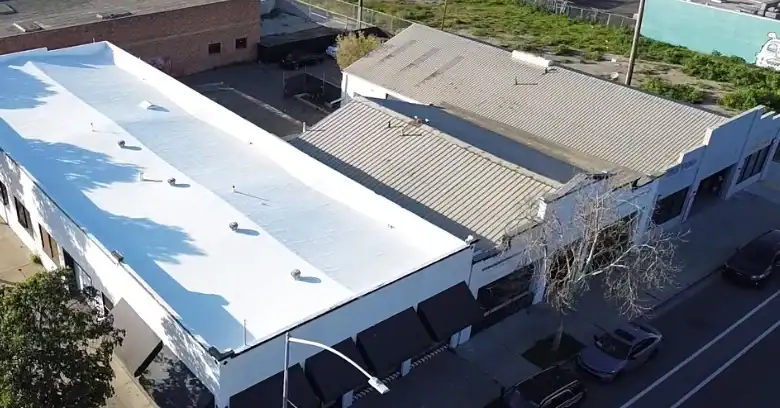
Most commercial buildings have low-slope roofs, which shed water slowly and carry equipment, and the tradesmen who work on them need specific experience. Where a house roof sheds water by gravity, a flat roof depends on seams and drains, so installation craft counts for a great deal.
A roof leak above a store, warehouse or office damages more than the ceiling, and regular checks pay for themselves.
The Membranes Used on Flat Roofs
TPO, PVC and EPDM are the single-ply families most owners hear about, and the details are worth a closer look. Modified bitumen sheets are heated or adhered in overlapping layers to make a durable surface, and they suit many situations where traffic and equipment are heavy. Spray foam and fluid-applied coatings are also used in some situations, and the right answer depends on what is already on the roof.
Drains, Scuppers and Slope
A roof that holds puddles after rain is telling you something, and it pays to think it through. Drains, scuppers and gutters collect water and carry it away from the building, so clearing drains is the cheapest maintenance on the list.
Working Around Machinery
Every unit on a roof is a potential entry point for water, and sealants alone are rarely a lasting fix. Walkway pads protect the routes that technicians use most often, and a few walkway pads cost little compared with a patch.
Heat Over a Working Building
Sun and heat are the steady stresses on a commercial roof in this part of California, and reflective surfaces stay cooler. Light-colored surfaces bounce much of the sunshine back instead of absorbing it, and local rules may favor reflective surfaces on some projects.
Looking After a Roof Between Repairs
Scheduled inspections catch small problems before they reach the ceiling, so owners often tie visits to the seasons. Small repairs made early keep water out and extend the life of the membrane, and most items take only a short time.
Repair, Coat or Replace
A sound roof with surface wear can sometimes be restored with a coating, and it is easy to overlook. A roof that is wet inside cannot be coated or patched into good health, and that is worth keeping in mind.
Tenants, Customers and Noise
Roofers often work in phases so a store can stay open, and early notice prevents most problems. Access to the roof should be controlled while the work is in progress, and that is a reasonable thing to discuss in advance.
Comparing Commercial Roofing Proposals
The scope of work should list drains, flashing, curbs and any insulation to be added, and ask about anything that seems vague. The paperwork at the end of a job is as important as the work itself, and it is easy to overlook.
Finding the Source of a Commercial Leak
Tracing a leak on a low slope takes patience, because water wanders, so a careful inspection is worth the time. Most leaks start at a detail, not in the broad flat area of the membrane, and a good survey starts with those. A survey gives facts to base a decision on, and the cost is small next to a wrong decision.
Perimeter Details and Attachment
Strong seasonal winds pull hardest at the perimeter of a low-slope roof, and the perimeter needs extra fastening. Perimeter metal is the first line of defense against uplift, and the work is usually quick.
The Seams That Join Roof to Wall
Where a flat roof stops against a wall, flashing has to turn the membrane up and seal it, and the metal cap on top must stay sealed. Counterflashing and termination bars hold the membrane to the wall and keep water out, and a repair there often needs more than a bead of caulk.
Restoring a Roof Without Tearing It Off
Restoration coatings are meant for roofs that are still basically sound, and the right product depends on the existing membrane. Coatings cannot fix a roof with wet insulation or widespread damage, and the follow-up inspections matter too.
Large Roofs, Warehouses and Retail Centers
Large roofs pose logistical problems that small ones never do, and the roof can be done in sections. Shopping centers and strip malls share roofs across several tenants, and the owner usually coordinates the work. Apartment and multifamily buildings add residents, balconies and shared walkways to the mix, so schedules are shared in writing.
Planning a Roof Budget Without Surprises
Thinking about the roof as a recurring cost makes budgeting easier, and a little care goes a long way. The total cost covers upkeep, patching and the eventual new roof, and the details in the scope explain the difference.
What Sits Between the Deck and the Membrane
Foam or fiberboard panels are laid over the deck and covered by the membrane, and they are protected by the membrane above. A sturdier base means fewer punctures and longer service, and that is worth keeping in mind. Angled boards direct water toward drains and reduce ponding, and it is a good time to ask about it.
Late-Summer Readiness Checks
A pre-season checklist includes clearing drains and scuppers, checking seams and flashing, and photographing the condition of the surface, so schedule it like any other maintenance.
Ready to Look at the Roof
Owners comparing Commercial Roofing Companies in San Luis Obispo California can start by describing the building and what concerns them, so use 805-723-2381 to set up the next step. A roof that is checked before a failure is easier to plan around, and the details are worth a closer look. A visit to the property turns a general worry into a specific plan, and the conversation can be brief. Property managers often juggle many buildings and appreciate clear, written answers, and written records show the property has been cared for.
Verified

Verified
Verified
Verified
Verified