
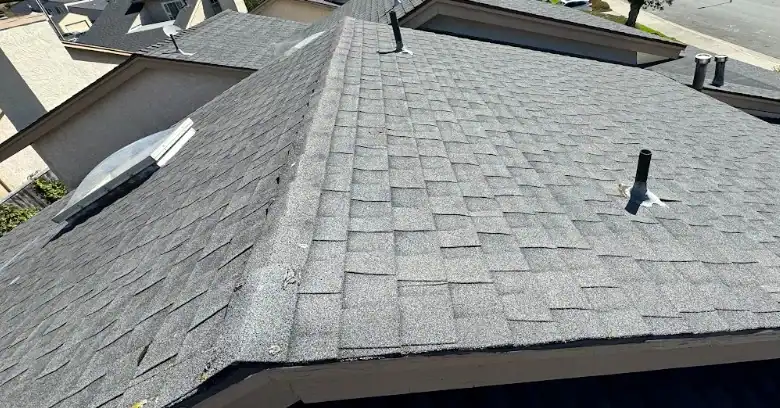
Ready for Shingle Roof Services in Central Coast California?
Creative Roofing handles shingle roofing from the first nail to the last ridge cap, for homes in Central Coast California and the towns around it.
Phone 805-723-2381 and we will go over what a shingle roof involves.
Inside a Shingle
Each shingle is a thin sandwich of mat, asphalt and stone granules, and the granules protect the asphalt from the sun. A shingle that has lost its granules is losing its sunscreen, and it pays to think it through.
How Shingle Lines Differ
A three-tab shingle has a flat, uniform look and the thinnest profile of any common type, and the saving is real but so is the shorter life. Laminated shingles are thicker, heavier and more dimensional than flat strip shingles, and colors come in a wide range. Premium and luxury lines go further, with thicker laminates, deeper shadow lines and designer shapes, and the added weight is a benefit in wind.
Why Sunny Slopes Age First
Long dry summers bake a shingle roof for months with very little relief from rain, and the shaded side tells a different story. Blisters appear when trapped moisture or heat pushes up the surface, and the pattern across the roof shows how far the wear has gone.
Light Versus Dark
A pale shade reflects more sunlight than a dark one, which can reduce heat entering the attic, and a sample held up outdoors shows the shade truthfully. A reflective product can ease the burden on air conditioning, and local rules sometimes encourage them.
Nails, Courses and Starter Strips
Shingles are fastened with nails placed in a specific spot, and a few inches either way changes how well they hold, and it is easy to overlook. Offsetting the seams from row to row keeps leaks from lining up, and the pattern is part of the manufacturer specification. The cap shingles on a ridge take extra abuse from sun and wind, and the ventilation opening below the cap should stay clear.
Wind, Seasonal Gusts and Sealing
A shingle that never sealed can lift and flap in a gust, and the nails hold the rest. Strong seasonal winds can lift tabs that have lost their seal and tear them off the roof, and a pattern of lifting suggests the roof is aging.
Heat Trapped Below Shortens the Roof
A balanced system of intake and exhaust keeps the temperature under the roof closer to the air outside, so check that the soffit openings are not blocked by insulation. Attic fans, gable vents and ridge vents each work differently and should not fight each other, and a roofer can assess the layout in a short visit.
Where Shingles Meet Everything Else
Modern synthetic underlayments resist tearing and last better in strong sun, and it pays to think it through. Every pipe and vent through the deck needs a boot or collar that is sealed and replaced with the roof, and a careful crew takes extra time at the details.
Reading the Roof
Granules in the gutters, curling edges and bald spots are the most reliable signs of an aging shingle roof, and the details are worth a closer look. Patching makes sense when the damage is limited and the shingles are otherwise healthy, so ask for photographs of the problem areas. Replacement is the sensible answer once the field of shingles has lost its protective surface, and that is worth keeping in mind.
The Deck Decides What Happens Next
Old shingles come off in sections and go straight into a bin, leaving a clean deck ready for the next step, and anything hidden gets found at this point. Overlaying is a shortcut that a careful roofer will explain before agreeing to it, and the decision deserves a little thought. Rotted boards and delaminated plywood are usually found around leaks, valleys and plumbing vents, so ask how surprises will be handled.
Cleanup, Nails and Protecting the Property
The first hour on site is spent setting up protection, and that time is well spent, and it is easy to overlook. Final cleanup should leave the property as orderly as it was found, apart from the new roof, and point out anything that was missed. Gutters should be cleared of granules and debris once the new roof is on, since the first rains will wash any leftovers into the downspouts, and the new roof will thank you.
Timing a Shingle Replacement
Timing a project well means picking a stretch of dry days and leaving some room for delays, and flexibility makes scheduling easier. Crews adjust to the heat by working early and finishing before the worst of the afternoon, which protects the material and the people, and a rushed job in extreme heat is a poor bargain.
Skylights, Chimneys and Solar Panels
Openings in a roof have a real effect on the quality and cost of a shingle project, and a thorough roofer will count them. Anyone considering rooftop solar should have the age and condition of the shingles assessed first, and a little planning saves a lot of expense.
Why a Patch Rarely Matches Perfectly
A roofer can often borrow shingles from a hidden slope or the back of the house to repair a more visible area, which gives the best match, so ask the roofer what to expect.
Where Shingles End and Gutters Begin
Shingles should overhang the drip edge by a small, consistent amount so that water drops cleanly into the gutter instead of curling back under, and old fascia boards are easy to replace while the roof is open.
Comparing Shingle Roofing Proposals
A good proposal names the shingle line, the color, the underlayment and the flashing materials, and the details are worth a closer look. Find out how the crew will protect the house and landscaping during the work, and it is easy to overlook.
Start the Conversation
Those comparing Shingle Roof Services in Central Coast California can reach us by phone, and the number is 805-723-2381. Even a quick call can clear up questions about shingle grades, colors and timing, and we are glad to help you sort it out.






















