
Planning Roof Inspections for a Home in Lompoc California?
Creative Roofing takes a roofing job from the first look to the last sweep of the yard, working in Lompoc California and nearby.
Dial 805-723-2381 and describe the project you have in mind.
Where a Roofing Job Begins
The first visit is about gathering facts rather than picking a product, and a rushed visit tends to cost more than it saves. Signs of wear on top often point to a moisture problem underneath, and it pays to think it through.
Sun and heat age a roof in ways that rain alone never would, so the south and west slopes get the closest attention.
Repair, Patch or Replace
Some roofs need a patch, some need a section redone, and some have reached the end of the road, and the details are worth a closer look. Damage should be shown rather than only described, and the answer tells you a lot.
When the decking underneath is damaged, the scope of the job grows, and it helps to know that before the work begins.
Choosing Materials for Your Home
The common choices are shingle, tile and metal, and each suits some houses better than others, since heavy coverings need a frame built to carry them. Lighter colors reflect more of the summer sun, while darker ones soak it up, so do not settle the question from a photograph.
Scheduling Around the Weather
Roof work is easiest to schedule in the long dry stretch between rains, and crews watch the forecast closely. Heat affects the work as well, so an early knock on the door is nothing to worry about.
What Happens on Demolition Day
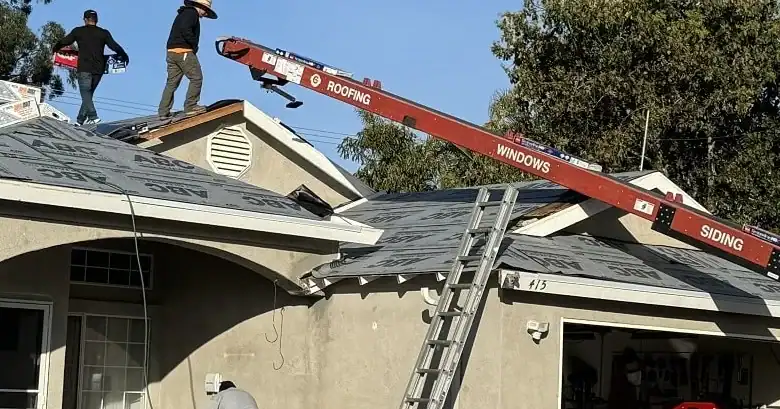
Old roofing comes off in layers, down to the bare decking, and debris goes into a bin or trailer rather than onto the lawn. Once the deck is bare, any damaged boards are replaced, and it is easier to fix now than after the roof is finished.
The Hidden Layers
The first layer laid over the deck is a barrier against moisture, and valleys, eaves and penetrations get extra layers. With the barrier in place the roof can shed rain even before the covering is finished, and the visible covering goes on from there.
Penetrations and Edges
Wherever the roof surface stops, a metal detail has to take over, and it pays to think it through. Pipe seals made of soft materials fail early in strong sun, so replacing them along with the roof removes a predictable problem.
Ventilation in a Warm Climate
Warm air trapped under the deck works on the roof from below, and a proper system draws air in low and sends it out high. More vents are not always better, because intake and exhaust have to be balanced, and it is easy to overlook.
Finishing the Job
Final cleanup means more than a quick sweep, and a magnetic sweep picks up stray nails. Questions are easier to settle while the crew is still on site, and it pays to think it through.
What the City Wants to See
Depending on the town, a re-roof may need a permit before any material is ordered, and a little care goes a long way. Wildfire concerns have changed what many local codes ask of a roof, and the proposal should reflect them. Written proposals should describe the materials, the scope and the cleanup in plain words, and it is worth reading it slowly.
Shielding Windows, Plants and Patios
Roof work is hard on landscaping unless it is planned for, so tarps and plywood go down where debris will land. Moving vehicles out of range for the day is a simple precaution, so tell the crew about anything fragile or valuable. The attic gets dusty during tear-off, and anything stored there will notice, and a sheet over stored boxes keeps the grit off.
Disruption and How to Manage It
Most residential projects are finished within days, not weeks, and the crew should give you a realistic window. A quick word with the people next door can head off complaints, and the whole thing is over sooner than it seems. Pets are often the ones most bothered by the commotion, so consider a day out of the house if you can.
Questions That Reveal the Difference
Ask how the roof will be ventilated and how the flashing will be handled, since confident answers come easily to people who do this daily. A proposal that only says shingles or tile is not specific enough, so ask before you sign anything. Surprises are normal, and a process for them is a sign of a well-run job, and you will have a clear record.
Caring for the Roof Once It Is Done
A roof that is never looked at tends to fail when it is least convenient, and the best times are before the rainy season and after the first big storm. Overhanging trees drop material that collects in corners and valleys, and that is worth keeping in mind. Missing pieces, lifted edges or a new stain are all reasons to have someone look, so do not wait for the next storm.
Choosing the Right Season
Many homeowners wait until a leak appears before they think about a roof, and calling in spring avoids the rush. Any month can work with the right planning and a willingness to move a day, and the best season is often the one that fits your calendar.
Insulation, Ducts and Cables Under the Roof
Looking at the roof from inside the attic before the work begins reveals water stains, damp insulation and daylight where none should enter, and attic problems are cheaper to deal with during a re-roof.
Start the Conversation
Questions about Roof Inspections in Lompoc California begin with a short phone call, with 805-723-2381 ready whenever you are. The size of the project changes the schedule but not the principle, so there is no harm in asking questions first. Putting off a roof question rarely makes it easier to answer, and nobody will rush you.
Verified

Verified
Verified
Verified
Verified






















