
Looking for Roof Replacement for a Home in Central Coast California?
Creative Roofing walks a household through every stage of a roofing project, from Central Coast California out to the surrounding area.
Dial 805-723-2381 and we will talk through what the roof needs.
Before Anything Is Torn Off
The first visit is about gathering facts rather than picking a product, and the notes from that visit steer every later choice. Loose granules, lifted edges, cracked flashing and soft spots all say something about the layers below, so the visit usually takes longer than people expect.
Sun and heat age a roof in ways that rain alone never would, so the wear is rarely even from one side to the next.
Deciding What the Roof Needs
The right answer depends on how much sound material is left on the house, and the reasons should be easy to follow. Findings that cannot be pointed to are findings worth questioning, and the answer tells you a lot.
When the decking underneath is damaged, the scope of the job grows, and agreeing on the approach in advance beats debating it with the roof open.
Picking a Roof Covering
Most houses here wear one of three coverings, and the choice shapes everything else, so structure comes first and appearance second. Sun exposure makes color a practical question as well as a visual one, and that is worth keeping in mind.
When the Crew Can Work
Rain arrives in bursts, and a roof that is open when one comes needs protection, and it pays to think it through. Crews often start early in summer to get ahead of the hottest hours, and the plan bends to the heat rather than the other way around.
Stripping Down to the Deck
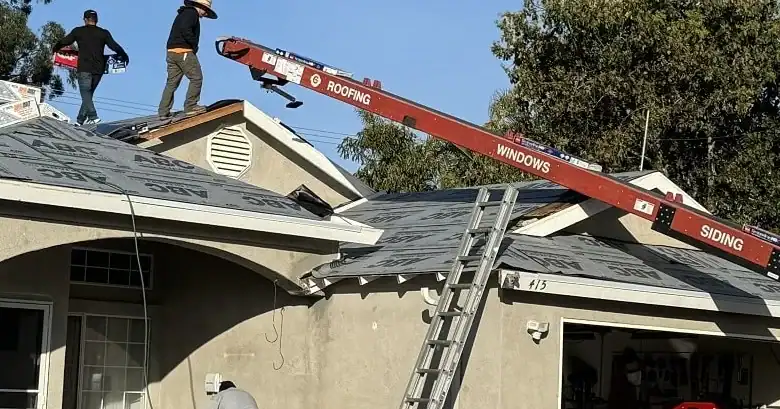
Old roofing comes off in layers, down to the bare decking, and debris goes into a bin or trailer rather than onto the lawn. Once the deck is bare, any damaged boards are replaced, because new material is only as good as what it is fastened to.
Protection Under the Covering
The surface you see is only the outer layer of a roof, and metal edging is set at the eaves and rakes before the covering. The house is safest once the second layer is complete, so the rest of the work can proceed without worry.
Small Metal Pieces, Large Consequences
Flashing is the thin metal that keeps water out where the roof meets something else, so fresh metal is standard practice among careful crews. Sun dries and cracks the flexible parts over time, and a new roof should not depend on a seal that is already tired.
Intake and Exhaust
Heat collects in the space beneath the roof deck unless it has somewhere to go, since warm air rises on its own when it is given a path. Adding vents at random may do little more than cut holes in the roof, because airflow is easy to plan now and hard to add later.
Finishing the Job
When the last piece is installed, the cleanup begins, and covers come off the landscaping and the beds are inspected. Looking at the ridge, the valleys and the flashing with the roofer present is time well spent, and a saved record answers questions nobody has thought to ask yet.
Local Rules and Paper Trails
Municipal offices have their own expectations for roof work, because surprises at the counter slow everything down. Fire safety rules in some neighborhoods affect which coverings are allowed, since the covering you pick has to be one the town accepts. A clear proposal lists what will be removed, what will be installed and what happens if the deck needs work, and it is worth reading it slowly.
Protecting the House and Yard
Heavy materials, ladders and falling pieces all share the space around the walls, and that is worth keeping in mind. Pets, children and cars are best kept away from the work area, and a short talk the evening before covers the details. The attic gets dusty during tear-off, and anything stored there will notice, and it is best done the night before.
Disruption and How to Manage It
Timing depends on the size of the roof, the complexity of the layout and the covering chosen, and the crew should give you a realistic window. Dumpsters and trucks may take up space on the road, and it is easy to overlook. Pets are often the ones most bothered by the commotion, so consider a day out of the house if you can.
What to Ask Every Roofer
Find out who will be on the roof and who will be in charge of the job, and listen to how the answer is given. A proposal that only says shingles or tile is not specific enough, so ask before you sign anything. Surprises are normal, and a process for them is a sign of a well-run job, and settle it before the first day.
Caring for the Roof Once It Is Done
Even a new roof benefits from an occasional look from the ground, and binoculars make the job easy. Sweeping leaves off the roof and out of valleys prevents trouble, and a small broom is often enough. Call a roofer after a major wind event or if you see a stain on a ceiling, and it is far easier to repair than to rebuild.
When to Schedule the Work
Many homeowners wait until a leak appears before they think about a roof, so a few weeks of lead time is common. Any month can work with the right planning and a willingness to move a day, and the covering you choose affects the timing as well.
Checking the Space Beneath the Deck
When the old roof comes off, the crew sees the underside of the deck, and stains, rust on nail tips and darkened wood tell the story of past leaks, and attic problems are cheaper to deal with during a re-roof.
Next Steps for Your Roofing Project
Sorting out Roof Replacement in Central Coast California is easier with someone who can look at the house, so use 805-723-2381 to talk through the roof and the next step. Large or small, a roofing project goes best when the plan is clear before the work starts, and the roof will tell the story once someone looks. A short conversation can turn a vague worry into a clear plan, and nobody will rush you.






















