
Thinking About Residential Roof Contractors in Morro Bay California?
Creative Roofing stays with a roofing project from the first walk-around to the final check, working in Morro Bay California and nearby.
Phone 805-723-2381 and describe the project you have in mind.
Starting Out Right
Before any material is chosen, the existing roof has to be understood, because the rest of the plan rests on the findings from that look. Loose granules, lifted edges, cracked flashing and soft spots all say something about the layers below, and the findings are worth asking to see.
Sunny slopes and shaded slopes tell different stories, and both matter, so the wear is rarely even from one side to the next.
Repair, Patch or Replace
A roof can be repaired, partly rebuilt or removed entirely, and the evidence decides what is done, and the details are worth a closer look. Findings that cannot be pointed to are findings worth questioning, and a good roofer expects the question.
When the decking underneath is damaged, the scope of the job grows, so a note on how it will be handled saves arguments later.
Picking a Roof Covering
Three families of material cover most residential roofs in this region, so structure comes first and appearance second. Sun exposure makes color a practical question as well as a visual one, so hold a sample against the house in daylight.
Timing the Work
For most of the year the weather here lets a roof go on with few interruptions, and temporary dry-in layers keep the house safe overnight. The temperature on the roof can run well above the temperature in the shade, so an early knock on the door is nothing to worry about.
Removing the Old Roof
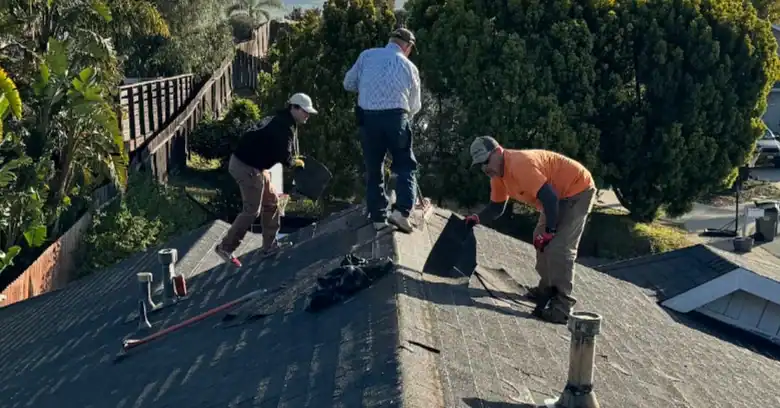
The existing covering is stripped away and the deck is left exposed for inspection, and magnets and rakes pick up the nails that fall. Sound wood is the base everything else depends on, since good materials laid over a weak deck do not last.
Protection Under the Covering
The first layer laid over the deck is a barrier against moisture, so self-adhering membrane goes where leaks tend to begin. With the barrier in place the roof can shed rain even before the covering is finished, and the visible covering goes on from there.
Small Metal Pieces, Large Consequences
Chimneys, skylights, vent pipes and walls all need flashing worked into the roof, and reusing old flashing under a new roof often comes back to bite. Sun dries and cracks the flexible parts over time, and putting in new boots costs little when the roof is already open.
Keeping the Attic Cooler
An attic under a hot roof can reach extreme temperatures in summer, since warm air rises on its own when it is given a path. Adding vents at random may do little more than cut holes in the roof, and it is easy to overlook.
Cleanup and the Final Walk-Through
The job is not over until the yard looks like a yard again, and that is part of the work, not an extra. Keeping a short record of the materials used helps with later maintenance, and a saved record answers questions nobody has thought to ask yet.
Permits and Paperwork
Depending on the town, a re-roof may need a permit before any material is ordered, and the process is easier when someone handles it for you. Areas with wildfire exposure often have extra requirements for roofing materials and vents, and the proposal should reflect them. The best paperwork leaves little room for misunderstanding, and it is worth reading it slowly.
Keeping the Property Safe
The ground around a house takes a beating during a roof project, and that is worth keeping in mind. Cars parked in the driveway can be struck by falling nails or pieces of shingle, and a little planning prevents most accidents. Inside the house, vibration can shake items from shelves and loosen attic insulation, and a little care goes a long way.
The Few Days of Commotion
A new roof usually takes a few days for an average house, though weather and size change that, so ask for the expected start and finish up front. Neighbors appreciate a heads-up before the noise begins, and early starts mean early noise. Pets are often the ones most bothered by the commotion, and a plan for the loud days makes them easier.
A Short List for Comparing Proposals
Find out who will be on the roof and who will be in charge of the job, and anything left vague deserves a follow-up. Product names and thicknesses on the proposal let you compare like with like, and it should be written on the proposal. Ask what happens if something unexpected turns up under the old roof, and it is better to know in advance.
Maintenance After the Job
Regular glances at the roof catch small problems early, and binoculars make the job easy. Trim branches that touch or hang over the roof, and that is worth keeping in mind. Call a roofer after a major wind event or if you see a stain on a ceiling, and a photograph helps explain what you saw.
Is There a Best Time for a New Roof
Waiting for the first storm to find the weak spot means hiring in a hurry, and a calm decision is nearly always a better one. Spring can bring the first showers, so flexibility helps, and a good roofer will explain the trade-offs.
Checking the Space Beneath the Deck
Rust on the points of roofing nails and dark patches on the sheathing are signs that moisture has been present for some time, and bring a flashlight if you can.
Ready When You Are
Homeowners comparing Residential Roof Contractors in Morro Bay California can simply pick up the phone, so use 805-723-2381 to talk through the roof and the next step. Whether the job is a small section or a whole house, the questions are much the same, so there is no harm in asking questions first. Putting off a roof question rarely makes it easier to answer, so pick up the phone when you are ready.
Verified

Verified
Verified
Verified
Verified






















