
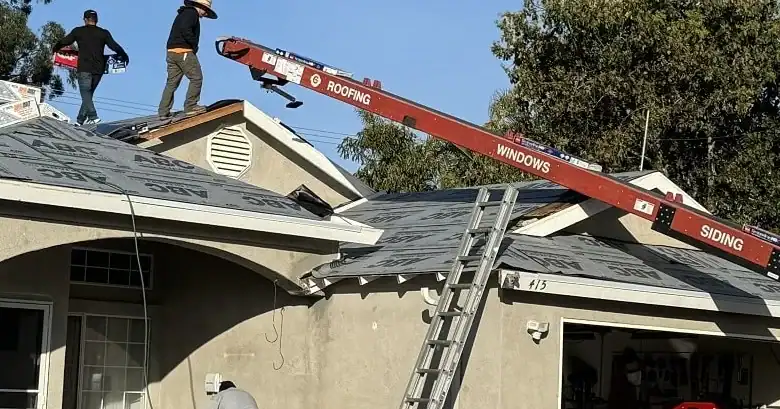
Thinking About New Roofs for a Home in San Luis Obispo California?
Creative Roofing covers each step of putting a new roof on a house, working in San Luis Obispo California and nearby.
Reach out at 805-723-2381 and describe the project you have in mind.
Starting Out Right
The first visit is about gathering facts rather than picking a product, since guessing from the ground leads to surprises later. A proper look covers the slopes seen from the yard and the ones that are not, and that is the evidence a sensible plan is built on.
Months of direct sun take a steady toll on whatever covers a house, so the wear is rarely even from one side to the next.
Choosing How Far to Go
Whether to fix or replace comes down to the condition of the layers beneath the surface, and an honest roofer will say which one applies. Pictures of the trouble spots take the guesswork out of the decision, so do not feel awkward about asking.
Rotted or soft sheathing changes the plan and often the schedule, so a note on how it will be handled saves arguments later.
Choosing Materials for Your Home
Homeowners usually end up comparing shingles, tile and metal panels, since heavy coverings need a frame built to carry them. A roof that faces strong sun all afternoon behaves differently depending on its shade, and it pays to look at them at different times of day.
When the Crew Can Work
Rain arrives in bursts, and a roof that is open when one comes needs protection, and a careful crew never leaves an opening to chance. The temperature on the roof can run well above the temperature in the shade, and finishing early keeps people and materials in better shape.
What Happens on Demolition Day
Removal of the old material is where the project gets loud, so landscaping and windows are covered before the first piece comes up. Soft or split sheathing is cut out and new panels are fastened down, and skipping the step shortens the life of an otherwise good roof.
What Goes Down First
Underneath the visible covering sits a water-resistant layer that does much of the work, and valleys, eaves and penetrations get extra layers. Reaching this stage quickly is a sensible way to protect the interior, and rows are laid from the eave upward, each lapping the last.
Where Roofs Meet Walls and Pipes
Water finds the joints first, so flashing matters, and the cost is small next to the roof it protects. Vent boots and pipe collars are rubber or lead pieces that wear out before the roof does, and putting in new boots costs little when the roof is already open.
Air Under the Roof
An attic under a hot roof can reach extreme temperatures in summer, and a proper system draws air in low and sends it out high. Mixing vent types without a plan can short-circuit the airflow, so ask how the attic will breathe once the work is done.
The Last Day on Site
When the last piece is installed, the cleanup begins, and a magnetic sweep picks up stray nails. Photographs of the completed work are worth having for your own records, so keep the paperwork and pictures together.
The Paperwork Side of a Roof
Replacing a roof usually involves the local building department in some way, and the process is easier when someone handles it for you. Wildfire concerns have changed what many local codes ask of a roof, and the proposal should reflect them. Vague wording on a proposal is a reason to ask questions, so compare any two side by side.
Shielding Windows, Plants and Patios
A roofing job puts a lot of weight, noise and debris around a house, and it is reasonable to ask how this will be done. The area under the eaves is the one to avoid, and keep a path clear for deliveries. Attic contents are best covered or moved before the work starts, so it is wise to take down fragile pictures first.
Noise, Neighbors and Daily Life
Most residential projects are finished within days, not weeks, and nobody can promise a date through a rain delay. Dumpsters and trucks may take up space on the road, and the whole thing is over sooner than it seems. Household routines bend a little while the work is under way, so consider a day out of the house if you can.
A Short List for Comparing Proposals
Find out who will be on the roof and who will be in charge of the job, and listen to how the answer is given. Product names and thicknesses on the proposal let you compare like with like, so ask before you sign anything. The way a roofer handles the unexpected says a lot about the whole operation, and keep the discussion friendly but specific.
Small Habits That Extend Roof Life
Regular glances at the roof catch small problems early, and it is easy to overlook. Overhanging trees drop material that collects in corners and valleys, and it protects the investment you just made. A prompt visit after damage keeps a minor repair minor, and a photograph helps explain what you saw.
Spring, Summer or Fall
Many homeowners wait until a leak appears before they think about a roof, and calling in spring avoids the rush. Early fall is popular because the weather is still dry and the heat has eased, and the details are worth a closer look.
Checking the Space Beneath the Deck
Rust on the points of roofing nails and dark patches on the sheathing are signs that moisture has been present for some time, so ask the roofer to look inside as well.
Start the Conversation
Anyone researching New Roofs in San Luis Obispo California is one call away from a straight answer, so use 805-723-2381 to talk through the roof and the next step. A modest repair and a full re-roof both begin with an honest look at the roof, so there is no harm in asking questions first. The decision often feels bigger before the call than it turns out to be, so pick up the phone when you are ready.
Verified

Verified
Verified
Verified
Verified






















