
Searching for Residential Roof Services Near Morro Bay California?
Creative Roofing walks a household through every stage of a roofing project, for homes in Morro Bay California and the towns around it.
Phone 805-723-2381 to set up a time for someone to look at the roof.
Starting Out Right
A roofing project begins with a close look at the surface, the edges and the pipes, and the notes from that visit steer every later choice. Loose granules, lifted edges, cracked flashing and soft spots all say something about the layers below, and the findings are worth asking to see.
Months of direct sun take a steady toll on whatever covers a house, so the south and west slopes get the closest attention.
What Should Actually Be Done
Whether to fix or replace comes down to the condition of the layers beneath the surface, and the recommendation should come with the reasons attached. Damage should be shown rather than only described, and the answer tells you a lot.
Rotted or soft sheathing changes the plan and often the schedule, and it is easy to overlook.
Choosing Materials for Your Home
The common choices are shingle, tile and metal, and each suits some houses better than others, and the pitch of the roof narrows the field quickly. A roof that faces strong sun all afternoon behaves differently depending on its shade, so hold a sample against the house in daylight.
The Calendar and the Forecast
Roof work is easiest to schedule in the long dry stretch between rains, so exposed areas get covered at the end of each day. Crews often start early in summer to get ahead of the hottest hours, and the plan bends to the heat rather than the other way around.
Tear-Off and Preparation
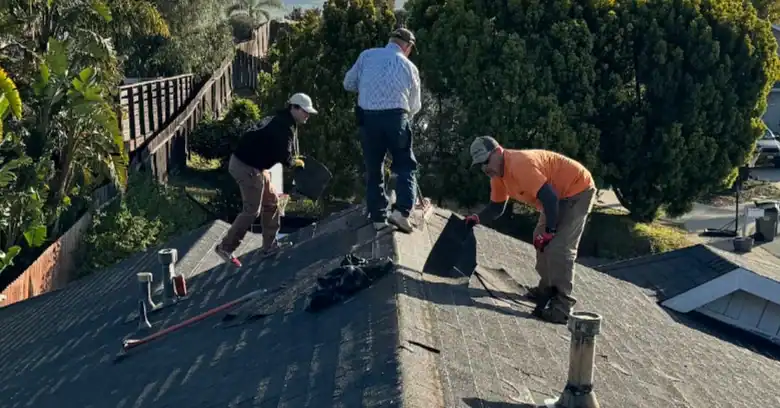
Taking the old roof off is the noisiest and messiest part of the job, and protecting the driveway and plants is worth asking about. Repairs to the deck happen now, before anything new is installed, so this is not the place to save time.
Underlayment and Drying In
Underneath the visible covering sits a water-resistant layer that does much of the work, so self-adhering membrane goes where leaks tend to begin. Drying in gives the crew a margin against surprise weather, and the visible covering goes on from there.
Flashing and the Fiddly Parts
The places where a roof is interrupted are the places most likely to leak, and reusing old flashing under a new roof often comes back to bite. The seal around a vent pipe rarely lasts as long as the surface around it, and a new roof should not depend on a seal that is already tired.
Ventilation in a Warm Climate
Heat collects in the space beneath the roof deck unless it has somewhere to go, so vents near the ridge give the hot air a way out. The design of the system matters more than the number of vents, so ask how the attic will breathe once the work is done.
Cleanup and the Final Walk-Through
Final cleanup means more than a quick sweep, and a magnetic sweep picks up stray nails. Questions are easier to settle while the crew is still on site, so keep the paperwork and pictures together.
The Paperwork Side of a Roof
Rules about reroofing differ from one city to the next, and the answer should be clear from the start. Where fire risk is high, the roof covering and the vents face tighter standards, and a roofer working in the area should already know them. A clear proposal lists what will be removed, what will be installed and what happens if the deck needs work, so keep a copy where you can find it.
Keeping the Property Safe
The ground around a house takes a beating during a roof project, and it is reasonable to ask how this will be done. The area under the eaves is the one to avoid, and a short talk the evening before covers the details. Light fixtures and wall hangings can shift when a roof is being removed above them, and a sheet over stored boxes keeps the grit off.
The Few Days of Commotion
A simple roof may go quickly while a complicated one takes longer, and nobody can promise a date through a rain delay. A quick word with the people next door can head off complaints, so a friendly note goes a long way. The loudest stretch is the tear-off, and it passes quickly, and the noise settles once the old roof is gone.
A Short List for Comparing Proposals
Ask what will be done with the old material and how the deck will be handled, and write the answers down. The product line matters as much as the type of covering, so ask before you sign anything. Ask what happens if something unexpected turns up under the old roof, and the details are worth a closer look.
Keeping a Roof in Good Shape
Checking the roof twice a year takes only a few minutes, and binoculars make the job easy. Debris on the roof holds moisture and wears the surface, so it is worth doing before summer ends. Call a roofer after a major wind event or if you see a stain on a ceiling, and a photograph helps explain what you saw.
Spring, Summer or Fall
Booking early in the dry season leaves time to compare more than one proposal, so a few weeks of lead time is common. Winter work happens too, with crews watching the forecast closely, and the covering you choose affects the timing as well.
Checking the Space Beneath the Deck
Insulation in the attic that is compressed, wet or missing should be noted, since a new roof is a good time to fix the whole assembly, and it is easy to overlook.
Talk to Us About Your Roof
Homeowners comparing Residential Roof Services in Morro Bay California can simply pick up the phone, with 805-723-2381 ready whenever you are. A modest repair and a full re-roof both begin with an honest look at the roof, and the roof will tell the story once someone looks. A short conversation can turn a vague worry into a clear plan, and nobody will rush you.
Verified

Verified
Verified
Verified
Verified






















