
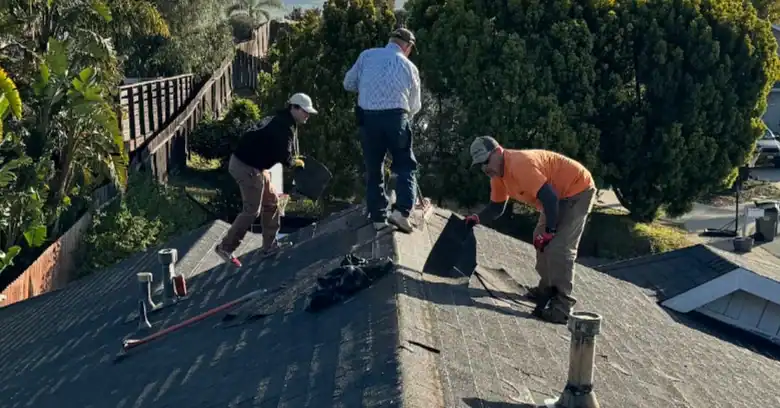
Thinking About Residential Roof Services Serving San Luis Obispo California?
Creative Roofing handles the planning, the tear-off and the cleanup of a roof job, working in San Luis Obispo California and nearby.
Phone 805-723-2381 to start a conversation about the roof over your head.
The First Step in a Roofing Project
Before any material is chosen, the existing roof has to be understood, and that is worth keeping in mind. The roofer checks the surface, the flashing, the vents and the gutter line, then the attic if it can be reached, and the findings are worth asking to see.
Sun and heat age a roof in ways that rain alone never would, and a roofer who knows the area expects exactly that.
Choosing How Far to Go
A roof can be repaired, partly rebuilt or removed entirely, and the evidence decides what is done, and the details are worth a closer look. A roofer who explains the reasoning in plain terms is easier to trust with the work, since the plan should make sense to the person paying for it.
Wood that has been wet for a long time has to be cut out and replaced, and agreeing on the approach in advance beats debating it with the roof open.
Choosing Materials for Your Home
Homeowners usually end up comparing shingles, tile and metal panels, since heavy coverings need a frame built to carry them. Color deserves more thought than it usually gets, and a full-size piece seen outdoors beats a catalog picture.
When the Crew Can Work
Rain arrives in bursts, and a roof that is open when one comes needs protection, and a careful crew never leaves an opening to chance. Crews often start early in summer to get ahead of the hottest hours, so the day usually begins at sunrise.
Removing the Old Roof
The existing covering is stripped away and the deck is left exposed for inspection, and magnets and rakes pick up the nails that fall. Soft or split sheathing is cut out and new panels are fastened down, because new material is only as good as what it is fastened to.
Waterproofing Beneath the Surface
Underneath the visible covering sits a water-resistant layer that does much of the work, and it is easy to overlook. The house is safest once the second layer is complete, and that is worth keeping in mind.
Small Metal Pieces, Large Consequences
The places where a roof is interrupted are the places most likely to leak, and it pays to think it through. Plumbing vents are among the most common sources of small leaks, so replacing them along with the roof removes a predictable problem.
Attic Airflow
Warm air trapped under the deck works on the roof from below, and vents at the eaves let cooler air in. More vents are not always better, because intake and exhaust have to be balanced, and a roofer should be able to describe it simply.
Wrapping Up
Final cleanup means more than a quick sweep, and a magnetic sweep picks up stray nails. Looking at the ridge, the valleys and the flashing with the roofer present is time well spent, so keep the paperwork and pictures together.
The Paperwork Side of a Roof
Rules about reroofing differ from one city to the next, so it is fair to ask who pulls the permit. Fire safety rules in some neighborhoods affect which coverings are allowed, so ask how the plan meets the rules for your street. A proposal that names its materials and steps is easier to compare, so compare any two side by side.
Looking After Your Property During the Work
Roof work is hard on landscaping unless it is planned for, and a careful crew sets them before the work begins. Cars parked in the driveway can be struck by falling nails or pieces of shingle, and it pays to think it through. Attic contents are best covered or moved before the work starts, and a sheet over stored boxes keeps the grit off.
The Few Days of Commotion
A simple roof may go quickly while a complicated one takes longer, and the crew should give you a realistic window. Dumpsters and trucks may take up space on the road, and the whole thing is over sooner than it seems. Pets are often the ones most bothered by the commotion, and that is worth keeping in mind.
Questions Worth Asking Before You Agree
Ask how the roof will be ventilated and how the flashing will be handled, and anything left vague deserves a follow-up. A proposal that only says shingles or tile is not specific enough, and take your time reading it. Surprises are normal, and a process for them is a sign of a well-run job, and the details are worth a closer look.
Looking After a New Roof
Checking the roof twice a year takes only a few minutes, and it is easy to overlook. Keep the gutters clear of leaves and needles, especially at the end of the dry season, and it protects the investment you just made. Call a roofer after a major wind event or if you see a stain on a ceiling, so do not wait for the next storm.
Choosing the Right Season
Booking early in the dry season leaves time to compare more than one proposal, and calling in spring avoids the rush. Spring can bring the first showers, so flexibility helps, and the best season is often the one that fits your calendar.
Roof Work and Your Attic
Looking at the roof from inside the attic before the work begins reveals water stains, damp insulation and daylight where none should enter, and the findings can change the scope.
Start the Conversation
A call is the simplest way to begin planning work in San Luis Obispo California, so use 805-723-2381 to talk through the roof and the next step. A modest repair and a full re-roof both begin with an honest look at the roof, and we are glad to talk through the options. Taking the first step is usually the hardest part of any home project, and the next step becomes obvious.
Verified

Verified
Verified
Verified
Verified






















