
Searching for Residential Roof Contractors Near Me Serving Santa Barbara California?
Creative Roofing covers each step of putting a new roof on a house, working in Santa Barbara California and nearby.
Call 805-723-2381 and describe the project you have in mind.
The First Step in a Roofing Project
Every roofing job starts with someone climbing up to see what is actually there, since guessing from the ground leads to surprises later. A proper look covers the slopes seen from the yard and the ones that are not, and the findings are worth asking to see.
Sun and heat age a roof in ways that rain alone never would, so the wear is rarely even from one side to the next.
What Should Actually Be Done
Whether to fix or replace comes down to the condition of the layers beneath the surface, and the reasons should be easy to follow. Ask to see the problem areas, either in photographs or from the ladder, since the plan should make sense to the person paying for it.
When the decking underneath is damaged, the scope of the job grows, and it is easy to overlook.
Choosing Materials for Your Home
Three families of material cover most residential roofs in this region, so structure comes first and appearance second. A roof that faces strong sun all afternoon behaves differently depending on its shade, so hold a sample against the house in daylight.
When the Crew Can Work
Dry months are the busy season for roofing, since an open roof and rain do not mix, and crews watch the forecast closely. Crews often start early in summer to get ahead of the hottest hours, and a little care goes a long way.
Removing the Old Roof
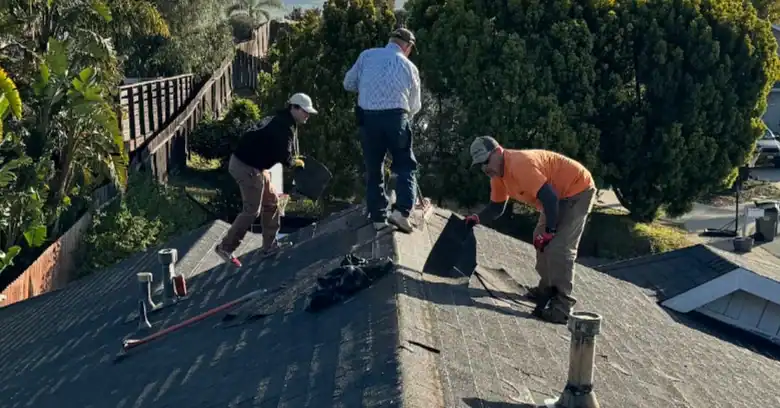
Taking the old roof off is the noisiest and messiest part of the job, and debris goes into a bin or trailer rather than onto the lawn. Soft or split sheathing is cut out and new panels are fastened down, since good materials laid over a weak deck do not last.
Protection Under the Covering
Beneath every roof is a membrane that catches whatever the surface lets through, and metal edging is set at the eaves and rakes before the covering. With the barrier in place the roof can shed rain even before the covering is finished, and rows are laid from the eave upward, each lapping the last.
Flashing and the Fiddly Parts
Wherever the roof surface stops, a metal detail has to take over, and reusing old flashing under a new roof often comes back to bite. Vent boots and pipe collars are rubber or lead pieces that wear out before the roof does, and putting in new boots costs little when the roof is already open.
Intake and Exhaust
Heat collects in the space beneath the roof deck unless it has somewhere to go, and a proper system draws air in low and sends it out high. A ventilation plan is worth a conversation before the job starts, and it is easy to overlook.
Leaving the Property Clean
A finished roof still leaves a yard full of scraps, nails and packaging, and that is part of the work, not an extra. Looking at the ridge, the valleys and the flashing with the roofer present is time well spent, and it only takes a few minutes.
The Paperwork Side of a Roof
Replacing a roof usually involves the local building department in some way, and the process is easier when someone handles it for you. Areas with wildfire exposure often have extra requirements for roofing materials and vents, and the details are worth a closer look. Written proposals should describe the materials, the scope and the cleanup in plain words, so keep a copy where you can find it.
Shielding Windows, Plants and Patios
A roofing job puts a lot of weight, noise and debris around a house, so tarps and plywood go down where debris will land. The area under the eaves is the one to avoid, and a short talk the evening before covers the details. Light fixtures and wall hangings can shift when a roof is being removed above them, and covering belongings is a sensible precaution.
Noise, Neighbors and Daily Life
A new roof usually takes a few days for an average house, though weather and size change that, and plan on some slack for the weather. Informing nearby households is a courtesy that pays off, and most people are tolerant when they know what to expect. The loudest stretch is the tear-off, and it passes quickly, so consider a day out of the house if you can.
What to Ask Every Roofer
Ask how the crew protects the house when rain is in the forecast, and listen to how the answer is given. Knowing exactly what is going on the house removes a common source of disputes, so ask before you sign anything. Surprises are normal, and a process for them is a sign of a well-run job, and settle it before the first day.
Looking After a New Roof
Checking the roof twice a year takes only a few minutes, and little problems stay little. Sweeping leaves off the roof and out of valleys prevents trouble, and a small broom is often enough. Call a roofer after a major wind event or if you see a stain on a ceiling, and it is far easier to repair than to rebuild.
Spring, Summer or Fall
Planning ahead usually gives better choices than reacting to an emergency, so a few weeks of lead time is common. Spring can bring the first showers, so flexibility helps, and a good roofer will explain the trade-offs.
Attic Findings That Change the Plan
When the old roof comes off, the crew sees the underside of the deck, and stains, rust on nail tips and darkened wood tell the story of past leaks, and attic problems are cheaper to deal with during a re-roof.
Getting Started in Santa Barbara California
Anyone researching Residential Roof Contractors Near Me in Santa Barbara California is one call away from a straight answer, so use 805-723-2381 to talk through the roof and the next step. Every roof is different, so every conversation starts from the house itself, and we are glad to talk through the options. The sooner the roof is looked at, the more choices you tend to have, so pick up the phone when you are ready.
Verified

Verified
Verified
Verified
Verified






















