
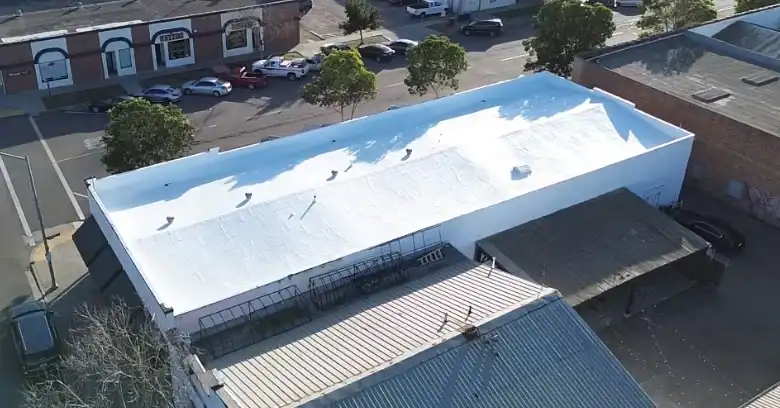
Researching Flat Roof Repair for a Building in Central Coast California?
Creative Roofing handles the seams, drains and edges where a flat roof succeeds or fails, throughout Central Coast California and the neighboring communities.
Call 805-723-2381 to talk through repair, coating or replacement.
How a Flat Roof Differs From a Pitched One
A flat roof is never truly flat, but its slope is so slight that water drains slowly and lingers, and drainage is the central question. A pinhole in a membrane or a gap in a seam lets in water that sits and keeps seeping, and look at examples of their finished work.
Types of Flat Roofing
TPO and PVC are single-ply sheets that are welded at the seams with hot air, creating a continuous waterproof surface, and repairs are made by welding on a patch. Rubber membranes are black or white, and the seams are joined with tapes or adhesives, and punctures can be patched with the same materials. The multiple plies mean that a flaw in one layer is backed up by the next, so the structure has to carry it.
The Weak Points of a Level Roof
The open field of a membrane is usually the toughest part of the whole system, and the field is checked last. Where a flat roof meets a wall, the membrane must turn up and be sealed and capped with flashing, and it pays to think it through.
When Water Will Not Leave
A roof that holds puddles is telling you about a low spot or a blocked drain, and a little care goes a long way. Adding drains or enlarging scuppers helps when the old ones were undersized, and a roofer can map the low areas.
Cool Roof Coatings and Light Membranes
Dark surfaces can reach temperatures much higher than the surrounding air, and it is easy to overlook. Liquid coatings are rolled or sprayed onto a sound roof to form a continuous reflective skin, and the benefit depends on the existing roof.
Foot Traffic, Equipment and Penetrations
These openings are the most common leak sources, so they get the most attention in an inspection, and it pays to think it through. Tools, ladders and dropped objects can cut a sheet, so care is required, and avoid storing items on the roof.
Matching the Work to the Roof
Repairing a small area is practical when the surrounding material is still healthy, and photographs help. These options depend on the condition of the insulation under the old surface, and an honest answer starts with a survey. When the roof is saturated, cracked and failing in many places, replacement is the only lasting answer, and compare more than one proposal.
Patios, Garages and Modern Homes
Residential low-slope roofs turn up over additions, covered patios, carports and contemporary houses designed with clean horizontal lines, so ask whether the company handles low-slope work regularly. A low roof meeting a taller wall is among the most leak-prone details on a house, and it deserves close attention, and fixing it properly takes some patience. A deck surface over a roof has to be lifted to repair the layer beneath, which makes prevention far cheaper than correction, and the details should be planned with the whole project.
Keeping Rooms Cool Below a Flat Surface
Insulation values and reflective finishes work together to keep the space below comfortable, and it is easy to overlook. Cutting a small test square is another way to check, and it is sealed again as part of the same visit, and be skeptical of a bid that skips it.
A Simple Maintenance Calendar
Drains, scuppers and gutters should be cleared first, since blocked outlets cause more damage than any other single fault, so make it a fixed date on the calendar. A stain on a ceiling after a storm is a clear signal to have the roof inspected before the next one arrives, and it pays to think it through.
Edges Take the Brunt
Gusts lift a flat roof from its edges and corners, where the pressure is highest, and a membrane that is not firmly attached there can peel back like the lid of a can, and a little care goes a long way. Raking the gravel back into an even layer is a routine job that keeps the protection continuous, and replace what has blown away. Surprises about extra details are the most common cause of disagreement over flat roof bids, and write everything down.
Openings That Need Their Own Waterproofing
Each opening is a separate detail, and each one should be listed in the written proposal, so ask how every opening will be handled. Gathering the pipes and conduits into fewer penetrations reduces the number of places where leaks can begin, and it pays to think it through. Drains and scuppers are also penetrations, and the flashing around them has to be watertight while still letting the water through quickly, so check them often in the rainy months.
Reading Competing Bids
A bid that only says new flat roof does not tell you what you are buying, and the details are worth a closer look. The answers tell you more than a brochure or a website ever could, and notice who answers plainly.
What to Expect on the Days of the Work
Workers on a low-slope roof often arrive early, because the surface heats up quickly and some products behave better in the cool of the morning, so ask how the schedule will work.
Common Worries Before a Flat Roof Project
Plenty of owners assume a membrane has to be replaced at the first sign of wear, when a repair or a coating would have done the job, and an honest opinion is the goal.
Tell Us What You Are Dealing With
People researching Flat Roof Repair in Central Coast California are welcome to call with questions, and 805-723-2381 reaches someone who can help. Whether the roof is leaking now or you are planning ahead, an early conversation keeps your options open, so reach out whenever you are ready.






















