
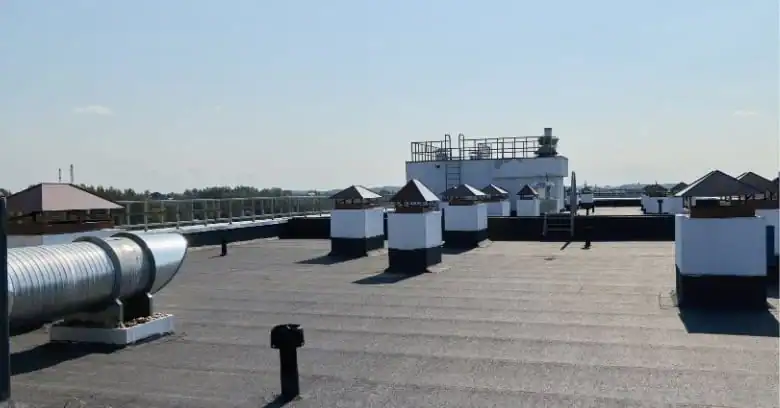
Need EPDM Roof Installation Around San Luis Obispo California?
Creative Roofing deals with flat and low-slope roofs on houses, additions, garages and small buildings, for properties in San Luis Obispo California and the towns around it.
Reach us at 805-723-2381 and tell us about the flat roof you have.
Roofs That Do Not Shed Water by Themselves
The gentle angle of a flat roof gives water time to find every weakness, and the materials and details are chosen for it. Careful work at the seams, edges and drains is what keeps one dry, and the cost of a mistake is paid in repairs.
Types of Flat Roofing
Thermoplastic membranes are light-colored, reflective and joined by heat into one watertight skin, and installation requires trained hands. A rubber roof is flexible and handles movement well, though seams and flashings need care, and the system suits many residential flat roofs. Layered asphalt systems have been used for generations and are valued for redundancy, and repairs can be made in place.
The Weak Points of a Level Roof
Seams, corners, edges and penetrations are where problems begin on a low-slope surface, and the field is checked last. Termination bars and sealant hold the top edge of the membrane against the wall, and a small bead of sealant in time prevents a big repair.
Ponding, Drains and Rain Bursts
Rain here often comes in sudden bursts that test every flat roof drain, and a clogged outlet can overload a roof. A new roof is the best time to correct drainage problems for good, so ask for a plan to improve drainage.
Strong Sun on a Flat Surface
Heat makes a membrane expand during the day and shrink at night, and the movement stresses seams and fasteners. A coating adds a protective layer and can seal small cracks and seams, and the preparation is as important as the product.
Foot Traffic, Equipment and Penetrations
These openings are the most common leak sources, so they get the most attention in an inspection, so these spots deserve regular checks. Regular foot traffic wears a path in the surface unless it is protected, and a quick look after any service visit catches new damage.
Choosing How Far to Go
A flat roof with a few leaks and a sound membrane can often be repaired for a fraction of the cost of replacing it, and photographs help. Adding a new membrane over an existing one is possible in some cases and saves removal costs, and the survey is worth the small cost. Replacing wet insulation restores the performance of the roof and the comfort of the rooms below, and ask about drainage improvements in particular.
Residential Low-Slope Roofing
Owners of older homes often discover that an addition from a previous decade was finished with a membrane that has long since worn out, and the wrong material on a flat roof will leak. A low roof meeting a taller wall is among the most leak-prone details on a house, and it deserves close attention, and a thorough repair covers the whole junction. Before adding weight or furniture to a flat roof, it is wise to confirm that the structure and the membrane can carry it, so involve the roofer early.
What Sits Between the Roof and the Ceiling
Rigid insulation boards above or below the deck slow the passage of heat, and they matter more on a level roof than on any other type, and it is easy to overlook. Cutting a small test square is another way to check, and it is sealed again as part of the same visit, and the map is a useful record.
Keeping a Flat Roof in Shape Through the Year
A check in early autumn catches clogged drains, lifted seams and cracked sealant before the first storm tests them, and a small repair now is nearly always cheaper. A stain on a ceiling after a storm is a clear signal to have the roof inspected before the next one arrives, and it pays to think it through.
Perimeter Details and Uplift
Gusts lift a flat roof from its edges and corners, where the pressure is highest, and a membrane that is not firmly attached there can peel back like the lid of a can, and repairs should not wait for the next storm. Gravel on a flat roof is not decoration, because it protects the membrane from sun and holds it in place against uplift, so inspect the outlets after any disturbance. Walkways, curbs and equipment supports need to be flashed and fastened as part of the membrane, and the details on a crowded roof take real time to do properly, and point out anything unusual.
Everything That Breaks the Surface
Old skylights on flat roofs are a frequent source of leaks, because the seals harden in the sun and the frames move over time, and that is worth keeping in mind. The seal around a pipe on a low-slope roof has to be formed to match the membrane, because a generic rubber boot will not bond to every type, and a tidy roof is easier to maintain. Overflow scuppers set slightly higher than the main drains act as a safety valve when the primary outlet is blocked, and clear them after storms.
Questions for a Flat Roof Contractor
A good proposal names the membrane, its thickness, the attachment method and the insulation to be used, so ask for the details in writing. Find out how drainage will be addressed and whether tapered insulation is included, and trust the overall impression.
Access, Fumes and Noise
Removing items from the roof, such as furniture and planters, saves time and prevents damage on the day the work begins, so ask how the schedule will work.
Questions Owners Often Ask About Level Roofs
A roof with no visible slope is not necessarily failing, since most are designed with a gentle fall toward the drains, and the answers are usually more reassuring than expected.
Ready to Look at Options
People researching EPDM Roof Installation in San Luis Obispo California are welcome to call with questions, with 805-723-2381 ready whenever you want to talk. Planning ahead usually leads to better choices than reacting to an emergency, so reach out whenever you are ready.
Verified

Verified
Verified
Verified
Verified






















