
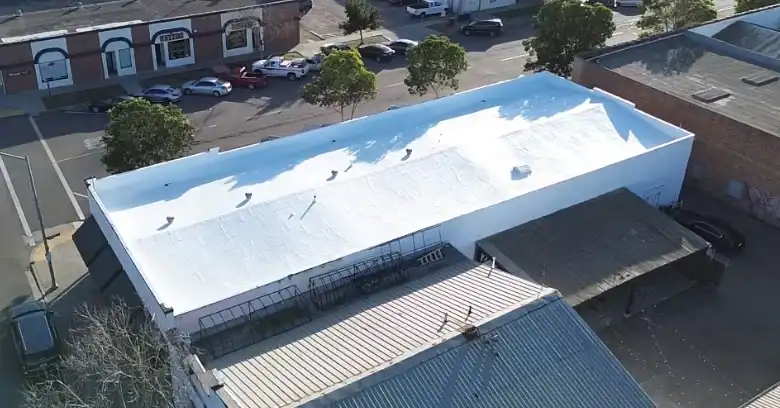
Need Flat Roof Companies Serving Sacramento California?
Creative Roofing handles the seams, drains and edges where a flat roof succeeds or fails, for properties in Sacramento California and the towns around it.
Dial 805-723-2381 and we will explain the options for a level roof.
Roofs That Do Not Shed Water by Themselves
Low-slope roofs rely on a continuous waterproof skin because gravity does little to clear the surface, so shingles are never the answer. Careful work at the seams, edges and drains is what keeps one dry, and ask what systems they install most.
The Systems You Will Hear About
White single-ply membranes reflect sunlight and help keep the building cooler, so a damaged area can be fixed cleanly. EPDM is a synthetic rubber sheet that is glued or mechanically fastened and has a long record on flat roofs, and the seam tape is a point to watch over time. Built-up roofing, often called BUR, layers hot or cold asphalt with reinforcing fabric and finishes with gravel or a cap sheet, and repairs can be made in place.
Details That Fail First
Seams, corners, edges and penetrations are where problems begin on a low-slope surface, and a roofer should walk every foot of the edge. Where a flat roof meets a wall, the membrane must turn up and be sealed and capped with flashing, and redoing sealant is routine upkeep.
Keeping a Level Roof Drained
Puddles that remain a day or two after rain signal that water is not leaving the roof as it should, so check drains before the rains begin. A new roof is the best time to correct drainage problems for good, and it extends the life of the whole system.
Sun, Heat and Reflective Surfaces
Ultraviolet light and heat are the main forces that age the surface of a low-slope roof in this region, and sunlight is the main cause of aging. Reflective surfaces keep rooms below cooler and may reduce the load on air conditioning, and a coating cannot rescue a roof that is wet inside.
Protecting the Surface From Wear
Skylights and hatches add edges that need careful flashing, so these spots deserve regular checks. Walkway pads cost little and save the membrane from scuffing and punctures, and avoid storing items on the roof.
Repair, Recoat or Replace
A flat roof with a few leaks and a sound membrane can often be repaired for a fraction of the cost of replacing it, and the key is an accurate diagnosis. Testing for moisture shows what the roof can accept, so be cautious of any bid that skips the testing. Starting fresh gives the best foundation for another long stretch of service, so begin conversations before the leaks become urgent.
Residential Low-Slope Roofing
Residential low-slope roofs turn up over additions, covered patios, carports and contemporary houses designed with clean horizontal lines, and a shingle crew may not be the right choice. A bead of caulk across that joint might hold for a season, but a proper counterflashing is the lasting answer, and describe where the stain appears. A deck surface over a roof has to be lifted to repair the layer beneath, which makes prevention far cheaper than correction, and ask about drains and overflows.
Keeping Rooms Cool Below a Flat Surface
Rigid insulation boards above or below the deck slow the passage of heat, and they matter more on a level roof than on any other type, so ask what insulation is part of the proposal. Replacing only the saturated sections can restore performance while leaving the dry parts in place, and that is worth keeping in mind.
Before the Rains and After the Storms
The best time to look at a flat roof is at the end of the dry season, when leaves and debris have piled up and the rains are about to test every drain, and the work is quick. Standing water that remains for days after rain is worth reporting, even if no leak has appeared yet, and acting quickly limits the damage.
Holding a Membrane Down in a Gust
Gusts lift a flat roof from its edges and corners, where the pressure is highest, and a membrane that is not firmly attached there can peel back like the lid of a can, and repairs should not wait for the next storm. Raking the gravel back into an even layer is a routine job that keeps the protection continuous, and the details are worth a closer look. Crowded rooftops with many pipes and units are slow to roof, because every obstacle needs its own flashing and sealing, and point out anything unusual.
Openings That Need Their Own Waterproofing
Replacing a worn skylight and its curb flashing together with the roof is far cheaper than doing the two jobs separately, and that is worth keeping in mind. Flexible parts crack in strong sun over a few seasons, which is why penetrations leak long before the membrane does, so ask about consolidating them. Drains and scuppers are also penetrations, and the flashing around them has to be watertight while still letting the water through quickly, and a little care goes a long way.
Getting Specific About the System
A good proposal names the membrane, its thickness, the attachment method and the insulation to be used, so ask for the details in writing. A roofer with plenty of flat roof experience can explain problems before they occur, and notes help you compare.
Keeping Disruption Small
Most flat roof jobs on a house or small building take only a few days, though adhesives and torch work call for dry weather and some advance planning, and tell the crew about pets and schedules.
What People Wonder When the Roof Is Flat
A flat roof is not doomed to leak, and one that is well built and looked after can serve a property for a very long time, and bring photographs if you have them.
Talk to Us About Your Flat Roof
A conversation about Flat Roof Companies in Sacramento California usually starts with the type and age of the roof, so use 805-723-2381 to set up the next step. Planning ahead usually leads to better choices than reacting to an emergency, and we are glad to help you sort it out.
Verified

Verified
Verified
Verified
Verified






















