
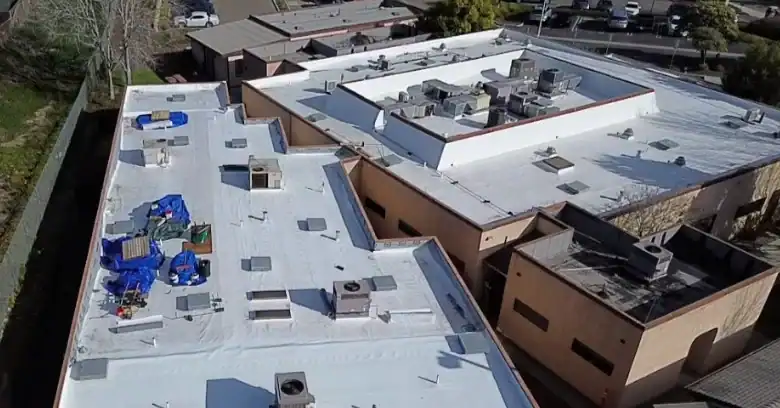
Weighing TPO Membrane Roofs Serving Central Coast California?
Creative Roofing knows how a roof without a pitch is built, why it leaks and how to make it last, across Central Coast California and nearby.
Phone 805-723-2381 and describe what you are seeing up there.
Roofs That Do Not Shed Water by Themselves
Where a pitched roof sheds rain in seconds, a level roof holds it for hours or days, and that is worth keeping in mind. Careful work at the seams, edges and drains is what keeps one dry, and the cost of a mistake is paid in repairs.
Membranes, Built-Up Layers and Coatings
Heat-welded sheets such as TPO are among the most popular choices for new flat roofs, so a damaged area can be fixed cleanly. Black EPDM absorbs heat, while a white version reflects more of the sun, and the details are worth a closer look. Gravel surfacing on a built-up roof protects the layers from sun and foot traffic, and the gravel hides the condition of the membrane.
Seams, Corners and Terminations
Most flat roof leaks start at a detail rather than in the middle of the roof, and that is worth keeping in mind. Cracked sealant at the top of a wall flashing is one of the most common sources of leaks, and it pays to think it through.
Standing Water Is a Warning
Ponding is the condition of standing water on a roof, and it accelerates wear on any membrane, and the first storm of the season shows the problems. Angled boards under a new membrane direct water toward the drains and eliminate low spots, and a roofer can map the low areas.
Cool Roof Coatings and Light Membranes
Dark surfaces can reach temperatures much higher than the surrounding air, and it is easy to overlook. Liquid coatings are rolled or sprayed onto a sound roof to form a continuous reflective skin, and a coating cannot rescue a roof that is wet inside.
Anything That Pokes Through or Sits on Top
These openings are the most common leak sources, so they get the most attention in an inspection, and the sealant at each one ages in the sun. Walkway pads cost little and save the membrane from scuffing and punctures, so ask the roofer to mark and protect the routes.
What a Roof Can Still Do
Targeted repairs buy time and protect the interior while a bigger plan is made, so ask to see where the water is getting in. Adding a new membrane over an existing one is possible in some cases and saves removal costs, and an honest answer starts with a survey. Replacing wet insulation restores the performance of the roof and the comfort of the rooms below, so begin conversations before the leaks become urgent.
Residential Low-Slope Roofing
Residential low-slope roofs turn up over additions, covered patios, carports and contemporary houses designed with clean horizontal lines, so ask whether the company handles low-slope work regularly. A low roof meeting a taller wall is among the most leak-prone details on a house, and it deserves close attention, and describe where the stain appears. A deck surface over a roof has to be lifted to repair the layer beneath, which makes prevention far cheaper than correction, and the details are worth a closer look.
Keeping Rooms Cool Below a Flat Surface
Rooms beneath a flat roof often feel warmest in late afternoon, when the surface has soaked up a full day of sun, and it is easy to overlook. Cutting a small test square is another way to check, and it is sealed again as part of the same visit, and that is often cheaper than a full tear-off.
Keeping a Flat Roof in Shape Through the Year
A check in early autumn catches clogged drains, lifted seams and cracked sealant before the first storm tests them, and that beats waiting. After a heavy storm or a spell of high wind, a quick look from a ladder can show whether anything has shifted, lifted or collected on the surface, and it pays to think it through.
Wind, Edges and Fastening on a Level Roof
After a windy spell it is worth checking the perimeter from a ladder for loose trim, lifted seams and curling edges, and a small problem there grows quickly. Raking the gravel back into an even layer is a routine job that keeps the protection continuous, and the gravel does a great deal of quiet work. Walkways, curbs and equipment supports need to be flashed and fastened as part of the membrane, and the details on a crowded roof take real time to do properly, and write everything down.
Everything That Breaks the Surface
Skylights and roof hatches sit on raised curbs that are flashed into the membrane, and the quality of that flashing decides whether they leak, and expect specific answers. A roofer who plans the layout of penetrations before the work starts usually delivers a drier roof, and every opening is one more detail to watch. Keeping every outlet clear and in good repair is the most important single habit of flat roof care, and a quick look takes only a minute.
What the Paperwork Should Say
The written scope should list the flashing details, the edge metal and the drainage work, and read them slowly. The answers tell you more than a brochure or a website ever could, and it is easy to overlook.
Scheduling and Living With a Flat Roof Project
Removing items from the roof, such as furniture and planters, saves time and prevents damage on the day the work begins, and the disruption is brief compared with a leak.
Questions Owners Often Ask About Level Roofs
Questions about a level roof are best answered by someone who has looked at it in person, and the answers are usually more reassuring than expected.
Ready to Look at Options
A conversation about TPO Membrane Roofs in Central Coast California usually starts with the type and age of the roof, with 805-723-2381 ready whenever you want to talk. Whether the roof is leaking now or you are planning ahead, an early conversation keeps your options open, and we are glad to help you sort it out.