
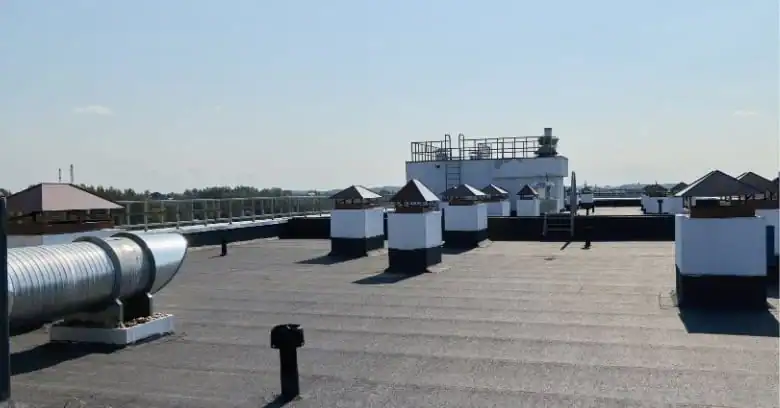
Looking Into EPDM Roof Installation Near Nipomo California?
Creative Roofing deals with flat and low-slope roofs on houses, additions, garages and small buildings, across Nipomo California and nearby.
Reach us at 805-723-2381 and tell us about the flat roof you have.
Roofs That Do Not Shed Water by Themselves
The gentle angle of a flat roof gives water time to find every weakness, so shingles are never the answer. Because water stays on the surface, small flaws that a pitched roof would forgive become leaks on a flat one, and ask what systems they install most.
Types of Flat Roofing
Heat-welded sheets such as TPO are among the most popular choices for new flat roofs, and a little care goes a long way. The big rolls of rubber cover large areas with few seams, and punctures can be patched with the same materials. Built-up roofing, often called BUR, layers hot or cold asphalt with reinforcing fabric and finishes with gravel or a cap sheet, so the structure has to carry it.
The Weak Points of a Level Roof
Most flat roof leaks start at a detail rather than in the middle of the roof, and that is worth keeping in mind. Parapet caps and copings protect the top of the wall and must be sound, and redoing sealant is routine upkeep.
Ponding, Drains and Rain Bursts
A roof that holds puddles is telling you about a low spot or a blocked drain, and clear leaves and debris from scuppers. Tapered insulation or added crickets can create the slope that a level roof lacks, and the improvement is permanent.
How Heat Wears a Low-Slope Roof
A flat roof faces the sky all day, and the sun heats it far more than a steep roof ever experiences, so the surface slowly dries and cracks. Liquid coatings are rolled or sprayed onto a sound roof to form a continuous reflective skin, and the preparation is as important as the product.
Anything That Pokes Through or Sits on Top
Every pipe, vent and curb through a flat roof is a place where the membrane has to be cut and sealed, and plugging with caulk is only a stopgap. Walkway pads cost little and save the membrane from scuffing and punctures, and a little care goes a long way.
Choosing How Far to Go
Targeted repairs buy time and protect the interior while a bigger plan is made, and temporary fixes should be called what they are. When the surface is simply worn, a coating or an overlay can refresh it without a full tear-off, and wet insulation rules out a quick fix. When the roof is saturated, cracked and failing in many places, replacement is the only lasting answer, and ask about drainage improvements in particular.
Flat Roofs on Houses, Porches and Additions
Many homes combine a pitched main roof with flat sections at the back or the sides, and the two meet in a joint that needs careful flashing, and the repair needs a roofer who works with membranes. A low roof meeting a taller wall is among the most leak-prone details on a house, and it deserves close attention, and describe where the stain appears. A roof used as living space has to meet higher standards than one that nobody walks on, and the details should be planned with the whole project.
What Sits Between the Roof and the Ceiling
A flat roof has little or no attic, so the layers of the roof itself have to do the work that attic insulation and ventilation do on a pitched house, and the savings show up in the cooling bill. Cutting a small test square is another way to check, and it is sealed again as part of the same visit, and that is worth keeping in mind.
Keeping a Flat Roof in Shape Through the Year
Drains, scuppers and gutters should be cleared first, since blocked outlets cause more damage than any other single fault, so make it a fixed date on the calendar. Noting the date and the weather when a leak appears helps the roofer find the cause, so do not wait to see whether it dries out.
Wind, Edges and Fastening on a Level Roof
Gusts lift a flat roof from its edges and corners, where the pressure is highest, and a membrane that is not firmly attached there can peel back like the lid of a can, and repairs should not wait for the next storm. Gravel on a flat roof is not decoration, because it protects the membrane from sun and holds it in place against uplift, and replace what has blown away. Walkways, curbs and equipment supports need to be flashed and fastened as part of the membrane, and the details on a crowded roof take real time to do properly, and point out anything unusual.
Roof Penetrations, Skylights and Hatches
Each opening is a separate detail, and each one should be listed in the written proposal, so ask how every opening will be handled. Plumbing vents, conduits and exhaust ducts pass through the membrane and need boots, collars or pitch pockets that suit the material, and mark each one on a sketch. Drains and scuppers are also penetrations, and the flashing around them has to be watertight while still letting the water through quickly, and clear them after storms.
What the Paperwork Should Say
A good proposal names the membrane, its thickness, the attachment method and the insulation to be used, so ask for the details in writing. A roofer with plenty of flat roof experience can explain problems before they occur, and it is easy to overlook.
Scheduling and Living With a Flat Roof Project
The crew needs clear access to the roof, a place to set up the equipment and a path for removing old material without crossing living areas, and a short conversation beforehand covers the details.
Common Worries Before a Flat Roof Project
A flat roof is not doomed to leak, and one that is well built and looked after can serve a property for a very long time, and it pays to think it through.
Talk to Us About Your Flat Roof
People researching EPDM Roof Installation in Nipomo California are welcome to call with questions, and 805-723-2381 reaches someone who can help. Calling before a problem becomes urgent makes it easier to compare options and schedules, and we are glad to help you sort it out.
Verified

Verified
Verified
Verified
Verified






















