
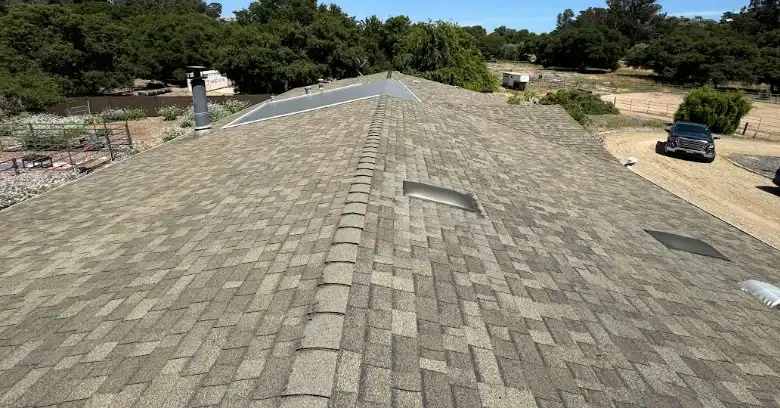
Comparing Architectural Shingle Roofs Serving Lompoc California?
Creative Roofing replaces worn shingle roofs and mends the ones that still have life left, serving homeowners in Lompoc California and beyond.
Ring 805-723-2381 and ask about a shingle roof for your house.
Inside a Shingle
The common residential shingle starts as a reinforcing mat, which is coated with asphalt and then surfaced with mineral granules, and that is worth keeping in mind. The granules do more than add color, because they shield the asphalt from ultraviolet light, so a handful of grit in a downspout tells a story.
Three-Tab, Architectural and Designer Lines
A three-tab shingle has a flat, uniform look and the thinnest profile of any common type, and the saving is real but so is the shorter life. The extra layer adds weight and strength, and the cut pattern breaks up the lines, and the difference shows in the finished roof. Designer shingles are heavier and carefully styled to resemble natural slate or cedar, and it is easy to overlook.
How California Weather Wears a Shingle
Long dry summers bake a shingle roof for months with very little relief from rain, and the effects are visible on the south and west slopes first. Curling, cracking and blistering are the typical signs of a shingle that has had too much heat, and it pays to think it through.
Cool Shingles and Heat Gain
Lighter shingles reflect more of the summer sun and keep the roof surface cooler, and a sample held up outdoors shows the shade truthfully. Some manufacturers offer cool-roof shingles with special granules that reflect more infrared light, and local rules sometimes encourage them.
The Craft Behind a Good Install
Nails driven too high or too low weaken the hold of the whole course, and it is easy to overlook. Each course overlaps the one below so that water always sheds over a solid layer, and crooked rows are a warning. Special cap products are made to bend without cracking, and a sloppy ridge is a common weak spot.
Gusts and Loose Tabs
Seal strips need warmth to activate, which is why roofs installed in cool weather may take longer to bond, so the two work together. Pieces that blow off expose the underlayment, which is not meant to sit in the sun, and a pattern of lifting suggests the roof is aging.
Air Movement Under the Deck
A balanced system of intake and exhaust keeps the temperature under the roof closer to the air outside, and the plan should be part of the proposal. Blocking the soffit vents with insulation is a common mistake that undermines the whole system, and fixing ventilation is far easier during a re-roof.
Flashing, Valleys and Underlayment
Self-adhering membranes at the eaves and valleys give extra protection where leaks start, so ask which product is going on. Valley flashing has to be formed correctly and sealed well, or water finds a way in, and a little care goes a long way.
When a Shingle Roof Is Telling You Something
Granules in the gutters, curling edges and bald spots are the most reliable signs of an aging shingle roof, and early action keeps choices open. Isolated problems from a branch or a loose tab respond well to a simple repair, so ask for photographs of the problem areas. When the whole roof is brittle, curling and shedding granules, repairs become a losing game, and a full replacement gives a fresh start.
Tear-Off, Layers and the Deck Beneath
A complete tear-off lets the roofer inspect each sheet of decking and replace any that has been stained, softened or split, and it pays to think it through. Laying new shingles over old ones is sometimes allowed, but it hides the deck and adds weight to the structure, and the decision deserves a little thought. Rotted boards and delaminated plywood are usually found around leaks, valleys and plumbing vents, so ask how surprises will be handled.
Debris, Magnets and Final Sweeps
Protecting the house is part of the work, not an extra, and the plan should say how landscaping and windows will be shielded, so ask how the yard will be protected. Tires and bare feet find stray nails more often than anyone expects, so a thorough pickup at the end is essential, and the work is not finished until the cleanup is. Downspouts that carry water well away from the house protect both the new roof and the walls beneath it, and the new roof will thank you.
Timing a Shingle Replacement
A roof installed in warm weather bonds sooner than one finished in cool, damp conditions, and that early bond helps in wind, and the calendar is only part of the question. Shade, water and early starts are the usual ways of coping with the heat on a dark roof, and the schedule bends to the weather.
Working Around Things That Share the Roof
Each opening in a shingle roof needs flashing built in layers with the courses, and the work is easier when the roof is already open, and it is easy to overlook. Solar panels bolted to a shingle roof have to be removed and reinstalled when the roof is replaced, so the two projects should be planned together, and get the plan in writing.
Blending New Shingles Into an Older Roof
New shingles set into a sun-faded roof usually look a shade darker or brighter, and the contrast softens only after a season or two of weather, so ask the roofer what to expect.
Gutters, Drip Edge and the Roofline
Without proper edging, rain can wick behind the shingles and attack the sheathing and fascia board over the following seasons, and a little care goes a long way.
What to Look for in Writing
The written scope should list tear-off, deck repair, ventilation and cleanup, so ask for details in writing. Ask about the schedule and how the roof will be covered if rain is forecast, and the answers are worth writing down.
Ready to Compare Options
Homeowners weighing Architectural Shingle Roofs in Lompoc California can begin by describing the house and the look they want, so use 805-723-2381 to set up the next step. Calling before a problem becomes urgent makes it easier to compare materials and schedules, so reach out whenever you are ready.
Verified

Verified
Verified
Verified
Verified






















