
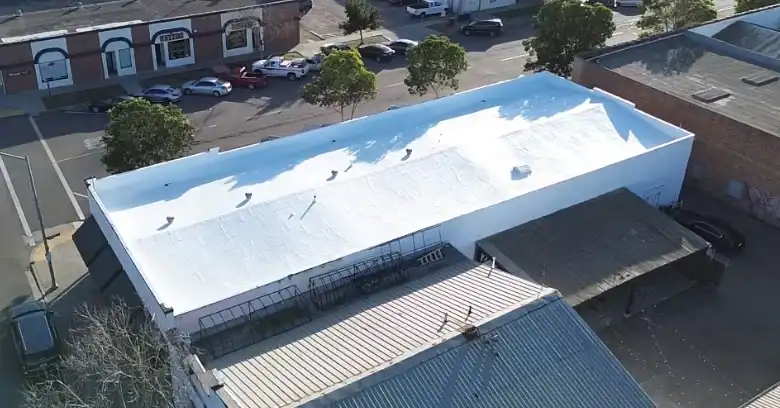
Thinking About Flat Roof Installation in Central Coast California?
Creative Roofing knows how a roof without a pitch is built, why it leaks and how to make it last, serving owners in Central Coast California and beyond.
Reach us at 805-723-2381 and describe what you are seeing up there.
A Roof With Almost No Slope
Low-slope roofs rely on a continuous waterproof skin because gravity does little to clear the surface, and that is worth keeping in mind. Because water stays on the surface, small flaws that a pitched roof would forgive become leaks on a flat one, and the cost of a mistake is paid in repairs.
The Systems You Will Hear About
Thermoplastic membranes are light-colored, reflective and joined by heat into one watertight skin, and the quality of the welds is the main concern. EPDM is a synthetic rubber sheet that is glued or mechanically fastened and has a long record on flat roofs, and the system suits many residential flat roofs. The multiple plies mean that a flaw in one layer is backed up by the next, and the system is heavy compared with single-ply.
Details That Fail First
The open field of a membrane is usually the toughest part of the whole system, and a roofer should walk every foot of the edge. Where a flat roof meets a wall, the membrane must turn up and be sealed and capped with flashing, so look at those joints every year.
When Water Will Not Leave
Puddles that remain a day or two after rain signal that water is not leaving the roof as it should, and clear leaves and debris from scuppers. Fixing the cause of ponding is better than repeatedly patching its effects, and a roofer can map the low areas.
How Heat Wears a Low-Slope Roof
Heat makes a membrane expand during the day and shrink at night, and the movement stresses seams and fasteners. Reflective surfaces keep rooms below cooler and may reduce the load on air conditioning, and that is worth keeping in mind.
Anything That Pokes Through or Sits on Top
A roof with many openings needs more maintenance than one with few, and replacing a worn collar is a quick job. Regular foot traffic wears a path in the surface unless it is protected, and avoid storing items on the roof.
What a Roof Can Still Do
A flat roof with a few leaks and a sound membrane can often be repaired for a fraction of the cost of replacing it, and the details are worth a closer look. These options depend on the condition of the insulation under the old surface, and an honest answer starts with a survey. Removing the old layers lets the deck be inspected and any damaged wood replaced, so begin conversations before the leaks become urgent.
Flat Roofs on Houses, Porches and Additions
Residential low-slope roofs turn up over additions, covered patios, carports and contemporary houses designed with clean horizontal lines, and the repair needs a roofer who works with membranes. Where a flat porch roof meets the wall of the main house, the membrane has to climb the wall and be capped so that water cannot run behind it, and a thorough repair covers the whole junction. Before adding weight or furniture to a flat roof, it is wise to confirm that the structure and the membrane can carry it, so involve the roofer early.
Heat Gain and Thermal Layers
A flat roof has little or no attic, so the layers of the roof itself have to do the work that attic insulation and ventilation do on a pitched house, and it is easy to overlook. Water that gets into the insulation layer spreads sideways, so the damp area can be much larger than the visible stain on the ceiling, and that is worth keeping in mind.
Seasonal Checks for a Level Roof
Drains, scuppers and gutters should be cleared first, since blocked outlets cause more damage than any other single fault, and call a roofer if anything looks suspicious. Standing water that remains for days after rain is worth reporting, even if no leak has appeared yet, so do not wait to see whether it dries out.
Edges Take the Brunt
Edge metal, copings and terminations have to be fastened to a set pattern and sealed at the joints, or wind will find the gap and work it open, and repairs should not wait for the next storm. Gravel on a flat roof is not decoration, because it protects the membrane from sun and holds it in place against uplift, and replace what has blown away. Surprises about extra details are the most common cause of disagreement over flat roof bids, and it is easy to overlook.
Openings That Need Their Own Waterproofing
Replacing a worn skylight and its curb flashing together with the roof is far cheaper than doing the two jobs separately, and no skylight should be roofed over without a plan. The seal around a pipe on a low-slope roof has to be formed to match the membrane, because a generic rubber boot will not bond to every type, so ask about consolidating them. Overflow scuppers set slightly higher than the main drains act as a safety valve when the primary outlet is blocked, and a blocked outlet loads a roof beyond its design.
Comparing Flat Roofing Proposals
A good proposal names the membrane, its thickness, the attachment method and the insulation to be used, and a careful contractor will explain every line. The answers tell you more than a brochure or a website ever could, and notes help you compare.
Keeping Disruption Small
Removing items from the roof, such as furniture and planters, saves time and prevents damage on the day the work begins, and the disruption is brief compared with a leak.
Common Worries Before a Flat Roof Project
Questions about a level roof are best answered by someone who has looked at it in person, so do not hesitate to ask.
Next Steps for Your Roof
A conversation about Flat Roof Installation in Central Coast California usually starts with the type and age of the roof, and 805-723-2381 reaches someone who can help. Even a quick call can clear up questions about membranes, coatings and timing, and a little care goes a long way.






















