
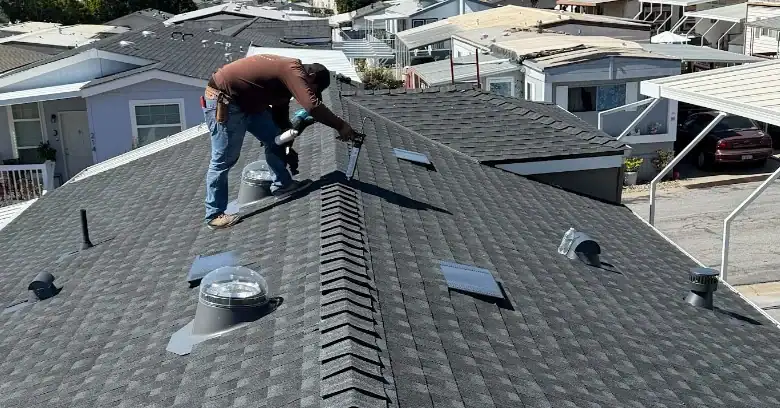
Ready for Architectural Shingle Roofers in Nipomo California?
Creative Roofing lays asphalt, architectural and designer shingles over carefully prepared decks, across Nipomo California and nearby.
Ring 805-723-2381 and ask about a shingle roof for your house.
The Anatomy of an Asphalt Shingle
An asphalt shingle is a fiberglass mat soaked in asphalt and covered with ceramic-coated granules, and the granules protect the asphalt from the sun. Granule loss is the clearest sign that a shingle is wearing out, and the process only gets faster over time.
Shingle Grades Explained
Traditional three-tab shingles are a single flat layer cut into three tabs, and they are the lightest and plainest option, and it remains a reasonable choice in some situations. Dimensional shingles imitate the look of shake or slate at a modest cost, and colors come in a wide range. Higher grades cost more, and the look is the main reason to pay for them, so the roof feels more substantial.
Why Sunny Slopes Age First
Heat, ultraviolet light and temperature swings wear the surface steadily, and the shaded side tells a different story. Cracks across the face open the way for water to reach the layers below, and each one is a place a leak can start.
Color, Reflectivity and Cooling
A pale shade reflects more sunlight than a dark one, which can reduce heat entering the attic, and the effect is easiest to see on a hot day. Reflective granules can bring a dark color closer to the performance of a light one, and the details are worth a closer look.
Fastening Patterns and Why They Matter
Shingles are fastened with nails placed in a specific spot, and a few inches either way changes how well they hold, so ask how many nails go into each shingle. The row at the eave is the most exposed to wind and water, which is why it gets special treatment, and that is worth keeping in mind. Hips and ridges are capped with special pieces that bend over the peak and seal the top of the roof, and the ventilation opening below the cap should stay clear.
Wind, Seasonal Gusts and Sealing
Shingles have a strip of adhesive that bonds each course to the one below once the sun warms it, so the two work together. A creased or missing shingle after a gust is a sign that the adhesive has failed, so a loose shingle should not wait for the next storm.
Keeping the Attic Breathing
Heat that cannot escape from the attic speeds the aging of the roof deck and the shingles, and the plan should be part of the proposal. The right combination depends on the shape of the roof and the size of the attic, and fixing ventilation is far easier during a re-roof.
Valleys, Walls and Pipes
Modern synthetic underlayments resist tearing and last better in strong sun, and the choice affects how the roof performs. Valleys are the crossing channels where two slopes meet, and they carry the most water on the roof, and a little care goes a long way.
When a Shingle Roof Is Telling You Something
Granules in the gutters, curling edges and bald spots are the most reliable signs of an aging shingle roof, and a roofer can sort the serious from the cosmetic. Repairing a small area costs far less than a full replacement when the surrounding roof is sound, and it is easy to overlook. When the whole roof is brittle, curling and shedding granules, repairs become a losing game, and the new roof will perform better than a patched old one.
The Deck Decides What Happens Next
Removing every old layer is the usual starting point, since it exposes the deck and shows whether anything underneath needs repair, so the plan should allow for repairs to the wood. Overlaying is a shortcut that a careful roofer will explain before agreeing to it, and the decision deserves a little thought. Rotted boards and delaminated plywood are usually found around leaks, valleys and plumbing vents, so ask how surprises will be handled.
Respect for the House and Garden
Tarps along the walls, plywood over delicate plantings and a bin positioned below the edge keep the mess contained, and move vehicles and furniture the night before. Final cleanup should leave the property as orderly as it was found, apart from the new roof, and the work is not finished until the cleanup is. Letting grit and leaves pile up in a gutter can lead to overflow along the fascia and the foundation, and a clear gutter is cheap protection.
Dry Months and Warm Days
Shingle work goes best in dry, mild weather, when the sealing strips bond quickly and the crew can leave the roof open without worry, and the calendar is only part of the question. Heat is a normal part of summer roofing, and a good crew plans the day around it rather than fighting it, and the schedule bends to the weather.
Skylights, Chimneys and Solar Panels
A re-roof is the right moment to replace worn skylight curbs, chimney flashing and cracked sealant, before they cause trouble, so list everything on the roof when you ask for proposals. Replacing a roof beneath an existing array is a coordination job involving the roofer and the solar company, so ask both contractors how they would proceed.
Why a Patch Rarely Matches Perfectly
A roofer can often borrow shingles from a hidden slope or the back of the house to repair a more visible area, which gives the best match, and function matters more than appearance here.
Carrying Water Away From the House
A drip edge along the eave and the rake guides water into the gutter and keeps it from running behind the fascia, where it would rot the wood, and old fascia boards are easy to replace while the roof is open.
Getting Specific About the Product
The written scope should list tear-off, deck repair, ventilation and cleanup, and a thorough contractor will be happy to explain. Check what happens if damaged sheathing is found once the old roof is off, so take notes during the conversation.
Talk to Us About a Shingle Roof
Homeowners weighing Architectural Shingle Roofers in Nipomo California can begin by describing the house and the look they want, and 805-723-2381 reaches someone who can help. There is no pressure in asking about a new roof, and the roof will tell the story once someone looks.
Verified

Verified
Verified
Verified
Verified






















