
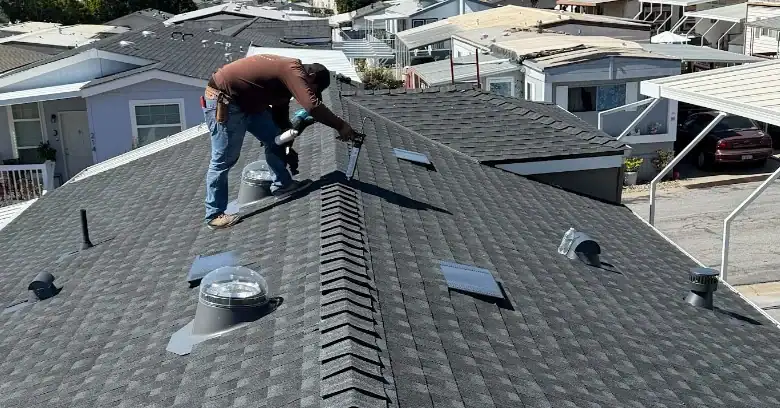
Shopping for Architectural Shingle Roofers for a Home in Sacramento California?
Creative Roofing works with layered shingles, starter strips, underlayment and ridge caps, from Sacramento California out to the surrounding area.
Reach us at 805-723-2381 and describe the roof you are weighing.
What a Shingle Roof Is Made Of
The common residential shingle starts as a reinforcing mat, which is coated with asphalt and then surfaced with mineral granules, so the whole shingle depends on all of them. A shingle that has lost its granules is losing its sunscreen, and the process only gets faster over time.
Shingle Grades Explained
Flat shingles of this style are economical but wear out sooner than thicker kinds, and a little care goes a long way. Laminated shingles are thicker, heavier and more dimensional than flat strip shingles, and the thicker body stands up better to sun. The top of the range offers the richest textures and the greatest thickness, and a sample on site shows the difference clearly.
Strong Sun on Asphalt
Months of direct sunshine take a toll that the eye picks up slowly, and the effects are visible on the south and west slopes first. Curling, cracking and blistering are the typical signs of a shingle that has had too much heat, and the pattern across the roof shows how far the wear has gone.
Cool Shingles and Heat Gain
The color of a roof affects both its appearance and its temperature, and nearby roofs offer a useful preview. A reflective product can ease the burden on air conditioning, and the details are worth a closer look.
Nails, Courses and Starter Strips
Fastening is the quiet detail that separates a durable roof from a poor one, and check that they are driven flush. Each course overlaps the one below so that water always sheds over a solid layer, and that is worth keeping in mind. The cap shingles on a ridge take extra abuse from sun and wind, and it pays to think it through.
Seal Strips and Warm Weather
The adhesive bond is what keeps tabs flat against the roof in a strong wind, and a roof installed in summer bonds quickly. Strong seasonal winds can lift tabs that have lost their seal and tear them off the roof, and a pattern of lifting suggests the roof is aging.
Heat Trapped Below Shortens the Roof
A hot attic cooks the shingles from underneath, and the damage adds to what the sun does on top, so check that the soffit openings are not blocked by insulation. More vents is not better, and mixing types can short-circuit the flow, so ask what will be done about ventilation.
Waterproofing Layers and Metal Pieces
Modern synthetic underlayments resist tearing and last better in strong sun, and the choice affects how the roof performs. Valley flashing has to be formed correctly and sealed well, or water finds a way in, so quality work here matters a great deal.
Signs of Wear and Choosing Repair or Replacement
A roof that sheds grit, lifts at the edges and shows dark patches is reaching the end of its life, so take the whole picture into account. Repairing a small area costs far less than a full replacement when the surrounding roof is sound, and it is easy to overlook. Replacement is the sensible answer once the field of shingles has lost its protective surface, and that is worth keeping in mind.
The Deck Decides What Happens Next
Most shingle replacements begin with a full tear-off, in which the old layers are stripped away and the plywood or boards beneath are laid bare, and anything hidden gets found at this point. Local rules often limit the number of layers a roof may carry, and many roofers prefer a clean start in any case, so ask for both options in writing. Damaged decking is the most common surprise on a roofing job, and a good proposal says how it will be handled, and expect a call with photographs.
Cleanup, Nails and Protecting the Property
Tarps along the walls, plywood over delicate plantings and a bin positioned below the edge keep the mess contained, and move vehicles and furniture the night before. Nails are the main hazard left behind after any roofing job, and a magnetic sweep of the yard and driveway is standard practice, and the work is not finished until the cleanup is. Letting grit and leaves pile up in a gutter can lead to overflow along the fascia and the foundation, and it costs little to keep them clear.
Choosing the Right Season for Shingles
Timing a project well means picking a stretch of dry days and leaving some room for delays, so booking ahead is wise. On a scorching day the surface of a roof becomes too hot to handle, and the asphalt softens enough to mark if walked on carelessly, and a rushed job in extreme heat is a poor bargain.
Coordinating With Other Trades
Roofers work around fixed obstacles all the time, but each one adds time and adds a place where water might enter, and replacing them together saves money. Anyone considering rooftop solar should have the age and condition of the shingles assessed first, and the order of the work matters a great deal.
Blending New Shingles Into an Older Roof
Older shingles lose color and granules in the sun, so a few fresh ones will stand out until the surrounding roof catches up, and a small color difference is not a defect.
Carrying Water Away From the House
Metal edging installed under the underlayment at the eave and over it at the rake is the correct order, and it makes a visible difference to the durability of the edge, and ask the roofer to flag any rot.
What to Look for in Writing
Specific wording is the best protection against surprises, and the line items let you compare two bids fairly. A roofer who explains the process clearly is usually one who follows it, and it is easy to overlook.
Start the Conversation
Homeowners weighing Architectural Shingle Roofers in Sacramento California can begin by describing the house and the look they want, so dial 805-723-2381 when it suits you. Whether the roof is leaking now or you are planning ahead, an early conversation keeps your options open, and the roof will tell the story once someone looks.
Verified

Verified
Verified
Verified
Verified






















