
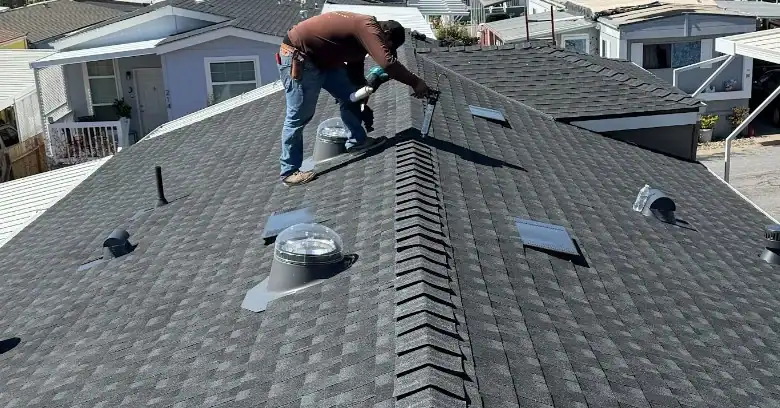
Thinking About Asphalt Shingle Roofers Around Santa Barbara California?
Creative Roofing installs and repairs the shingle coverings found on most houses in the area, throughout Santa Barbara California and the neighboring communities.
Phone 805-723-2381 and we will go over what a shingle roof involves.
What a Shingle Roof Is Made Of
The common residential shingle starts as a reinforcing mat, which is coated with asphalt and then surfaced with mineral granules, and the granules protect the asphalt from the sun. Granule loss is the clearest sign that a shingle is wearing out, and bare patches show up as dark spots.
Three-Tab, Architectural and Designer Lines
Flat shingles of this style are economical but wear out sooner than thicker kinds, so many homeowners compare it with thicker lines. Architectural shingles are made of two or more laminated layers that give the roof depth and shadow, and colors come in a wide range. Higher grades cost more, and the look is the main reason to pay for them, and it is easy to overlook.
Heat Is the Slow Enemy
The sun does more to age a shingle roof in this region than any other force, and the effects are visible on the south and west slopes first. A shingle that has begun to curl no longer lies flat against the roof, and it pays to think it through.
Cool Shingles and Heat Gain
A pale shade reflects more sunlight than a dark one, which can reduce heat entering the attic, and a sample held up outdoors shows the shade truthfully. A reflective product can ease the burden on air conditioning, and local rules sometimes encourage them.
Fastening Patterns and Why They Matter
The nailing line printed on the shingle marks where fasteners must go for the best grip, and check that they are driven flush. A starter strip along the eave and the rake gives the first course a sealed edge and extra grip, and the pattern is part of the manufacturer specification. Hips and ridges are capped with special pieces that bend over the peak and seal the top of the roof, and a sloppy ridge is a common weak spot.
Wind, Seasonal Gusts and Sealing
Seal strips need warmth to activate, which is why roofs installed in cool weather may take longer to bond, and the nails hold the rest. Wind rarely harms a well-sealed roof, but it finds every weak spot on an old one, so a loose shingle should not wait for the next storm.
Air Movement Under the Deck
A hot attic cooks the shingles from underneath, and the damage adds to what the sun does on top, and it is easy to overlook. Attic fans, gable vents and ridge vents each work differently and should not fight each other, and a roofer can assess the layout in a short visit.
Flashing, Valleys and Underlayment
Felt paper or synthetic sheets cover the deck and give a second line of defense, and it matters most when the roof is open to weather. Valley flashing has to be formed correctly and sealed well, or water finds a way in, and these details cause most leaks on shingle roofs.
Reading the Roof
Cracks, missing pieces and exposed nails are all signals worth acting on, and a roofer can sort the serious from the cosmetic. Spot repairs are a good choice when most of the roof still has plenty of life left, and it is easy to overlook. Matching old shingles is difficult, so large repairs often look patchy, and that is worth keeping in mind.
The Deck Decides What Happens Next
Most shingle replacements begin with a full tear-off, in which the old layers are stripped away and the plywood or boards beneath are laid bare, and anything hidden gets found at this point. Laying new shingles over old ones is sometimes allowed, but it hides the deck and adds weight to the structure, and a little care goes a long way. Sheathing that crumbles or feels spongy underfoot must be replaced before shingles can hold, so ask how surprises will be handled.
Debris, Magnets and Final Sweeps
Tarps along the walls, plywood over delicate plantings and a bin positioned below the edge keep the mess contained, and a little preparation prevents most complaints. Rolling magnets across the lawn, the driveway and the planting beds collects what a rake and the eye miss, and the work is not finished until the cleanup is. Downspouts that carry water well away from the house protect both the new roof and the walls beneath it, and it pays to think it through.
Planning Around Rain and Heat
Asphalt shingles seal themselves down with heat from the sun, so warm, dry days produce the best bond and the neatest finish, so booking ahead is wise. Very hot afternoons can scuff new shingles underfoot and make nails harder to drive cleanly, so many crews start at dawn in midsummer, so an early arrival is nothing to worry about.
Openings, Brackets and Penetrations
Skylights and chimneys are best flashed with new metal whenever the shingles are replaced, since reusing old pieces under a new roof invites a leak, so list everything on the roof when you ask for proposals. Mounting brackets pierce the roof, and the seals around them age on the same schedule as the shingles beneath, so ask both contractors how they would proceed.
Making a Repair Look Right
Some visual difference is normal after a repair, and it fades as the new pieces weather, and place the repair where it is least visible.
Where Shingles End and Gutters Begin
The roofline is where the roof and the rest of the house meet, and it deserves attention during any replacement, and a little care goes a long way.
What to Look for in Writing
Look for the product by name so that you can compare it with another bid, and the details are worth a closer look. Find out how the crew will protect the house and landscaping during the work, and compare the replies from each company.
Talk to Us About a Shingle Roof
People researching Asphalt Shingle Roofers in Santa Barbara California are welcome to call with questions, so dial 805-723-2381 when it suits you. Planning ahead usually leads to better choices than reacting to an emergency, and we are glad to help you sort it out.
Verified

Verified
Verified
Verified
Verified






















