
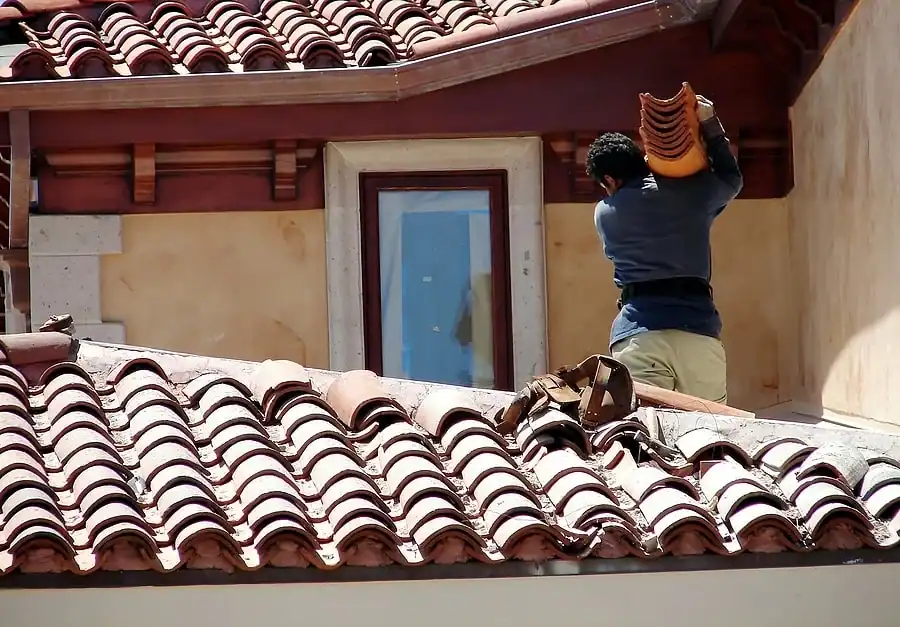
Considering Concrete Tile Roofers Around Central Coast California?
Creative Roofing keeps barrel, flat and interlocking roofs weathertight from the deck up, serving homeowners in Central Coast California and beyond.
Call 805-723-2381 to set up a visit to look at your roof.
How These Roofs Are Put Together
Clay and concrete units are individual pieces hung on a roof, overlapping like fish scales to shed water, so the layers below matter more than most people expect. Each type comes in profiles from rounded barrels to flat slabs and interlocking shapes, and it pays to think it through.
Load and Support
Heavy coverings put real stress on rafters, trusses and walls, which is why the structure is checked first, and a little care goes a long way. A house that was built for shingles may not be safe under a full load of concrete, so ask who will assess the framing.
Felt, Membranes and Battens
Beneath the visible surface lies a waterproof membrane that does the hard work, and a re-lay is the chance to replace it. The felt paper on older roofs becomes brittle and breaks when the pieces are lifted, and that is why age matters as much as appearance.
How Heat Behaves Under the Pieces
The pieces rarely wear out from sun alone, which is why a well-built roof can last so long, so the look holds up. Cosmetic wear is common and does not usually affect performance, so ask before assuming the roof is failing.
Cracks, Slips and Broken Pieces
A cracked unit lets water reach the underlayment, which is meant for backup rather than constant exposure, and the damage may not show from the ground. A short inspection after any work on the roof catches damage early, and the cost of a few replacements is small.
Hand-Shaped Metal and Mortar
Flashing along walls, chimneys and skylights has to be formed and shaped by hand around each piece, so look at how the work is finished. Ridge and hip pieces are bedded in mortar or fastened with mechanical systems, and the old mortar often fails before the roof does, and it deserves attention as the roof ages.
Holding Heavy Pieces in Place
Though heavy, individual pieces must be fastened properly or they can slide or lift in strong gusts, so ask how the pieces will be held down. Keeping the roof and gutters clear of leaves and needles is part of staying safe, and the details are worth a closer look.
Deciding What an Aging Roof Needs
A re-lay means lifting the units, replacing the underlayment and flashing, and setting the pieces back in place, so ask for an assessment of the underlayment. If the pieces are worn out, a re-lay would only reuse tired material, so it is a time to consider all the options.
Adhesives, Clips and Mortar
Each fastening method has strengths, and the choice depends on the slope, the wind exposure and the local rules, and it pays to think it through. Replacing these strips during a re-lay is inexpensive, and it improves both fire resistance and cleanliness, and a tidy edge looks better as well.
Washing, Sealing and Surface Care
Surface growth tends to be slower in dry summers, though shaded areas may still collect some, and the result can be striking. High pressure is the wrong tool for a roof made of individual pieces, because the water is driven uphill under the laps, and fix any breakage before the rains.
Felt, Synthetic and Self-Adhering Options
Heavy felt, synthetic sheets and self-adhering membranes are the common options, and they differ in heat resistance and tear strength, and that is worth keeping in mind. Battens that lift the units off the underlayment allow air to circulate and water to drain freely beneath the pieces, and it adds only modestly to the cost.
Rooftop Additions on a Roof of Many Pieces
The best time to add rooftop equipment is when the roof is being re-laid, because the openings can be built in properly, and ask who is responsible for the seals. A roofer can place a few walkway planks or marked steps to protect the routes that others will use, and replacing a unit is far cheaper than repairing the leak. When rain arrives in a sudden burst after months of dry weather, the valley is the first place where a defect shows, and a small repair now prevents a leak later.
How the Two Kinds Differ
Cast from cement and sand, concrete units take their color from pigment in the mix or from a coating applied to the surface, and the better choice depends on the house and the budget. Matching the profile to the style of the house is the first design decision, and it affects the cost and the installation method, and think about the neighbors as well.
How to Weigh Two Bids
A proposal that only says re-lay the roof does not tell you enough, and a clear proposal reflects a careful crew. Find out whether the crew has experience on heavy roofs and can show examples of finished work, and keep notes to compare later.
Stages of a Careful Re-Lay
Sorting the units as they come off lets the roofer count how many replacements will be needed and order matching pieces, and the result is a roof that looks as it did and performs like new.
Preparing for Dry Winds and Embers
Closure strips at the eaves and the ridge keep embers and animals out of the space beneath the units, and repair broken pieces before the winds arrive.
What to Save After a Restoration
A note of the underlayment type, the flashing metal and the fastening method helps any roofer who works on the roof later, and a clear record makes repairs simpler.
Next Steps for Your Roof
Homeowners weighing Concrete Tile Roofers in Central Coast California can begin by describing the house and the roof they have, with 805-723-2381 ready whenever you want to talk. Planning ahead usually leads to better choices than reacting to an emergency, and a little care goes a long way.






















