
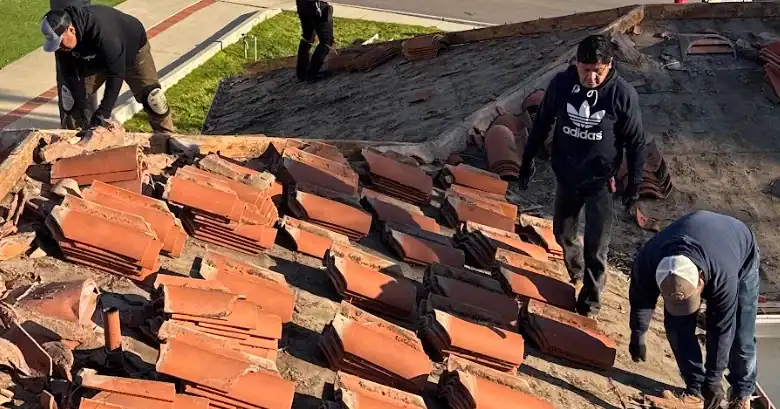
Ready for Clay Tile Roofer Contractors for a Home in San Luis Obispo California?
Creative Roofing handles the underlayment, battens and hand-shaped details that a fired or molded roof depends on, across San Luis Obispo California and nearby.
Reach us at 805-723-2381 to talk through what a tile roof needs.
Basics of a Roof Built From Individual Pieces
Clay and concrete units are individual pieces hung on a roof, overlapping like fish scales to shed water, so the layers below matter more than most people expect. Natural clay holds its color for a very long time, while concrete may need more attention to its finish, and the style often follows the architecture of the house.
Checking the Rafters Before Choosing
The weight of the roof is the first question to settle before changing from lighter material, and it should happen before materials are ordered. Rotted rafters or sheathing must be repaired before heavy material goes back on, and the cost of that work belongs in the plan.
What Sits Beneath the Pieces
The membrane is out of sight, which is why it is easy to forget, and it is easy to overlook. Sun and heat trapped under the units bake the underlayment for years, until it dries, cracks and fails, and high-temperature types are worth the small extra cost.
Sun, Heat and Dry Summers
The heavy mass of the pieces absorbs heat during the day and releases it slowly at night, and it pays to think it through. Cosmetic wear is common and does not usually affect performance, and it fades or washes off with time.
Finding Damaged Units
Slipped pieces that have shifted out of line leave gaps that rain can reach, so a close inspection from the roof is the only reliable method. Roofers who work on fragile coverings place their feet on the lower part of the unit where it is supported, and keep spare pieces from the original installation.
Where Pieces Meet Walls and Each Other
Valleys carry the most water on a roof, and the metal channel beneath the pieces must be sound, and sealant alone is never a lasting answer. The cap line at the top of the roof is one of its most exposed areas, so look for loose or missing cap pieces.
How Units Are Secured
Some systems use a mechanical clip at every piece, while others rely on adhesive along the edges, so ask how the pieces will be held down. Clay and concrete are noncombustible, which is a strong advantage in a region with wildfire seasons, and the details are worth a closer look.
Restoring a Roof Rather Than Starting Over
The decision depends on how many pieces are cracked and how the underlayment is holding up, and a careful inspection answers both questions. A full replacement is a bigger project, but it resets the clock on the entire roof, so it is a time to consider all the options.
How Units Are Bedded and Secured
Each fastening method has strengths, and the choice depends on the slope, the wind exposure and the local rules, so ask how the pieces will be held in place. Gaps at the ridge need the same attention, since embers and animals will find any opening, and they are often forgotten.
Cleaning a Heavy Roof Without Damaging It
Surface growth tends to be slower in dry summers, though shaded areas may still collect some, so consider it before deciding to replace. Soft washing with a mild solution and a gentle rinse removes growth without harming the surface, and the roof will look and perform better.
Specifying the Hidden Layer
High-temperature rated products suit the hot conditions found beneath dark units on a sunny slope, and why. Counter-battens add further airflow and reduce heat transfer into the attic, and it pays to think it through.
Planning Equipment Around the Units
The best time to add rooftop equipment is when the roof is being re-laid, because the openings can be built in properly, and the answer should be written down. Satellite dishes, antennas and holiday lights are small additions that can break units if the installer is careless or the fasteners are driven in the wrong place, and a short sign near the hatch helps. A valley that is clogged with leaves and needles can send water sideways under the units, which they are not designed to handle, and a ladder and a soft broom are often all you need.
Choosing Between Clay and Concrete
Between the two, concrete is usually the more economical, while clay is prized for its authentic look and its long record of service, so ask to see samples of both. Matching the profile to the style of the house is the first design decision, and it affects the cost and the installation method, and think about the neighbors as well.
Getting Specific About a Heavy Roof
Look for details on the underlayment type, the valley metal and the ridge system, and the details are what you are really buying. Ask how the crew will handle the pieces, where they will be stored and how breakage will be managed, so do not hesitate to ask.
Stages of a Careful Re-Lay
Each section of the roof is stripped down to the underlayment, repaired and covered with fresh waterproofing before the units go back, and it is easy to overlook.
Seasonal Readiness for a Tile Roof
Trimming branches back from the roof and keeping a clear margin around the house reduces the risk to the roof and the building, so make it part of the late-summer routine.
What to Save After a Restoration
After a re-lay or a repair, keep the photographs, the proposal and a few spare units stored somewhere safe, because color and profile matching gets harder with time, so ask the roofer for copies.
Tell Us What You Are Seeing
People researching Clay Tile Roofer Contractors in San Luis Obispo California are welcome to call with questions, and the number is 805-723-2381. Calling before a problem becomes urgent makes it easier to compare materials and schedules, and the first step is just a phone call.
Verified

Verified
Verified
Verified
Verified






















