
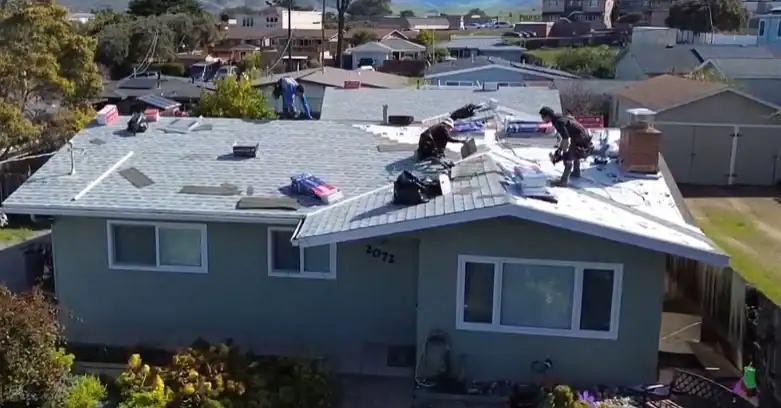
Weighing Roofing Services Serving Santa Barbara California?
Creative Roofing takes a roofing job from the first look to the last sweep of the yard, working in Santa Barbara California and nearby.
Dial 805-723-2381 and tell us what has you thinking about the roof.
Day One of a Roof Project
A roofing project begins with a close look at the surface, the edges and the pipes, and a rushed visit tends to cost more than it saves. A proper look covers the slopes seen from the yard and the ones that are not, and the findings are worth asking to see.
Heat is the quiet cause behind much of the wear seen on roofs here, and a little care goes a long way.
Repair, Patch or Replace
The right answer depends on how much sound material is left on the house, and the details are worth a closer look. Findings that cannot be pointed to are findings worth questioning, because you are the one living under the result.
Hidden damage found during tear-off is the usual reason a project grows beyond its first outline, and nobody should be surprised when it happens.
Matching the Covering to the House
Most houses here wear one of three coverings, and the choice shapes everything else, and the style of the neighborhood often plays a part. Lighter colors reflect more of the summer sun, while darker ones soak it up, and a full-size piece seen outdoors beats a catalog picture.
When the Crew Can Work
For most of the year the weather here lets a roof go on with few interruptions, and crews watch the forecast closely. Roof surfaces get hot enough in July to change how materials behave, so the day usually begins at sunrise.
What Happens on Demolition Day
Removal of the old material is where the project gets loud, and magnets and rakes pick up the nails that fall. Once the deck is bare, any damaged boards are replaced, since good materials laid over a weak deck do not last.
Protection Under the Covering
Underneath the visible covering sits a water-resistant layer that does much of the work, and metal edging is set at the eaves and rakes before the covering. The house is safest once the second layer is complete, so the rest of the work can proceed without worry.
Flashing and the Fiddly Parts
Wherever the roof surface stops, a metal detail has to take over, so fresh metal is standard practice among careful crews. Plumbing vents are among the most common sources of small leaks, so this is an easy step to ask about.
Attic Airflow
An attic under a hot roof can reach extreme temperatures in summer, since warm air rises on its own when it is given a path. Mixing vent types without a plan can short-circuit the airflow, and a roofer should be able to describe it simply.
Wrapping Up
A finished roof still leaves a yard full of scraps, nails and packaging, and covers come off the landscaping and the beds are inspected. A walk around the finished roof with the roofer is a reasonable thing to ask for, and it pays to think it through.
Permits and Paperwork
Replacing a roof usually involves the local building department in some way, and a little care goes a long way. Areas with wildfire exposure often have extra requirements for roofing materials and vents, since the covering you pick has to be one the town accepts. Vague wording on a proposal is a reason to ask questions, and it is easy to overlook.
Shielding Windows, Plants and Patios
The ground around a house takes a beating during a roof project, and a careful crew sets them before the work begins. Children and animals should stay clear of the yard while the work is underway, so tell the crew about anything fragile or valuable. Hammering on the deck above can rattle a ceiling and drop dust into the rooms below, and a little care goes a long way.
What the Household Should Expect
Timing depends on the size of the roof, the complexity of the layout and the covering chosen, and the crew should give you a realistic window. A quick word with the people next door can head off complaints, and early starts mean early noise. Household routines bend a little while the work is under way, and a plan for the loud days makes them easier.
Questions That Reveal the Difference
A sensible first question is what exactly is included in the scope, and write the answers down. A proposal that only says shingles or tile is not specific enough, and take your time reading it. Ask what happens if something unexpected turns up under the old roof, and the details are worth a closer look.
Keeping a Roof in Good Shape
Checking the roof twice a year takes only a few minutes, and binoculars make the job easy. Trim branches that touch or hang over the roof, so it is worth doing before summer ends. Waiting on a small problem usually makes it more expensive, and it pays to think it through.
Spring, Summer or Fall
A roof replaced on purpose goes better than one replaced in a panic, and the schedule fills quickly once the rains end. Any month can work with the right planning and a willingness to move a day, and a good roofer will explain the trade-offs.
Insulation, Ducts and Cables Under the Roof
When the old roof comes off, the crew sees the underside of the deck, and stains, rust on nail tips and darkened wood tell the story of past leaks, and it is easy to overlook.
Ready When You Are
Sorting out Roofing Services in Santa Barbara California is easier with someone who can look at the house, so dial 805-723-2381 and say what you are seeing. Every roof is different, so every conversation starts from the house itself, so there is no harm in asking questions first. A short conversation can turn a vague worry into a clear plan, and the next step becomes obvious.
Verified

Verified
Verified
Verified
Verified






















