
Weighing Residential Roofing Services Around Morro Bay California?
Creative Roofing covers each step of putting a new roof on a house, across Morro Bay California and the neighboring communities.
Phone 805-723-2381 to start a conversation about the roof over your head.
Where a Roofing Job Begins
Every roofing job starts with someone climbing up to see what is actually there, because the rest of the plan rests on the findings from that look. Signs of wear on top often point to a moisture problem underneath, so the visit usually takes longer than people expect.
Sun and heat age a roof in ways that rain alone never would, and the sunniest side is usually the oldest-looking side.
Repair, Patch or Replace
A roof can be repaired, partly rebuilt or removed entirely, and the evidence decides what is done, so a clear explanation matters more than a quick quote. Ask to see the problem areas, either in photographs or from the ladder, and a good roofer expects the question.
Hidden damage found during tear-off is the usual reason a project grows beyond its first outline, and it helps to know that before the work begins.
Matching the Covering to the House
Three families of material cover most residential roofs in this region, and the style of the neighborhood often plays a part. The shade of a roof affects how hot it runs in July, and it pays to look at them at different times of day.
When the Crew Can Work
Dry months are the busy season for roofing, since an open roof and rain do not mix, so exposed areas get covered at the end of each day. The temperature on the roof can run well above the temperature in the shade, and finishing early keeps people and materials in better shape.
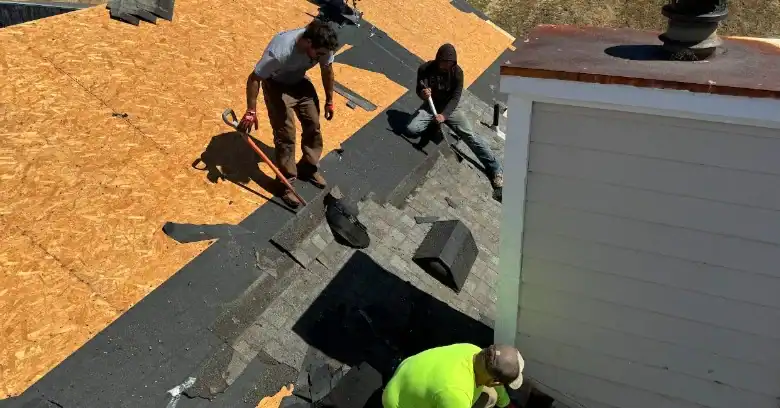
What Happens on Demolition Day
The existing covering is stripped away and the deck is left exposed for inspection, and debris goes into a bin or trailer rather than onto the lawn. Repairs to the deck happen now, before anything new is installed, and skipping the step shortens the life of an otherwise good roof.
Protection Under the Covering
The surface you see is only the outer layer of a roof, and valleys, eaves and penetrations get extra layers. Drying in gives the crew a margin against surprise weather, and the finished surface is installed over a sound base.
Flashing and the Fiddly Parts
Wherever the roof surface stops, a metal detail has to take over, so fresh metal is standard practice among careful crews. Pipe seals made of soft materials fail early in strong sun, and putting in new boots costs little when the roof is already open.
Ventilation in a Warm Climate
Attic heat is behind many worn roofs and many large cooling bills, and a proper system draws air in low and sends it out high. The design of the system matters more than the number of vents, so ask how the attic will breathe once the work is done.
Wrapping Up
When the last piece is installed, the cleanup begins, and that is part of the work, not an extra. Keeping a short record of the materials used helps with later maintenance, and it only takes a few minutes.
Local Rules and Paper Trails
Local requirements shape the job before the first shingle is touched, and the process is easier when someone handles it for you. Wildfire concerns have changed what many local codes ask of a roof, and a roofer working in the area should already know them. Vague wording on a proposal is a reason to ask questions, because what is written down is what everyone remembers.
Protecting the House and Yard
A roofing job puts a lot of weight, noise and debris around a house, so tarps and plywood go down where debris will land. Pets, children and cars are best kept away from the work area, and a short talk the evening before covers the details. Light fixtures and wall hangings can shift when a roof is being removed above them, and covering belongings is a sensible precaution.
The Few Days of Commotion
Timing depends on the size of the roof, the complexity of the layout and the covering chosen, and the crew should give you a realistic window. Dumpsters and trucks may take up space on the road, and it is easy to overlook. Household routines bend a little while the work is under way, so consider a day out of the house if you can.
Questions Worth Asking Before You Agree
Ask how the roof will be ventilated and how the flashing will be handled, since confident answers come easily to people who do this daily. A proposal that only says shingles or tile is not specific enough, and a good roofer will be glad you asked. A change in scope should be written down and approved before the work continues, and keep the discussion friendly but specific.
Caring for the Roof Once It Is Done
Checking the roof twice a year takes only a few minutes, and binoculars make the job easy. Trim branches that touch or hang over the roof, so it is worth doing before summer ends. Missing pieces, lifted edges or a new stain are all reasons to have someone look, and the earlier the better.
When to Schedule the Work
Booking early in the dry season leaves time to compare more than one proposal, and calling in spring avoids the rush. Early fall is popular because the weather is still dry and the heat has eased, and the covering you choose affects the timing as well.
What the Crew Sees Inside the House
Rust on the points of roofing nails and dark patches on the sheathing are signs that moisture has been present for some time, so ask the roofer to look inside as well.
Ready When You Are
Questions about Residential Roofing Services in Morro Bay California begin with a short phone call, with 805-723-2381 ready whenever you are. The size of the project changes the schedule but not the principle, and that is worth keeping in mind. A short conversation can turn a vague worry into a clear plan, and the next step becomes obvious.
Verified

Verified
Verified
Verified
Verified






















