
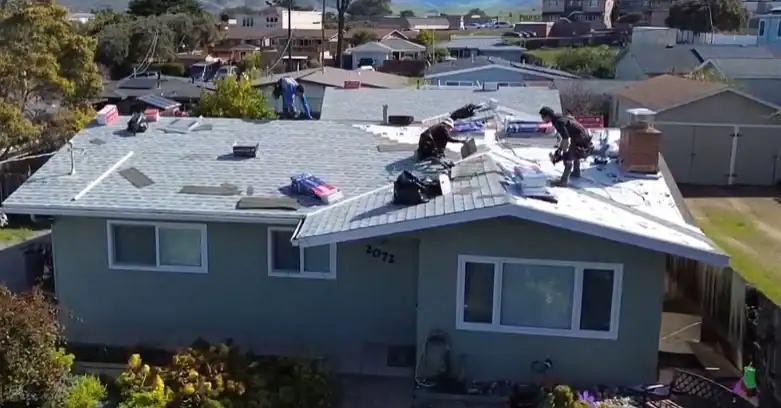
Thinking About Roofing Services Serving Arroyo Grande California?
Creative Roofing stays with a roofing project from the first walk-around to the final check, working in Arroyo Grande California and nearby.
Reach out at 805-723-2381 to start a conversation about the roof over your head.
Before Anything Is Torn Off
Before any material is chosen, the existing roof has to be understood, and the notes from that visit steer every later choice. A proper look covers the slopes seen from the yard and the ones that are not, and the findings are worth asking to see.
Long dry summers and strong sun leave their mark on nearly every roof in California, and a little care goes a long way.
Choosing How Far to Go
Not every worn roof needs replacing, and not every leak is a small one, and an honest roofer will say which one applies. Pictures of the trouble spots take the guesswork out of the decision, since the plan should make sense to the person paying for it.
Rotted or soft sheathing changes the plan and often the schedule, so a note on how it will be handled saves arguments later.
Choosing Materials for Your Home
The common choices are shingle, tile and metal, and each suits some houses better than others, and the pitch of the roof narrows the field quickly. Lighter colors reflect more of the summer sun, while darker ones soak it up, so hold a sample against the house in daylight.
Scheduling Around the Weather
Dry months are the busy season for roofing, since an open roof and rain do not mix, and it pays to think it through. On very hot afternoons shingles soften and workers slow down, and finishing early keeps people and materials in better shape.
What Happens on Demolition Day
Tear-off gives the first real view of the structure under the roof, and magnets and rakes pick up the nails that fall. Soft or split sheathing is cut out and new panels are fastened down, and it is easier to fix now than after the roof is finished.
The Hidden Layers
The surface you see is only the outer layer of a roof, and metal edging is set at the eaves and rakes before the covering. Once the underlayment is down, the house is considered dried in, and that is worth keeping in mind.
Where Roofs Meet Walls and Pipes
Wherever the roof surface stops, a metal detail has to take over, since worn metal under new material becomes the weak link. Pipe seals made of soft materials fail early in strong sun, so this is an easy step to ask about.
Keeping the Attic Cooler
A roof without enough ventilation bakes the attic and everything stored in it, and the details are worth a closer look. Mixing vent types without a plan can short-circuit the airflow, and it is easy to overlook.
The Last Day on Site
A finished roof still leaves a yard full of scraps, nails and packaging, so gutters are checked and cleared of loose granules. Questions are easier to settle while the crew is still on site, and it pays to think it through.
Local Rules and Paper Trails
Municipal offices have their own expectations for roof work, and the answer should be clear from the start. Areas with wildfire exposure often have extra requirements for roofing materials and vents, since the covering you pick has to be one the town accepts. Vague wording on a proposal is a reason to ask questions, so keep a copy where you can find it.
Looking After Your Property During the Work
A busy work site needs boundaries, and a careful crew sets them before the work begins. The area under the eaves is the one to avoid, and keep a path clear for deliveries. Hammering on the deck above can rattle a ceiling and drop dust into the rooms below, and a little care goes a long way.
Living Through a Roof Project
Most residential projects are finished within days, not weeks, and plan on some slack for the weather. Dumpsters and trucks may take up space on the road, and it is easy to overlook. Household routines bend a little while the work is under way, so consider a day out of the house if you can.
What to Ask Every Roofer
A sensible first question is what exactly is included in the scope, since confident answers come easily to people who do this daily. Knowing exactly what is going on the house removes a common source of disputes, and take your time reading it. The way a roofer handles the unexpected says a lot about the whole operation, and keep the discussion friendly but specific.
Caring for the Roof Once It Is Done
A roof that is never looked at tends to fail when it is least convenient, and binoculars make the job easy. Trim branches that touch or hang over the roof, and it also reduces fire risk in dry months. Waiting on a small problem usually makes it more expensive, and it pays to think it through.
Timing a Roof Project Through the Year
A roof replaced on purpose goes better than one replaced in a panic, and the schedule fills quickly once the rains end. Early fall is popular because the weather is still dry and the heat has eased, and the details are worth a closer look.
Roof Work and Your Attic
Rust on the points of roofing nails and dark patches on the sheathing are signs that moisture has been present for some time, and attic problems are cheaper to deal with during a re-roof.
Next Steps for Your Roofing Project
A call is the simplest way to begin planning work in Arroyo Grande California, so dial 805-723-2381 and say what you are seeing. Whether the job is a small section or a whole house, the questions are much the same, and that is worth keeping in mind. A short conversation can turn a vague worry into a clear plan, and it pays to think it through.
Verified

Verified
Verified
Verified
Verified






















