
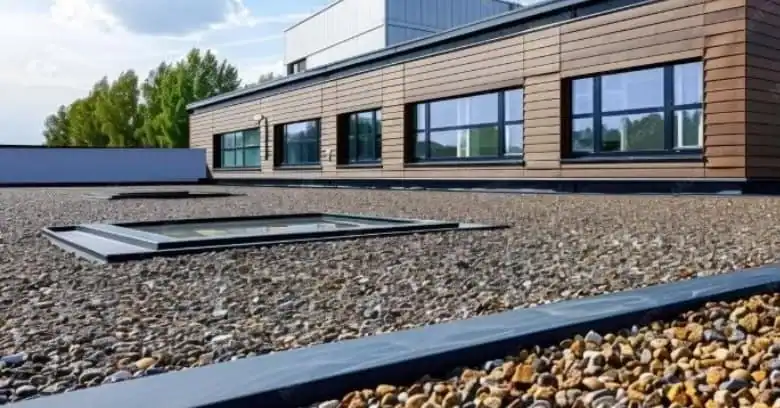
Weighing BUR Roofing for a Building in Nipomo California?
Creative Roofing repairs and replaces the level roofs that cap porches, patios, shops and modern homes, serving owners in Nipomo California and beyond.
Reach us at 805-723-2381 and we will explain the options for a level roof.
A Roof With Almost No Slope
The gentle angle of a flat roof gives water time to find every weakness, and the materials and details are chosen for it. Standing water multiplies every defect and speeds up aging, so it pays to hire people who work on flat roofs regularly.
What Goes on a Low-Slope Roof
The seams on thermoplastic sheets are fused rather than glued, which makes them strong, and installation requires trained hands. Rubber membranes are black or white, and the seams are joined with tapes or adhesives, and punctures can be patched with the same materials. Layered asphalt systems have been used for generations and are valued for redundancy, so the structure has to carry it.
Following the Water to Its Source
A careful look at the details finds most of what is wrong, so the inspection follows a set order. Where a flat roof meets a wall, the membrane must turn up and be sealed and capped with flashing, so look at those joints every year.
Standing Water Is a Warning
Water that does not drain adds weight, breeds algae and ages the surface faster, and a little care goes a long way. Fixing the cause of ponding is better than repeatedly patching its effects, so ask for a plan to improve drainage.
Sunshine, Heat and Aging
Dark surfaces can reach temperatures much higher than the surrounding air, so the surface slowly dries and cracks. A white or reflective coating can lower the surface temperature and protect the membrane beneath, and the preparation is as important as the product.
Protecting the Surface From Wear
A roof with many openings needs more maintenance than one with few, and replacing a worn collar is a quick job. Walkway pads cost little and save the membrane from scuffing and punctures, and a little care goes a long way.
Matching the Work to the Roof
Localized seams, flashings and punctures can be fixed without touching the rest of the roof, and the details are worth a closer look. Testing for moisture shows what the roof can accept, so be cautious of any bid that skips the testing. A new roof is also a chance to improve slope, drains and edges, so begin conversations before the leaks become urgent.
Level Roofs at Home
Residential low-slope roofs turn up over additions, covered patios, carports and contemporary houses designed with clean horizontal lines, and the repair needs a roofer who works with membranes. Leaks that appear in the room next to an addition often trace back to this single joint, and a little care goes a long way. A deck surface over a roof has to be lifted to repair the layer beneath, which makes prevention far cheaper than correction, and the details are worth a closer look.
What Sits Between the Roof and the Ceiling
A flat roof has little or no attic, so the layers of the roof itself have to do the work that attic insulation and ventilation do on a pitched house, and the combination is worth planning. Wet insulation loses most of its ability to resist heat and adds weight the roof was never meant to carry, and that is often cheaper than a full tear-off.
Before the Rains and After the Storms
A check in early autumn catches clogged drains, lifted seams and cracked sealant before the first storm tests them, and the work is quick. After a heavy storm or a spell of high wind, a quick look from a ladder can show whether anything has shifted, lifted or collected on the surface, and call early rather than late.
Securing the Roof Against the Wind
Whether a membrane is fully adhered, mechanically fastened or held down by ballast, the edges are the place where the installation either succeeds or fails, so ask how the edges will be attached. Ballasted roofs hold the membrane down with a layer of smooth stone or pavers instead of glue or fasteners, and the weight is part of the design, and replace what has blown away. Surprises about extra details are the most common cause of disagreement over flat roof bids, so be there for the visit if you can.
Openings That Need Their Own Waterproofing
Each opening is a separate detail, and each one should be listed in the written proposal, and that is worth keeping in mind. A roofer who plans the layout of penetrations before the work starts usually delivers a drier roof, and mark each one on a sketch. A drain bowl that is sealed to the membrane with a clamping ring and sealant keeps water from creeping under the sheet at the outlet, so check them often in the rainy months.
Reading Competing Bids
Look for the manufacturer system and the type of seam, whether welded, glued or taped, and the details are worth a closer look. Ask how the crew will test the seams, how the old roof will be disposed of and how the interior will be protected, and notice who answers plainly.
Keeping Disruption Small
The crew needs clear access to the roof, a place to set up the equipment and a path for removing old material without crossing living areas, and a short conversation beforehand covers the details.
Questions Owners Often Ask About Level Roofs
Plenty of owners assume a membrane has to be replaced at the first sign of wear, when a repair or a coating would have done the job, and bring photographs if you have them.
Talk to Us About Your Flat Roof
Anyone sorting out BUR Roofing in Nipomo California is one call away from a straight answer, with 805-723-2381 ready whenever you want to talk. Calling before a problem becomes urgent makes it easier to compare options and schedules, and a little care goes a long way.
Verified

Verified
Verified
Verified
Verified






















