
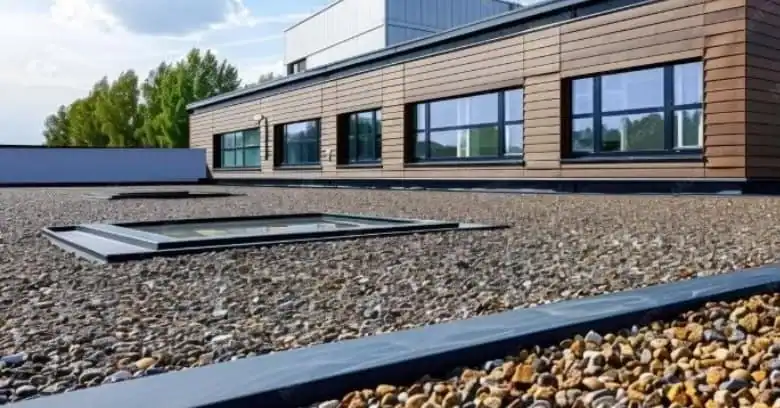
Weighing Built Up Roofing Serving Nipomo California?
Creative Roofing deals with flat and low-slope roofs on houses, additions, garages and small buildings, across Nipomo California and nearby.
Phone 805-723-2381 to talk through repair, coating or replacement.
The Challenge of a Level Surface
A roof with barely any pitch is a different design problem from the ordinary sloped kind, and drainage is the central question. Because water stays on the surface, small flaws that a pitched roof would forgive become leaks on a flat one, and ask what systems they install most.
What Goes on a Low-Slope Roof
White single-ply membranes reflect sunlight and help keep the building cooler, and repairs are made by welding on a patch. EPDM is a synthetic rubber sheet that is glued or mechanically fastened and has a long record on flat roofs, and the system suits many residential flat roofs. Gravel surfacing on a built-up roof protects the layers from sun and foot traffic, so the structure has to carry it.
The Weak Points of a Level Roof
Failures concentrate wherever the membrane stops or is cut, so the inspection follows a set order. Cracked sealant at the top of a wall flashing is one of the most common sources of leaks, so look at those joints every year.
Keeping a Level Roof Drained
Water that does not drain adds weight, breeds algae and ages the surface faster, and a clogged outlet can overload a roof. A new roof is the best time to correct drainage problems for good, and the improvement is permanent.
How Heat Wears a Low-Slope Roof
A flat roof faces the sky all day, and the sun heats it far more than a steep roof ever experiences, and a reflective finish lowers that stress. A coating adds a protective layer and can seal small cracks and seams, and the preparation is as important as the product.
Anything That Pokes Through or Sits on Top
Every pipe, vent and curb through a flat roof is a place where the membrane has to be cut and sealed, and the sealant at each one ages in the sun. Roof-mounted air conditioners and other equipment bring service people who walk on the membrane, and a plan for traffic keeps the roof sound.
What a Roof Can Still Do
A skilled roofer can patch a membrane so that the repair outlasts the surrounding area, and photographs help. These options depend on the condition of the insulation under the old surface, so be cautious of any bid that skips the testing. Replacing wet insulation restores the performance of the roof and the comfort of the rooms below, and that is worth keeping in mind.
Flat Roofs on Houses, Porches and Additions
A level porch roof may look like a minor part of a house, yet it protects the walls and the ceiling beneath it just as a main roof does, and the repair needs a roofer who works with membranes. Siding, stucco and trim all have to be worked into the flashing, and the roofer has to cooperate with whoever finished the wall, and fixing it properly takes some patience. Pavers, decking and planters laid over a membrane protect it from the sun but hide it from view, and the details are worth a closer look.
Heat Gain and Thermal Layers
A flat roof has little or no attic, so the layers of the roof itself have to do the work that attic insulation and ventilation do on a pitched house, and the savings show up in the cooling bill. Cutting a small test square is another way to check, and it is sealed again as part of the same visit, and be skeptical of a bid that skips it.
Seasonal Checks for a Level Roof
The best time to look at a flat roof is at the end of the dry season, when leaves and debris have piled up and the rains are about to test every drain, and a small repair now is nearly always cheaper. A stain on a ceiling after a storm is a clear signal to have the roof inspected before the next one arrives, and call early rather than late.
Holding a Membrane Down in a Gust
After a windy spell it is worth checking the perimeter from a ladder for loose trim, lifted seams and curling edges, and expect a specific answer. Raking the gravel back into an even layer is a routine job that keeps the protection continuous, and replace what has blown away. A careful roofer walks the roof beforehand and counts every penetration, then includes them all in the proposal, and write everything down.
Roof Penetrations, Skylights and Hatches
Replacing a worn skylight and its curb flashing together with the roof is far cheaper than doing the two jobs separately, and that is worth keeping in mind. Flexible parts crack in strong sun over a few seasons, which is why penetrations leak long before the membrane does, and it pays to think it through. Drains and scuppers are also penetrations, and the flashing around them has to be watertight while still letting the water through quickly, and a little care goes a long way.
What the Paperwork Should Say
Specific wording is your best protection against disputes, and a careful contractor will explain every line. Ask who will supervise the work and how weather delays will be handled, so write down what each company says.
Access, Fumes and Noise
Removing items from the roof, such as furniture and planters, saves time and prevents damage on the day the work begins, and that is worth keeping in mind.
Clearing Up a Few Misconceptions
Questions about a level roof are best answered by someone who has looked at it in person, so do not hesitate to ask.
Talk to Us About Your Flat Roof
People researching Built Up Roofing in Nipomo California are welcome to call with questions, and 805-723-2381 reaches someone who can help. Even a quick call can clear up questions about membranes, coatings and timing, and a little care goes a long way.
Verified

Verified
Verified
Verified
Verified






















