
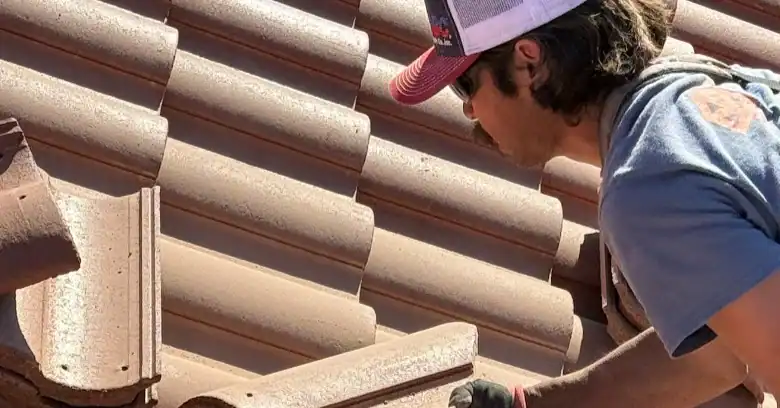
Weighing Concrete Tile Roofing Throughout Central Coast California?
Creative Roofing works with clay and concrete roofing units, from a single cracked piece to a full re-lay, serving homeowners in Central Coast California and beyond.
Phone 805-723-2381 and we will explain what is involved.
How These Roofs Are Put Together
Clay and concrete units are individual pieces hung on a roof, overlapping like fish scales to shed water, so the layers below matter more than most people expect. Both materials resist fire, which has made them popular where wildfire is a concern, and it pays to think it through.
Checking the Rafters Before Choosing
The weight of the roof is the first question to settle before changing from lighter material, so a visual check is where the process begins. Even a roof originally built for heavy units can lose strength over time if water has damaged the wood, and a careful contractor raises the issue unprompted.
The Hidden Layer That Does the Work
Many leaks on roofs of this kind begin with a failed underlayment, not with the pieces on top, so even a good surface can hide a tired layer. Replacing the underlayment when the units are removed gives the roof a fresh start, and high-temperature types are worth the small extra cost.
Sun, Heat and Dry Summers
Long dry summers are easy on the material itself, though the layers underneath age in the heat, and it pays to think it through. Efflorescence, a white powdery bloom, can show on concrete units and is mostly cosmetic, and a little care goes a long way.
Finding Damaged Units
Falling branches and windblown debris can also crack pieces in a storm, and the damage may not show from the ground. Satellite installers, painters and gutter cleaners are common causes of damage, and the cost of a few replacements is small.
The Detail Work on a Heavy Roof
Flashing along walls, chimneys and skylights has to be formed and shaped by hand around each piece, and sealant alone is never a lasting answer. Cracked and crumbling mortar along the ridge lets water and wind get under the cap pieces, and it pays to think it through.
Wildfire Season and Fire Resistance
Nails, clips and foam adhesive are the common ways to secure units to the roof, and the attachment method should be in the proposal. Keeping the roof and gutters clear of leaves and needles is part of staying safe, so ask how gaps will be kept closed.
Restoring a Roof Rather Than Starting Over
Re-laying saves the cost of new material and keeps the original look of the house, and avoid roofers who recommend replacement without looking. Replacing the covering gives the chance to upgrade the structure, the ventilation and the details, and that is worth keeping in mind.
Ridge Bedding and Edge Details
Modern installations often replace mortar with clips, screws or flexible adhesive that tolerate movement without failing, and the best answer is specific to your roof. Eave closures and bird stops fill the gap beneath the lowest course, keeping out birds, rodents, leaves and windblown embers, so these small parts deserve attention.
Dirt, Lichen and Cosmetic Wear
Cleaning should be done carefully by someone who knows the material, since walking on the roof is a risk to the units themselves, and the details are worth a closer look. High pressure is the wrong tool for a roof made of individual pieces, because the water is driven uphill under the laps, and a post-cleaning inspection is a good idea.
Underlayment Choices and Upgrades
Heavy felt, synthetic sheets and self-adhering membranes are the common options, and they differ in heat resistance and tear strength, and why. Counter-battens add further airflow and reduce heat transfer into the attic, so look for it in the proposal.
Solar Panels, Skylights and Heavy Roofs
Rooftop solar arrays and skylights need openings or mounting points cut through a roof of individual pieces, and each one has to be flashed with care, and the answer should be written down. Service technicians for air conditioning and chimney sweeps should be told to step only where the roof can bear a person, so make it a habit to ask about the roof. When rain arrives in a sudden burst after months of dry weather, the valley is the first place where a defect shows, and it is easy to overlook.
Picking the Right Unit for the House
Both materials are heavy, fire-resistant and durable, and either can give a house a distinctive character, and the difference shows up in the details. Barrel tiles are laid in alternating channels and caps, while interlocking units are single pieces that lock together along their edges, and think about the neighbors as well.
Getting Specific About a Heavy Roof
Look for details on the underlayment type, the valley metal and the ridge system, and a clear proposal reflects a careful crew. Ask how the structure will be checked and what happens if damage is found, so do not hesitate to ask.
What Happens on Site
Sorting the units as they come off lets the roofer count how many replacements will be needed and order matching pieces, and the whole process takes patience.
Preparing for Dry Winds and Embers
Closure strips at the eaves and the ridge keep embers and animals out of the space beneath the units, and a tidy roof is a safer roof.
Keeping Track of a Long-Lived Roof
A small stack of leftover pieces from the original job is worth more than almost any other record, since replacements are rarely identical, and it pays to think it through.
Next Steps for Your Roof
A conversation about Concrete Tile Roofing in Central Coast California usually starts with the age and condition of the roof, so dial 805-723-2381 when it suits you. Even a quick call can clear up questions about underlayment, repairs and timing, and the first step is just a phone call.






















