
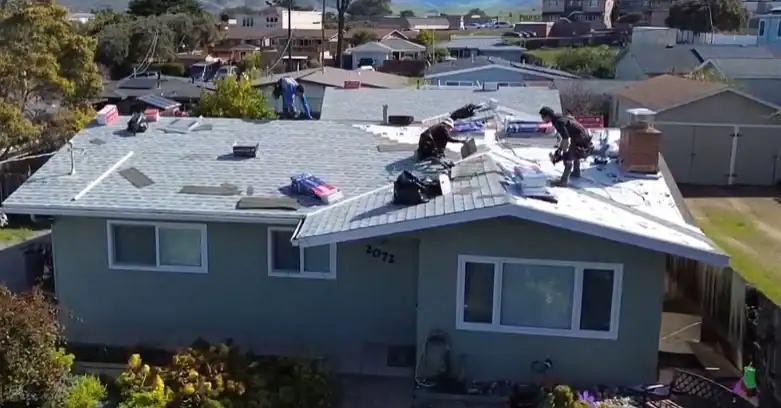
Looking for New Roofing Companies Near Central Coast California?
Creative Roofing covers each step of putting a new roof on a house, working in Central Coast California and nearby.
Phone 805-723-2381 and describe the project you have in mind.
Day One of a Roof Project
Before any material is chosen, the existing roof has to be understood, and that is worth keeping in mind. Loose granules, lifted edges, cracked flashing and soft spots all say something about the layers below, and that is the evidence a sensible plan is built on.
Sunny slopes and shaded slopes tell different stories, and both matter, so the wear is rarely even from one side to the next.
Repair, Patch or Replace
The right answer depends on how much sound material is left on the house, and an honest roofer will say which one applies. Findings that cannot be pointed to are findings worth questioning, and a good roofer expects the question.
Hidden damage found during tear-off is the usual reason a project grows beyond its first outline, and nobody should be surprised when it happens.
Matching the Covering to the House
The common choices are shingle, tile and metal, and each suits some houses better than others, and the style of the neighborhood often plays a part. Color deserves more thought than it usually gets, and a full-size piece seen outdoors beats a catalog picture.
Scheduling Around the Weather
Roofing here follows the weather more than the calendar, and a careful crew never leaves an opening to chance. Roof surfaces get hot enough in July to change how materials behave, and finishing early keeps people and materials in better shape.
Stripping Down to the Deck
Tear-off gives the first real view of the structure under the roof, so landscaping and windows are covered before the first piece comes up. Soft or split sheathing is cut out and new panels are fastened down, and skipping the step shortens the life of an otherwise good roof.
Underlayment and Drying In
Much of the protection a roof offers is out of sight, so self-adhering membrane goes where leaks tend to begin. Once the underlayment is down, the house is considered dried in, and the finished surface is installed over a sound base.
Where Roofs Meet Walls and Pipes
Wherever the roof surface stops, a metal detail has to take over, and reusing old flashing under a new roof often comes back to bite. Sun dries and cracks the flexible parts over time, and a little care goes a long way.
Intake and Exhaust
Warm air trapped under the deck works on the roof from below, since warm air rises on its own when it is given a path. The design of the system matters more than the number of vents, and the answer should be part of the proposal.
The Last Day on Site
A finished roof still leaves a yard full of scraps, nails and packaging, and covers come off the landscaping and the beds are inspected. Photographs of the completed work are worth having for your own records, and a saved record answers questions nobody has thought to ask yet.
The Paperwork Side of a Roof
Municipal offices have their own expectations for roof work, and a little care goes a long way. Areas with wildfire exposure often have extra requirements for roofing materials and vents, and the details are worth a closer look. A proposal that names its materials and steps is easier to compare, and it is easy to overlook.
Protecting the House and Yard
The ground around a house takes a beating during a roof project, and plants and patio furniture are moved or covered. Moving vehicles out of range for the day is a simple precaution, and a short talk the evening before covers the details. Light fixtures and wall hangings can shift when a roof is being removed above them, and covering belongings is a sensible precaution.
Living Through a Roof Project
A new roof usually takes a few days for an average house, though weather and size change that, so ask for the expected start and finish up front. Neighbors appreciate a heads-up before the noise begins, and it is easy to overlook. Pets are often the ones most bothered by the commotion, so consider a day out of the house if you can.
A Short List for Comparing Proposals
A sensible first question is what exactly is included in the scope, and it pays to think it through. Knowing exactly what is going on the house removes a common source of disputes, and it should be written on the proposal. The way a roofer handles the unexpected says a lot about the whole operation, and it is better to know in advance.
Small Habits That Extend Roof Life
Regular glances at the roof catch small problems early, and the best times are before the rainy season and after the first big storm. Overhanging trees drop material that collects in corners and valleys, and it also reduces fire risk in dry months. Waiting on a small problem usually makes it more expensive, and a photograph helps explain what you saw.
Is There a Best Time for a New Roof
Planning ahead usually gives better choices than reacting to an emergency, and a calm decision is nearly always a better one. Winter work happens too, with crews watching the forecast closely, and the best season is often the one that fits your calendar.
Insulation, Ducts and Cables Under the Roof
Rust on the points of roofing nails and dark patches on the sheathing are signs that moisture has been present for some time, and bring a flashlight if you can.
Next Steps for Your Roofing Project
A call is the simplest way to begin planning work in Central Coast California, with 805-723-2381 ready whenever you are. Large or small, a roofing project goes best when the plan is clear before the work starts, and that is worth keeping in mind. The decision often feels bigger before the call than it turns out to be, and nobody will rush you.






















