
Planning Residential Roofing Maintenance Around Lompoc California?
Creative Roofing stays with a roofing project from the first walk-around to the final check, serving Lompoc California and the places close by.
Phone 805-723-2381 and tell us what has you thinking about the roof.
The First Step in a Roofing Project
A roofing project begins with a close look at the surface, the edges and the pipes, and the notes from that visit steer every later choice. The roofer checks the surface, the flashing, the vents and the gutter line, then the attic if it can be reached, and that is the evidence a sensible plan is built on.
Months of direct sun take a steady toll on whatever covers a house, and the sunniest side is usually the oldest-looking side.
What Should Actually Be Done
The right answer depends on how much sound material is left on the house, and the recommendation should come with the reasons attached. A roofer who explains the reasoning in plain terms is easier to trust with the work, because you are the one living under the result.
When the decking underneath is damaged, the scope of the job grows, and nobody should be surprised when it happens.
Material Decisions
Homeowners usually end up comparing shingles, tile and metal panels, but the framing and the slope decide more than preference does. Sun exposure makes color a practical question as well as a visual one, so hold a sample against the house in daylight.
The Calendar and the Forecast
Roof work is easiest to schedule in the long dry stretch between rains, and crews watch the forecast closely. Roof surfaces get hot enough in July to change how materials behave, so the day usually begins at sunrise.
What Happens on Demolition Day
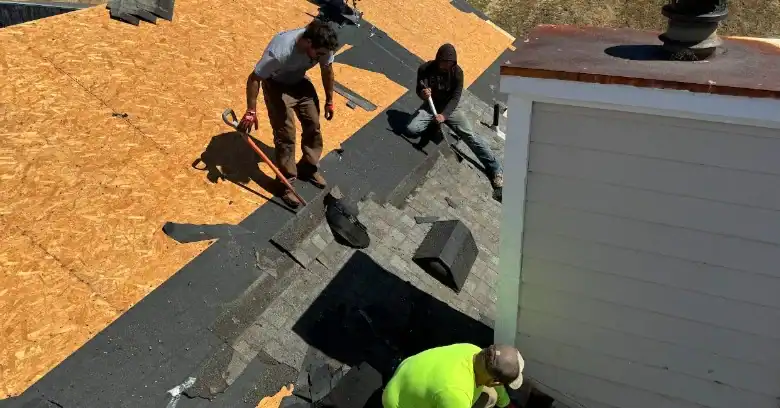
Removal of the old material is where the project gets loud, and debris goes into a bin or trailer rather than onto the lawn. Soft or split sheathing is cut out and new panels are fastened down, so this is not the place to save time.
Protection Under the Covering
Much of the protection a roof offers is out of sight, and chimneys get particular care. Once the underlayment is down, the house is considered dried in, and the finished surface is installed over a sound base.
Flashing and the Fiddly Parts
Wherever the roof surface stops, a metal detail has to take over, and reusing old flashing under a new roof often comes back to bite. Pipe seals made of soft materials fail early in strong sun, and a little care goes a long way.
Attic Airflow
Attic heat is behind many worn roofs and many large cooling bills, and vents at the eaves let cooler air in. Adding vents at random may do little more than cut holes in the roof, and a roofer should be able to describe it simply.
Finishing the Job
The job is not over until the yard looks like a yard again, so gutters are checked and cleared of loose granules. Photographs of the completed work are worth having for your own records, and a saved record answers questions nobody has thought to ask yet.
The Paperwork Side of a Roof
Municipal offices have their own expectations for roof work, so it is fair to ask who pulls the permit. Wildfire concerns have changed what many local codes ask of a roof, and a roofer working in the area should already know them. A clear proposal lists what will be removed, what will be installed and what happens if the deck needs work, so keep a copy where you can find it.
Shielding Windows, Plants and Patios
A roofing job puts a lot of weight, noise and debris around a house, and plants and patio furniture are moved or covered. The area under the eaves is the one to avoid, and it pays to think it through. The attic gets dusty during tear-off, and anything stored there will notice, so it is wise to take down fragile pictures first.
Disruption and How to Manage It
Most residential projects are finished within days, not weeks, and the details are worth a closer look. Neighbors appreciate a heads-up before the noise begins, and early starts mean early noise. Household routines bend a little while the work is under way, and a plan for the loud days makes them easier.
Questions That Reveal the Difference
Ask how the crew protects the house when rain is in the forecast, and anything left vague deserves a follow-up. A proposal that only says shingles or tile is not specific enough, and it should be written on the proposal. Talk through how changes to the plan will be handled and agreed, and the details are worth a closer look.
Keeping a Roof in Good Shape
A roof that is never looked at tends to fail when it is least convenient, and it is easy to overlook. Debris on the roof holds moisture and wears the surface, and that is worth keeping in mind. Waiting on a small problem usually makes it more expensive, and a photograph helps explain what you saw.
Spring, Summer or Fall
A roof replaced on purpose goes better than one replaced in a panic, so a few weeks of lead time is common. Any month can work with the right planning and a willingness to move a day, and a good roofer will explain the trade-offs.
Attic Findings That Change the Plan
Looking at the roof from inside the attic before the work begins reveals water stains, damp insulation and daylight where none should enter, and attic problems are cheaper to deal with during a re-roof.
Start the Conversation
Anyone researching Residential Roofing Maintenance in Lompoc California is one call away from a straight answer, so use 805-723-2381 to talk through the roof and the next step. Every roof is different, so every conversation starts from the house itself, and the roof will tell the story once someone looks. The sooner the roof is looked at, the more choices you tend to have, so pick up the phone when you are ready.
Verified

Verified
Verified
Verified
Verified






















