
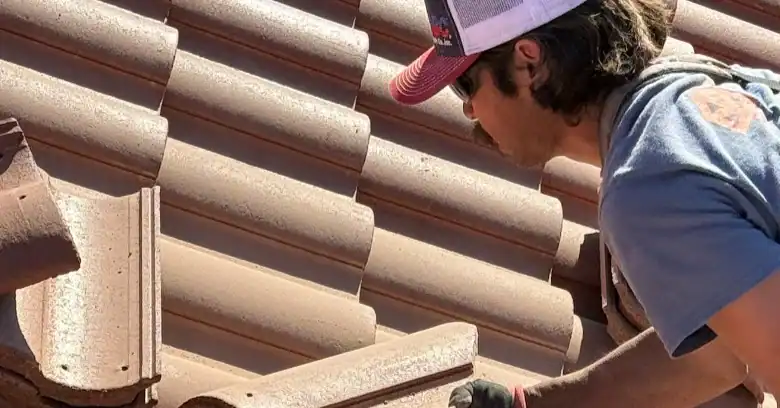
Considering Concrete Tile Roofing Throughout San Luis Obispo California?
Creative Roofing knows how to walk a fragile surface, find the broken piece and replace it cleanly, throughout San Luis Obispo California and the neighboring communities.
Reach us at 805-723-2381 to talk through what a tile roof needs.
Clay and Concrete Units in Plain Terms
A roof of this kind is a layered system in which each piece overlaps the next and the structure beneath does the waterproofing, and the system works only when every piece is in place. Concrete units are molded from cement and sand and colored through the body or on the surface, and the weight differs between materials.
Checking the Rafters Before Choosing
The framing is the foundation of any heavy roof, and a little care goes a long way. Replacing a lighter covering with a heavier one without checking the structure is a serious mistake, and the details are worth a closer look.
Underlayment Is the Real Waterproofing
The membrane is out of sight, which is why it is easy to forget, and a re-lay is the chance to replace it. Modern synthetic and self-adhering underlayments last longer under high temperatures, and that is why age matters as much as appearance.
Why Tile Suits Hot Weather
The pieces rarely wear out from sun alone, which is why a well-built roof can last so long, and it pays to think it through. Cosmetic wear is common and does not usually affect performance, and surface cleaning is far cheaper than replacement.
Why Pieces Break
A cracked unit lets water reach the underlayment, which is meant for backup rather than constant exposure, and replacing a broken piece is a quick job. Anyone who walks a roof of this kind needs to know where to step, because the wrong spot breaks the piece, and a good roofer will always carry a supply.
Edges and Intersections
Metal flashing and sealant protect these joints, and both age in strong sun, and a hurried job shows up in the first heavy rain. Ridge and hip pieces are bedded in mortar or fastened with mechanical systems, and the old mortar often fails before the roof does, and it deserves attention as the roof ages.
How Units Are Secured
Nails, clips and foam adhesive are the common ways to secure units to the roof, and the attachment method should be in the proposal. Clay and concrete are noncombustible, which is a strong advantage in a region with wildfire seasons, and the details are worth a closer look.
Options for a Tired Roof
Many of these roofs are restored two or three times over the life of the building, and the savings from a re-lay can be considerable. Spalling concrete, crumbling clay and widespread cracks are signs that the surface is at its end, so it is a time to consider all the options.
Mortar, Foam and Dry-Set Methods
Foam adhesives are widely used to secure units, particularly in areas where wind is a concern, because they bond quickly and resist uplift, so ask how the pieces will be held in place. The openings along the bottom edge of a profiled roof need a closure strip, or they become a doorway for pests and debris, and they are often forgotten.
Dirt, Lichen and Cosmetic Wear
Cleaning should be done carefully by someone who knows the material, since walking on the roof is a risk to the units themselves, and the result can be striking. A professional cleaner will explain the method and protect the plants and walls below, and it is easy to overlook.
A Better Base for a Long-Lived Roof
The underlayment is the part of a roof of this kind that owners cannot see and roofers can easily skimp on, so it deserves specific attention in a proposal, and why. Combining a sturdy base layer with extra protection at critical points gives a roof two lines of defense, and the extra layer is inexpensive protection.
Planning Equipment Around the Units
The best time to add rooftop equipment is when the roof is being re-laid, because the openings can be built in properly, and a little care goes a long way. Every person who climbs onto a roof of this kind risks cracking something, so access should be limited to those who know how to walk it, and a short sign near the hatch helps. Clearing debris from valleys before the rainy season is the simplest way to protect the underlayment beneath them, and it is easy to overlook.
Weighing Clay Against Concrete
Both materials are heavy, fire-resistant and durable, and either can give a house a distinctive character, and the better choice depends on the house and the budget. Matching the profile to the style of the house is the first design decision, and it affects the cost and the installation method, and it pays to think it through.
Questions Worth Asking
A proposal that only says re-lay the roof does not tell you enough, and compare two bids line by line. Ask how the structure will be checked and what happens if damage is found, and trust the tone of the conversation.
How a Restoration Proceeds
Each section of the roof is stripped down to the underlayment, repaired and covered with fresh waterproofing before the units go back, so a re-lay is slower than a shingle job.
Seasonal Readiness for a Tile Roof
Before the dry season peaks, a quick walk around the house with binoculars can show broken units, loose ridge pieces and debris piled in the valleys, and a roofer can check them quickly.
What to Save After a Restoration
A small stack of leftover pieces from the original job is worth more than almost any other record, since replacements are rarely identical, and it costs almost nothing to keep them.
Tell Us What You Are Seeing
A conversation about Concrete Tile Roofing in San Luis Obispo California usually starts with the age and condition of the roof, and 805-723-2381 reaches someone who can help. Calling before a problem becomes urgent makes it easier to compare materials and schedules, and a little care goes a long way.
Verified

Verified
Verified
Verified
Verified






















