
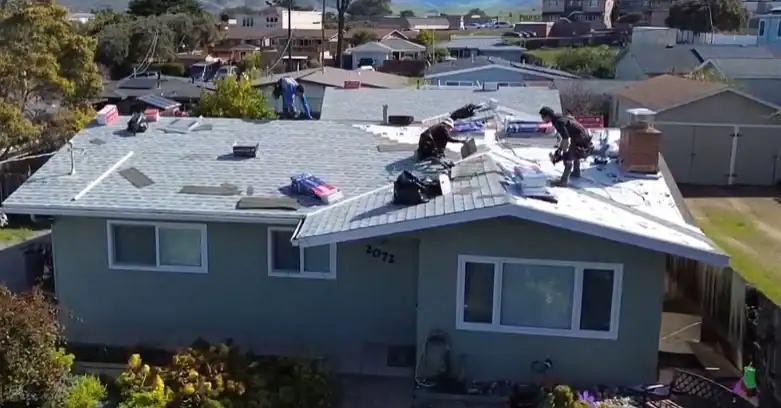
Thinking About Reroofing Contractors in Santa Barbara California?
Creative Roofing stays with a roofing project from the first walk-around to the final check, for homes in Santa Barbara California and the towns around it.
Reach out at 805-723-2381 to start a conversation about the roof over your head.
Where a Roofing Job Begins
A roofing project begins with a close look at the surface, the edges and the pipes, because the rest of the plan rests on the findings from that look. Loose granules, lifted edges, cracked flashing and soft spots all say something about the layers below, and it pays to think it through.
Long dry summers and strong sun leave their mark on nearly every roof in California, so the wear is rarely even from one side to the next.
Repair, Patch or Replace
The right answer depends on how much sound material is left on the house, so a clear explanation matters more than a quick quote. Ask to see the problem areas, either in photographs or from the ladder, and the answer tells you a lot.
When the decking underneath is damaged, the scope of the job grows, and it helps to know that before the work begins.
Picking a Roof Covering
The common choices are shingle, tile and metal, and each suits some houses better than others, and the pitch of the roof narrows the field quickly. A roof that faces strong sun all afternoon behaves differently depending on its shade, and a full-size piece seen outdoors beats a catalog picture.
When the Crew Can Work
For most of the year the weather here lets a roof go on with few interruptions, and temporary dry-in layers keep the house safe overnight. On very hot afternoons shingles soften and workers slow down, so the day usually begins at sunrise.
Tear-Off and Preparation
Removal of the old material is where the project gets loud, and the details are worth a closer look. Repairs to the deck happen now, before anything new is installed, so this is not the place to save time.
Protection Under the Covering
The first layer laid over the deck is a barrier against moisture, and it is easy to overlook. The house is safest once the second layer is complete, so the rest of the work can proceed without worry.
Flashing and the Fiddly Parts
The places where a roof is interrupted are the places most likely to leak, and reusing old flashing under a new roof often comes back to bite. The seal around a vent pipe rarely lasts as long as the surface around it, so replacing them along with the roof removes a predictable problem.
Air Under the Roof
Attic heat is behind many worn roofs and many large cooling bills, and a proper system draws air in low and sends it out high. Mixing vent types without a plan can short-circuit the airflow, and the answer should be part of the proposal.
Leaving the Property Clean
The job is not over until the yard looks like a yard again, so gutters are checked and cleared of loose granules. Questions are easier to settle while the crew is still on site, so keep the paperwork and pictures together.
Local Rules and Paper Trails
Replacing a roof usually involves the local building department in some way, because surprises at the counter slow everything down. Wildfire concerns have changed what many local codes ask of a roof, and the proposal should reflect them. Written proposals should describe the materials, the scope and the cleanup in plain words, so compare any two side by side.
What Happens to the Yard
Heavy materials, ladders and falling pieces all share the space around the walls, and it is reasonable to ask how this will be done. The area under the eaves is the one to avoid, and keep a path clear for deliveries. Attic contents are best covered or moved before the work starts, and a little care goes a long way.
Disruption and How to Manage It
The calendar for a job is set by the roof, not by the wish list, so ask for the expected start and finish up front. Dumpsters and trucks may take up space on the road, and it is easy to overlook. Working from home during a roof job is possible, though not always pleasant, and everything returns to normal once the crew packs up.
Questions Worth Asking Before You Agree
A sensible first question is what exactly is included in the scope, and it pays to think it through. Ask for the materials by name and manufacturer so you can look them up, and a little care goes a long way. A change in scope should be written down and approved before the work continues, and settle it before the first day.
Keeping a Roof in Good Shape
A roof needs less attention than most parts of a house, but it needs some, so put it on the calendar like any other chore. Debris on the roof holds moisture and wears the surface, and it also reduces fire risk in dry months. Call a roofer after a major wind event or if you see a stain on a ceiling, so do not wait for the next storm.
Timing a Roof Project Through the Year
A roof replaced on purpose goes better than one replaced in a panic, and the schedule fills quickly once the rains end. Early fall is popular because the weather is still dry and the heat has eased, so do not feel the choice is locked in.
Insulation, Ducts and Cables Under the Roof
Insulation in the attic that is compressed, wet or missing should be noted, since a new roof is a good time to fix the whole assembly, and attic problems are cheaper to deal with during a re-roof.
Getting Started in Santa Barbara California
Sorting out Reroofing Contractors in Santa Barbara California is easier with someone who can look at the house, so use 805-723-2381 to talk through the roof and the next step. Whether the job is a small section or a whole house, the questions are much the same, and the roof will tell the story once someone looks. The sooner the roof is looked at, the more choices you tend to have, and that is a good place to begin.
Verified

Verified
Verified
Verified
Verified






















