
Weighing Residential Roofing Repair in Santa Maria California?
Creative Roofing takes a roofing job from the first look to the last sweep of the yard, from Santa Maria California out to the surrounding area.
Reach out at 805-723-2381 and tell us what has you thinking about the roof.
Day One of a Roof Project
The first visit is about gathering facts rather than picking a product, since guessing from the ground leads to surprises later. Signs of wear on top often point to a moisture problem underneath, and it pays to think it through.
Sun and heat age a roof in ways that rain alone never would, and the sunniest side is usually the oldest-looking side.
Repair, Patch or Replace
The right answer depends on how much sound material is left on the house, and an honest roofer will say which one applies. Ask to see the problem areas, either in photographs or from the ladder, and the answer tells you a lot.
Wood that has been wet for a long time has to be cut out and replaced, and agreeing on the approach in advance beats debating it with the roof open.
Picking a Roof Covering
Asphalt shingles, concrete or clay tile and standing seam metal are the coverings most often put on homes here, and the pitch of the roof narrows the field quickly. A roof that faces strong sun all afternoon behaves differently depending on its shade, and it pays to look at them at different times of day.
Scheduling Around the Weather
Roof work is easiest to schedule in the long dry stretch between rains, and a careful crew never leaves an opening to chance. Crews often start early in summer to get ahead of the hottest hours, so an early knock on the door is nothing to worry about.
Tear-Off and Preparation
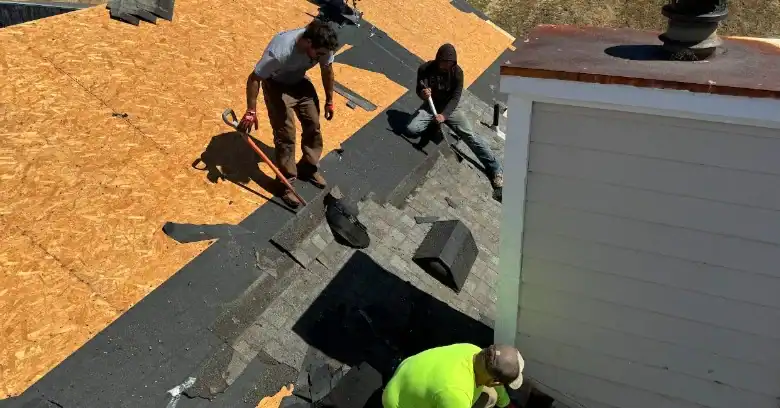
Taking the old roof off is the noisiest and messiest part of the job, so landscaping and windows are covered before the first piece comes up. Soft or split sheathing is cut out and new panels are fastened down, so this is not the place to save time.
What Goes Down First
Beneath every roof is a membrane that catches whatever the surface lets through, and chimneys get particular care. The house is safest once the second layer is complete, and the finished surface is installed over a sound base.
Where Roofs Meet Walls and Pipes
Wherever the roof surface stops, a metal detail has to take over, since worn metal under new material becomes the weak link. Plumbing vents are among the most common sources of small leaks, and putting in new boots costs little when the roof is already open.
Attic Airflow
Warm air trapped under the deck works on the roof from below, so vents near the ridge give the hot air a way out. A ventilation plan is worth a conversation before the job starts, so ask how the attic will breathe once the work is done.
The Last Day on Site
A finished roof still leaves a yard full of scraps, nails and packaging, and that is worth keeping in mind. Questions are easier to settle while the crew is still on site, and it pays to think it through.
The Paperwork Side of a Roof
Municipal offices have their own expectations for roof work, and the answer should be clear from the start. Where fire risk is high, the roof covering and the vents face tighter standards, since the covering you pick has to be one the town accepts. A clear proposal lists what will be removed, what will be installed and what happens if the deck needs work, because what is written down is what everyone remembers.
What Happens to the Yard
Roof work is hard on landscaping unless it is planned for, and that is worth keeping in mind. The area under the eaves is the one to avoid, and a little planning prevents most accidents. Inside the house, vibration can shake items from shelves and loosen attic insulation, and it is best done the night before.
Living Through a Roof Project
The calendar for a job is set by the roof, not by the wish list, so ask for the expected start and finish up front. Dumpsters and trucks may take up space on the road, and it is easy to overlook. Working from home during a roof job is possible, though not always pleasant, and that is worth keeping in mind.
Questions Worth Asking Before You Agree
Find out who will be on the roof and who will be in charge of the job, and anything left vague deserves a follow-up. Knowing exactly what is going on the house removes a common source of disputes, and it should be written on the proposal. Talk through how changes to the plan will be handled and agreed, and you will have a clear record.
Keeping a Roof in Good Shape
Even a new roof benefits from an occasional look from the ground, and it is easy to overlook. Keep the gutters clear of leaves and needles, especially at the end of the dry season, and that is worth keeping in mind. Early attention to a leak is almost always cheaper than late attention, and a photograph helps explain what you saw.
Choosing the Right Season
Many homeowners wait until a leak appears before they think about a roof, and a calm decision is nearly always a better one. Any month can work with the right planning and a willingness to move a day, and a good roofer will explain the trade-offs.
Insulation, Ducts and Cables Under the Roof
Insulation in the attic that is compressed, wet or missing should be noted, since a new roof is a good time to fix the whole assembly, and the findings can change the scope.
Getting Started in Santa Maria California
Anyone researching Residential Roofing Repair in Santa Maria California is one call away from a straight answer, and 805-723-2381 reaches the right person. The size of the project changes the schedule but not the principle, so there is no harm in asking questions first. The sooner the roof is looked at, the more choices you tend to have, so pick up the phone when you are ready.
Verified

Verified
Verified
Verified
Verified






















