
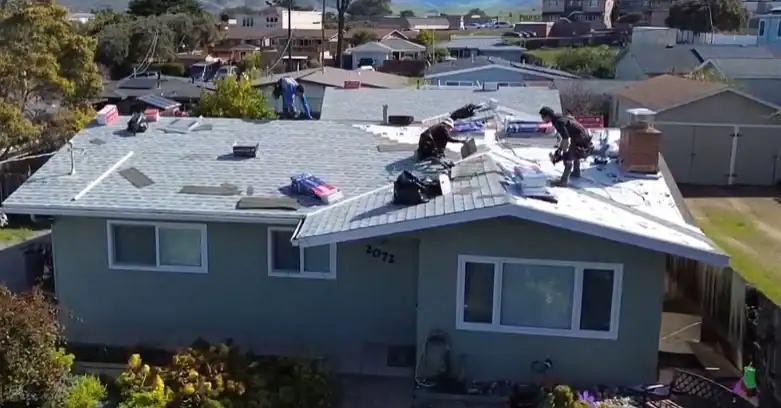
Planning Roofing Installation Near San Luis Obispo California?
Creative Roofing stays with a roofing project from the first walk-around to the final check, across San Luis Obispo California and the neighboring communities.
Ring 805-723-2381 and we will talk through what the roof needs.
Before Anything Is Torn Off
Before any material is chosen, the existing roof has to be understood, since guessing from the ground leads to surprises later. Signs of wear on top often point to a moisture problem underneath, so the visit usually takes longer than people expect.
Sunny slopes and shaded slopes tell different stories, and both matter, and a roofer who knows the area expects exactly that.
Choosing How Far to Go
Whether to fix or replace comes down to the condition of the layers beneath the surface, and the details are worth a closer look. Pictures of the trouble spots take the guesswork out of the decision, because you are the one living under the result.
Wood that has been wet for a long time has to be cut out and replaced, and it is easy to overlook.
Material Decisions
Homeowners usually end up comparing shingles, tile and metal panels, and the style of the neighborhood often plays a part. A roof that faces strong sun all afternoon behaves differently depending on its shade, and it pays to look at them at different times of day.
Scheduling Around the Weather
Dry months are the busy season for roofing, since an open roof and rain do not mix, and a careful crew never leaves an opening to chance. Crews often start early in summer to get ahead of the hottest hours, and a little care goes a long way.
Removing the Old Roof
Tear-off gives the first real view of the structure under the roof, and debris goes into a bin or trailer rather than onto the lawn. Once the deck is bare, any damaged boards are replaced, since good materials laid over a weak deck do not last.
What Goes Down First
Much of the protection a roof offers is out of sight, so self-adhering membrane goes where leaks tend to begin. Drying in gives the crew a margin against surprise weather, and rows are laid from the eave upward, each lapping the last.
Flashing and the Fiddly Parts
Wherever the roof surface stops, a metal detail has to take over, and the cost is small next to the roof it protects. Pipe seals made of soft materials fail early in strong sun, so this is an easy step to ask about.
Attic Airflow
Heat collects in the space beneath the roof deck unless it has somewhere to go, so vents near the ridge give the hot air a way out. Mixing vent types without a plan can short-circuit the airflow, so ask how the attic will breathe once the work is done.
Leaving the Property Clean
A finished roof still leaves a yard full of scraps, nails and packaging, and that is part of the work, not an extra. A walk around the finished roof with the roofer is a reasonable thing to ask for, and a saved record answers questions nobody has thought to ask yet.
The Paperwork Side of a Roof
Municipal offices have their own expectations for roof work, and the process is easier when someone handles it for you. Wildfire concerns have changed what many local codes ask of a roof, since the covering you pick has to be one the town accepts. Vague wording on a proposal is a reason to ask questions, because what is written down is what everyone remembers.
Looking After Your Property During the Work
A busy work site needs boundaries, and plants and patio furniture are moved or covered. The area under the eaves is the one to avoid, so tell the crew about anything fragile or valuable. Light fixtures and wall hangings can shift when a roof is being removed above them, and covering belongings is a sensible precaution.
Noise, Neighbors and Daily Life
Most residential projects are finished within days, not weeks, and plan on some slack for the weather. Informing nearby households is a courtesy that pays off, and early starts mean early noise. The loudest stretch is the tear-off, and it passes quickly, and everything returns to normal once the crew packs up.
Questions Worth Asking Before You Agree
Ask how the roof will be ventilated and how the flashing will be handled, and it pays to think it through. Ask for the materials by name and manufacturer so you can look them up, and a little care goes a long way. The way a roofer handles the unexpected says a lot about the whole operation, and the details are worth a closer look.
Maintenance After the Job
Checking the roof twice a year takes only a few minutes, and the best times are before the rainy season and after the first big storm. Debris on the roof holds moisture and wears the surface, and it also reduces fire risk in dry months. Call a roofer after a major wind event or if you see a stain on a ceiling, and it pays to think it through.
When to Schedule the Work
A roof replaced on purpose goes better than one replaced in a panic, and calling in spring avoids the rush. Spring can bring the first showers, so flexibility helps, and the details are worth a closer look.
Roof Work and Your Attic
Rust on the points of roofing nails and dark patches on the sheathing are signs that moisture has been present for some time, and it is easy to overlook.
Start the Conversation
Sorting out Roofing Installation in San Luis Obispo California is easier with someone who can look at the house, and the number is 805-723-2381. Every roof is different, so every conversation starts from the house itself, so there is no harm in asking questions first. The decision often feels bigger before the call than it turns out to be, so pick up the phone when you are ready.
Verified

Verified
Verified
Verified
Verified






















