
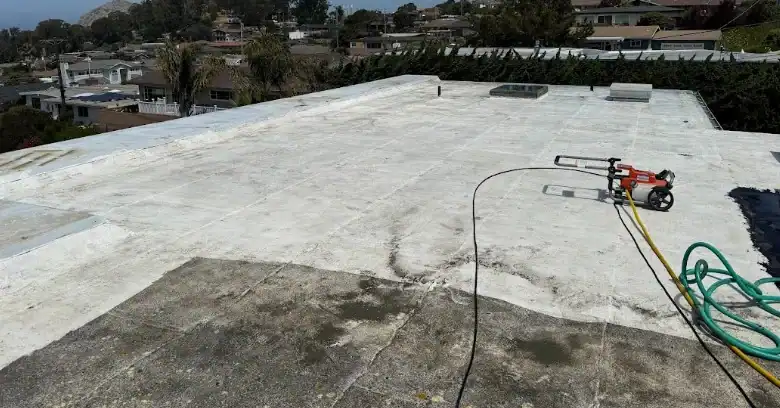
Researching TPO Membrane Roofing Serving Santa Barbara California?
Creative Roofing deals with flat and low-slope roofs on houses, additions, garages and small buildings, for properties in Santa Barbara California and the towns around it.
Reach us at 805-723-2381 and tell us about the flat roof you have.
How a Flat Roof Differs From a Pitched One
A roof with barely any pitch is a different design problem from the ordinary sloped kind, and that is worth keeping in mind. Because water stays on the surface, small flaws that a pitched roof would forgive become leaks on a flat one, and ask what systems they install most.
The Systems You Will Hear About
White single-ply membranes reflect sunlight and help keep the building cooler, and a little care goes a long way. A rubber roof is flexible and handles movement well, though seams and flashings need care, and the system suits many residential flat roofs. Modified bitumen sheets are rolled out and torched or adhered in overlapping courses for a durable surface, so the structure has to carry it.
Seams, Edges and Where Leaks Start
Failures concentrate wherever the membrane stops or is cut, and that is worth keeping in mind. Where a flat roof meets a wall, the membrane must turn up and be sealed and capped with flashing, and the work is simple for a roofer.
Scuppers, Drains and Slope
Puddles that remain a day or two after rain signal that water is not leaving the roof as it should, and a little care goes a long way. Fixing the cause of ponding is better than repeatedly patching its effects, and the details are worth a closer look.
Sunshine, Heat and Aging
Long dry summers expose the membrane to intense light for months without a break, and a reflective finish lowers that stress. Reflective surfaces keep rooms below cooler and may reduce the load on air conditioning, so cleaning and repair come first.
Protecting the Surface From Wear
Boots, pitch pockets and flashing collars around pipes must be sound and sealed, so these spots deserve regular checks. A roof used as a patio or deck needs a protective layer or pavers, and a little care goes a long way.
Repair, Recoat or Replace
Repairing a small area is practical when the surrounding material is still healthy, and the details are worth a closer look. Testing for moisture shows what the roof can accept, and an honest answer starts with a survey. Starting fresh gives the best foundation for another long stretch of service, and ask about drainage improvements in particular.
Level Roofs at Home
Owners of older homes often discover that an addition from a previous decade was finished with a membrane that has long since worn out, and it pays to think it through. A bead of caulk across that joint might hold for a season, but a proper counterflashing is the lasting answer, and fixing it properly takes some patience. Roof decks and patios built over living space need a waterproofing layer under the finished surface, and a failure there can be expensive to reach, and avoid fastening anything through the membrane.
What Sits Between the Roof and the Ceiling
Rigid insulation boards above or below the deck slow the passage of heat, and they matter more on a level roof than on any other type, and the savings show up in the cooling bill. A moisture survey with a meter or an infrared camera can map the wet areas without tearing the roof apart, and the map is a useful record.
A Simple Maintenance Calendar
The best time to look at a flat roof is at the end of the dry season, when leaves and debris have piled up and the rains are about to test every drain, so make it a fixed date on the calendar. Branches, loose objects and windblown trash can cut a membrane or block a drain, and they should be removed promptly, and acting quickly limits the damage.
Wind, Edges and Fastening on a Level Roof
Seasonal gusts pull hardest at the perimeter of a low-slope roof, so the fastening pattern is tighter along the edges than in the middle of the field, and expect a specific answer. Stones that have been scattered by wind or foot traffic leave bare patches that expose the membrane to ultraviolet light, and the gravel does a great deal of quiet work. Crowded rooftops with many pipes and units are slow to roof, because every obstacle needs its own flashing and sealing, and a thorough walk-through prevents them.
Everything That Breaks the Surface
Each opening is a separate detail, and each one should be listed in the written proposal, and expect specific answers. The seal around a pipe on a low-slope roof has to be formed to match the membrane, because a generic rubber boot will not bond to every type, and mark each one on a sketch. Drains and scuppers are also penetrations, and the flashing around them has to be watertight while still letting the water through quickly, and a little care goes a long way.
Reading Competing Bids
A good proposal names the membrane, its thickness, the attachment method and the insulation to be used, and the details are worth a closer look. A roofer with plenty of flat roof experience can explain problems before they occur, and it is easy to overlook.
Scheduling and Living With a Flat Roof Project
Removing items from the roof, such as furniture and planters, saves time and prevents damage on the day the work begins, and that is worth keeping in mind.
Common Worries Before a Flat Roof Project
A flat roof is not doomed to leak, and one that is well built and looked after can serve a property for a very long time, so do not hesitate to ask.
Tell Us What You Are Dealing With
Anyone sorting out TPO Membrane Roofing in Santa Barbara California is one call away from a straight answer, so use 805-723-2381 to set up the next step. Planning ahead usually leads to better choices than reacting to an emergency, and we are glad to help you sort it out.
Verified

Verified
Verified
Verified
Verified






















