
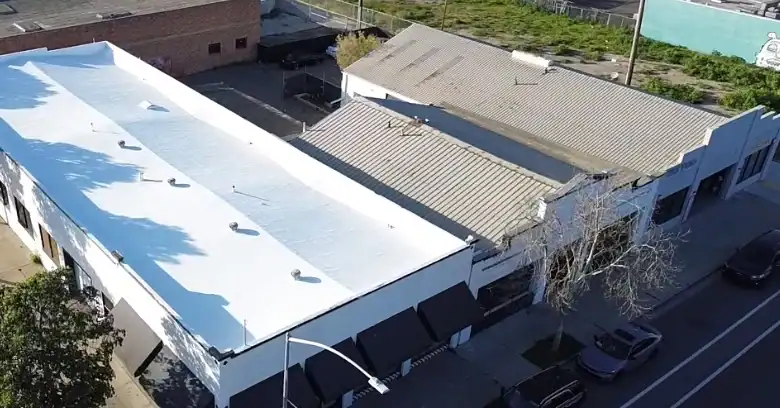
Considering Commercial Roofing for a Building in Atascadero California?
Creative Roofing works on the roofs of shops, offices, warehouses and apartment buildings, for properties in Atascadero California and the surrounding area.
Contact us at 805-723-2381 to talk through a commercial roof question.
Why a Building Roof Is a Different Animal
The roof on a store or office is a working surface as much as a cover, and the materials are chosen with that in mind. Waterproofing on a low slope comes from the sheet itself rather than from the angle, so installation craft counts for a great deal.
Buildings also carry people, stock and equipment that a leak can ruin, and that makes prevention worth more than repair.
A Look at the Main Systems
Many newer commercial roofs use a single-ply membrane over insulation, and the differences matter when comparing proposals. Layered bitumen roofs remain common on buildings of every age, and it is easy to overlook. Coated metal panels have become common on newer low-rise construction, so the building and its use drive the decision.
Keeping Water Moving
A roof that holds puddles after rain is telling you something, and a small amount of tapered insulation can fix ponding. Debris collects around drain strainers after the dry months and blocks them in the first storm, and an overflow scupper is a backup that should never be blocked.
What Sits on the Roof
Mechanical equipment on the roof creates dozens of places where the membrane has to be cut and sealed, and the flashing around each one has to be right. Foot traffic that is not planned for wears the roof where it matters most, so the best owners plan the routes in advance.
Strong Sun on a Flat Surface
Heat and ultraviolet light age a roof surface more than rain does, and that is worth keeping in mind. Light-colored surfaces bounce much of the sunshine back instead of absorbing it, and the details of the benefit depend on the building.
Maintenance Programs
A planned visit twice a year is a common routine for building owners, and a little care goes a long way. Small repairs made early keep water out and extend the life of the membrane, and tenants never notice because nothing leaks.
When a Roof Reaches the End of Its Life
Moisture surveys can show how much of a roof is truly wet inside, and testing is better than guessing. Wet insulation stops insulating and adds heavy weight to the structure, and it is better to know the truth sooner.
Roofing Without Disrupting Operations
Roofers often work in phases so a store can stay open, and early notice prevents most problems. Anyone entering the roof during construction needs to be accounted for, so ask how the site will be protected.
Apples to Apples
A clear commercial proposal names the system, the thickness and the method of attachment, and the details are worth a closer look. Photographs and written records of the installation are useful for the owner, and keep it with the building records.
Where the Water Really Gets In
Tracing a leak on a low slope takes patience, because water wanders, and that is worth keeping in mind. The edges and the corners are where a flat roof tends to give way first, and the open field is checked last. Moisture scans and core samples can show how far water has spread inside the roof, and it helps explain the situation to the people who sign the checks.
Wind, Fasteners and Roof Edges
The edges and corners of a flat roof take the highest wind loads, and loose metal trim is an early warning. Loose trim lets wind get under the membrane and peel it back, and a small fix now prevents a large one later.
Where the Roof Meets the Building
Flashing at the wall is one of the most failure-prone parts of a low-slope roof, and that is worth keeping in mind. Mortar joints and wall coatings are part of the roof story, so it helps to look at the wall as well as the roof.
Coatings and What They Can Do
Restoration coatings are meant for roofs that are still basically sound, and a coating is only as good as the surface beneath it. A coating is not a cure for a failed roof, and ask for the test results first.
Big Buildings, Big Roofs
Big projects need a plan for storage, staging and phasing, and weather windows matter more at this scale. Common areas, walkways and canopies add their own details, so the plan should name each area. Roofs over housing need extra care to keep people safe and informed, and clear notices help everyone know what to expect.
Spending Wisely on a Flat Roof
A commercial roof is a major capital item that is best planned years ahead, so the information from maintenance visits feeds the budget. Choosing on the lowest initial figure alone can cost more over the life of the building, so compare what is included before comparing totals.
What Sits Between the Deck and the Membrane
Insulation under a flat roof keeps the building comfortable and reduces energy use, and it is easy to overlook. Cover boards add a firm surface that protects insulation from foot traffic and hail-free impacts, and the added cost is modest. A tapered plan can be drawn for any roof and installed with the new membrane, and few owners regret it.
Late-Summer Readiness Checks
Property managers who inspect their roofs before the rainy season avoid most of the emergency calls that come with the first heavy downpour, and a little care goes a long way.
Talk to Us About Your Building
Owners comparing Commercial Roofing in Atascadero California can start by describing the building and what concerns them, so dial 805-723-2381 when it suits you. Whether the roof is leaking today or just getting old, an early look gives you more options, and the roof will tell the story once someone looks. People who manage property tend to value a straight answer about the roof above all, and describe what you are seeing. Property managers often juggle many buildings and appreciate clear, written answers, and written records show the property has been cared for.
Verified

Verified
Verified
Verified






















