
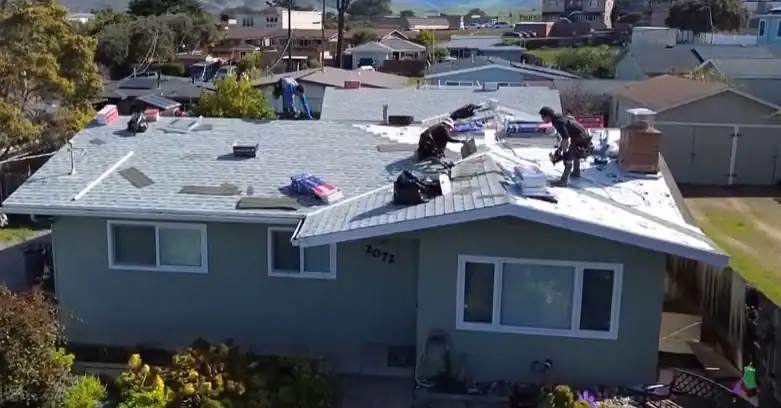
Looking for Reroofing Contractors for a Home in Atascadero California?
Creative Roofing stays with a roofing project from the first walk-around to the final check, working in Atascadero California and nearby.
Dial 805-723-2381 to set up a time for someone to look at the roof.
Starting Out Right
Before any material is chosen, the existing roof has to be understood, and that is worth keeping in mind. A proper look covers the slopes seen from the yard and the ones that are not, and the findings are worth asking to see.
Long dry summers and strong sun leave their mark on nearly every roof in California, and a roofer who knows the area expects exactly that.
Choosing How Far to Go
Whether to fix or replace comes down to the condition of the layers beneath the surface, and the details are worth a closer look. Damage should be shown rather than only described, since the plan should make sense to the person paying for it.
Weak spots in the deck only show themselves once the old roof is off, so a note on how it will be handled saves arguments later.
Choosing Materials for Your Home
Three families of material cover most residential roofs in this region, since heavy coverings need a frame built to carry them. A roof that faces strong sun all afternoon behaves differently depending on its shade, so hold a sample against the house in daylight.
Planning for Rain and Heat
Roofing here follows the weather more than the calendar, and crews watch the forecast closely. On very hot afternoons shingles soften and workers slow down, so an early knock on the door is nothing to worry about.
What Happens on Demolition Day
Tear-off gives the first real view of the structure under the roof, and the details are worth a closer look. Repairs to the deck happen now, before anything new is installed, and it is easier to fix now than after the roof is finished.
Protection Under the Covering
The first layer laid over the deck is a barrier against moisture, and it is easy to overlook. Once the underlayment is down, the house is considered dried in, and the finished surface is installed over a sound base.
Flashing and the Fiddly Parts
Flashing is the thin metal that keeps water out where the roof meets something else, so fresh metal is standard practice among careful crews. The seal around a vent pipe rarely lasts as long as the surface around it, so replacing them along with the roof removes a predictable problem.
Ventilation in a Warm Climate
Heat collects in the space beneath the roof deck unless it has somewhere to go, and the details are worth a closer look. More vents are not always better, because intake and exhaust have to be balanced, and it is easy to overlook.
Finishing the Job
A finished roof still leaves a yard full of scraps, nails and packaging, and covers come off the landscaping and the beds are inspected. A walk around the finished roof with the roofer is a reasonable thing to ask for, and it makes future repairs and sales smoother.
What the City Wants to See
Depending on the town, a re-roof may need a permit before any material is ordered, because surprises at the counter slow everything down. Areas with wildfire exposure often have extra requirements for roofing materials and vents, and the details are worth a closer look. A proposal that names its materials and steps is easier to compare, so keep a copy where you can find it.
Looking After Your Property During the Work
A roofing job puts a lot of weight, noise and debris around a house, and it is reasonable to ask how this will be done. Pets, children and cars are best kept away from the work area, and keep a path clear for deliveries. Inside the house, vibration can shake items from shelves and loosen attic insulation, and a little care goes a long way.
Noise, Neighbors and Daily Life
Most residential projects are finished within days, not weeks, and the details are worth a closer look. Dumpsters and trucks may take up space on the road, and the whole thing is over sooner than it seems. Remote workers may want a quiet spot elsewhere for a day or two, and everything returns to normal once the crew packs up.
A Short List for Comparing Proposals
Find out who will be on the roof and who will be in charge of the job, and write the answers down. Ask for the materials by name and manufacturer so you can look them up, and a little care goes a long way. A change in scope should be written down and approved before the work continues, and it is better to know in advance.
Caring for the Roof Once It Is Done
A roof that is never looked at tends to fail when it is least convenient, and binoculars make the job easy. Overhanging trees drop material that collects in corners and valleys, and a small broom is often enough. Call a roofer after a major wind event or if you see a stain on a ceiling, so do not wait for the next storm.
Timing a Roof Project Through the Year
Booking early in the dry season leaves time to compare more than one proposal, and calling in spring avoids the rush. Winter work happens too, with crews watching the forecast closely, so do not feel the choice is locked in.
Checking the Space Beneath the Deck
Insulation in the attic that is compressed, wet or missing should be noted, since a new roof is a good time to fix the whole assembly, and the findings can change the scope.
Getting Started in Atascadero California
A call is the simplest way to begin planning work in Atascadero California, and 805-723-2381 reaches the right person. Whether the job is a small section or a whole house, the questions are much the same, and that is worth keeping in mind. A short conversation can turn a vague worry into a clear plan, and it pays to think it through.
Verified

Verified
Verified
Verified






















