
Searching for Residential Roofing Installation Near Atascadero California?
Creative Roofing covers each step of putting a new roof on a house, across Atascadero California and the neighboring communities.
Dial 805-723-2381 and tell us what has you thinking about the roof.
Starting Out Right
Before any material is chosen, the existing roof has to be understood, since guessing from the ground leads to surprises later. The roofer checks the surface, the flashing, the vents and the gutter line, then the attic if it can be reached, and it pays to think it through.
Long dry summers and strong sun leave their mark on nearly every roof in California, so the south and west slopes get the closest attention.
Setting the Scope of Work
Some roofs need a patch, some need a section redone, and some have reached the end of the road, so a clear explanation matters more than a quick quote. Damage should be shown rather than only described, and a good roofer expects the question.
Rotted or soft sheathing changes the plan and often the schedule, and it helps to know that before the work begins.
Choosing Materials for Your Home
Asphalt shingles, concrete or clay tile and standing seam metal are the coverings most often put on homes here, since heavy coverings need a frame built to carry them. A roof that faces strong sun all afternoon behaves differently depending on its shade, so hold a sample against the house in daylight.
When the Crew Can Work
Rain arrives in bursts, and a roof that is open when one comes needs protection, and it pays to think it through. Crews often start early in summer to get ahead of the hottest hours, and the plan bends to the heat rather than the other way around.
Tear-Off and Preparation
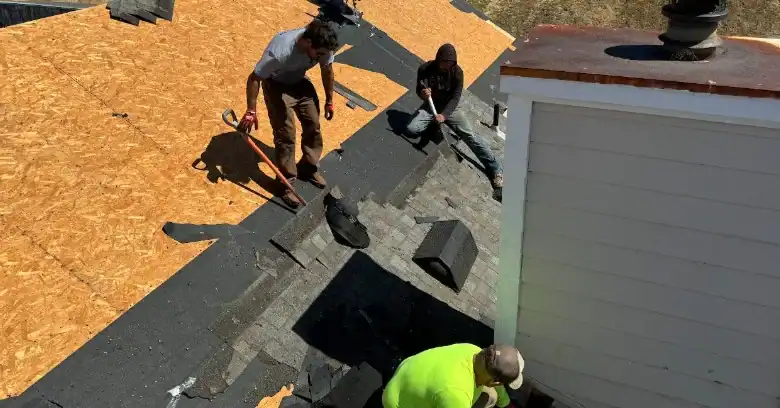
Old roofing comes off in layers, down to the bare decking, and protecting the driveway and plants is worth asking about. Sound wood is the base everything else depends on, and skipping the step shortens the life of an otherwise good roof.
What Goes Down First
Underneath the visible covering sits a water-resistant layer that does much of the work, and it is easy to overlook. With the barrier in place the roof can shed rain even before the covering is finished, and the visible covering goes on from there.
Flashing and the Fiddly Parts
Wherever the roof surface stops, a metal detail has to take over, and it pays to think it through. The seal around a vent pipe rarely lasts as long as the surface around it, and a new roof should not depend on a seal that is already tired.
Ventilation in a Warm Climate
Warm air trapped under the deck works on the roof from below, and the details are worth a closer look. A ventilation plan is worth a conversation before the job starts, and the answer should be part of the proposal.
Leaving the Property Clean
When the last piece is installed, the cleanup begins, and a magnetic sweep picks up stray nails. A walk around the finished roof with the roofer is a reasonable thing to ask for, and a saved record answers questions nobody has thought to ask yet.
Local Rules and Paper Trails
Replacing a roof usually involves the local building department in some way, and the process is easier when someone handles it for you. Areas with wildfire exposure often have extra requirements for roofing materials and vents, and a roofer working in the area should already know them. A clear proposal lists what will be removed, what will be installed and what happens if the deck needs work, because what is written down is what everyone remembers.
Looking After Your Property During the Work
Roof work is hard on landscaping unless it is planned for, and a careful crew sets them before the work begins. Children and animals should stay clear of the yard while the work is underway, and a short talk the evening before covers the details. Inside the house, vibration can shake items from shelves and loosen attic insulation, so it is wise to take down fragile pictures first.
Living Through a Roof Project
A new roof usually takes a few days for an average house, though weather and size change that, and the details are worth a closer look. Dumpsters and trucks may take up space on the road, and early starts mean early noise. Working from home during a roof job is possible, though not always pleasant, and the noise settles once the old roof is gone.
A Short List for Comparing Proposals
Find out who will be on the roof and who will be in charge of the job, and write the answers down. The product line matters as much as the type of covering, and a little care goes a long way. Ask what happens if something unexpected turns up under the old roof, and the details are worth a closer look.
Caring for the Roof Once It Is Done
Regular glances at the roof catch small problems early, and the best times are before the rainy season and after the first big storm. Overhanging trees drop material that collects in corners and valleys, and it protects the investment you just made. Call a roofer after a major wind event or if you see a stain on a ceiling, and the earlier the better.
Spring, Summer or Fall
Many homeowners wait until a leak appears before they think about a roof, and calling in spring avoids the rush. Early fall is popular because the weather is still dry and the heat has eased, and the covering you choose affects the timing as well.
What the Crew Sees Inside the House
Looking at the roof from inside the attic before the work begins reveals water stains, damp insulation and daylight where none should enter, and the findings can change the scope.
Getting Started in Atascadero California
Questions about Residential Roofing Installation in Atascadero California begin with a short phone call, with 805-723-2381 ready whenever you are. Every roof is different, so every conversation starts from the house itself, so there is no harm in asking questions first. The sooner the roof is looked at, the more choices you tend to have, and nobody will rush you.
Verified

Verified
Verified
Verified






















