
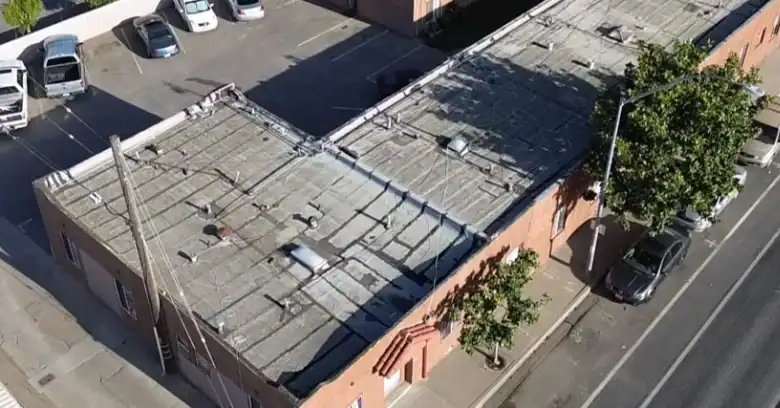
Considering Commercial Roof Contractors in Atascadero California?
Creative Roofing looks after the roof over a business, from a small storefront to a large building, wherever a building needs a sound roof around Atascadero California.
Ring 805-723-2381 to start planning the work with someone who knows low-slope roofs.
Roofs Over Businesses
A roof over a business is usually flat or nearly flat, and that changes almost everything about it, and the tradesmen who work on them need specific experience. Water that stays on a roof for long finds every weakness in the membrane, and the quality of those seams decides how long it lasts.
Water coming through a commercial roof can reach inventory, electrical gear and computers, and that makes prevention worth more than repair.
Common Low-Slope Roof Systems
Many newer commercial roofs use a single-ply membrane over insulation, so the choice affects how repairs are done later. Older buildings often have built-up roofing, with several layers laid over one another, and they suit many situations where traffic and equipment are heavy. Standing seam metal panels cover warehouses, schools and retail buildings, so the building and its use drive the decision.
Where the Rain Goes
Standing water is the most common enemy of a low-slope roof, and drains need to be clear before the rainy season begins. Drains, scuppers and gutters collect water and carry it away from the building, so clearing drains is the cheapest maintenance on the list.
Equipment Is Where Leaks Start
Mechanical equipment on the roof creates dozens of places where the membrane has to be cut and sealed, and the details are worth a closer look. A roof that has regular service visits needs protection along the paths, and a few walkway pads cost little compared with a patch.
Heat Over a Working Building
Long dry summers expose a membrane to strong ultraviolet light month after month, and that is worth keeping in mind. A cooler roof surface lowers the strain on air conditioning in hot months, and it pays to think it through.
Inspections and Upkeep
A planned visit twice a year is a common routine for building owners, and it gives you a record to show a buyer or lender. Typical upkeep includes clearing drains, checking seams and sealing small cracks, and tenants never notice because nothing leaks.
Repair, Coat or Replace
A sound roof with surface wear can sometimes be restored with a coating, and saving a good roof is cheaper than replacing it. A roof that is wet inside cannot be coated or patched into good health, and surprises are the expensive part.
Scheduling and Safety
A good plan keeps customers and staff away from the areas under construction, and early notice prevents most problems. Fall protection is required on commercial roofs, and a professional crew uses it, and that is a reasonable thing to discuss in advance.
Making Sense of Competing Bids
Look for details about seams, terminations and penetration flashing, and the difference is often in what is not mentioned. A contractor should be willing to explain how the work will be checked while it is in progress, so make it part of the agreement.
Why the Drip Is Never Where the Hole Is
Tracing a leak on a low slope takes patience, because water wanders, so a careful inspection is worth the time. Open seams, cracked sealant and failed flashings account for a large share of leaks, and it pays to think it through. A survey gives facts to base a decision on, so it is worth asking about on a larger roof.
Edges Are Where Roofs Let Go
Strong seasonal winds pull hardest at the perimeter of a low-slope roof, and loose metal trim is an early warning. A strip of metal that has come away is an invitation for wind and water, and the work is usually quick.
Parapet Walls and Their Weak Points
A parapet is an extra wall that needs its own waterproofing on both faces, and the metal cap on top must stay sealed. Cracks in a parapet cap or the wall below can feed water into the roof system, and it pays to think it through.
Giving an Older Roof More Time
Acrylic, silicone and urethane are the main families of liquid roof coatings, so cleaning and repairing come first. A coating is not a cure for a failed roof, so be wary of anyone who promises it fixes everything.
Distribution Centers and Shopping Centers
Warehouses and distribution buildings often have very large, uninterrupted roofs, and it is easy to overlook. Common areas, walkways and canopies add their own details, so the plan should name each area. Apartment and multifamily buildings add residents, balconies and shared walkways to the mix, and it pays to think it through.
Thinking About Cost Over the Life of the Roof
People who set aside funds for roof work avoid scrambling when the time comes, and a good report gives a reasonable range of years remaining. The total cost covers upkeep, patching and the eventual new roof, and the details in the scope explain the difference.
Thermal Layers on a Flat Roof
Thick boards of insulation do much of the work of holding heat in or out, so keeping them dry is essential. A thin board over the insulation spreads loads and gives the membrane a better base, and it is worth asking about. Tapered insulation can create slope on a roof that is otherwise dead flat, and few owners regret it.
Wind, Rain and Seasonal Readiness
A pre-season checklist includes clearing drains and scuppers, checking seams and flashing, and photographing the condition of the surface, and the visit takes only a short time.
Start With a Conversation
Anyone sorting out Commercial Roof Contractors in Atascadero California is one call away from a straight answer, so dial 805-723-2381 when it suits you. A roof that is checked before a failure is easier to plan around, and we are glad to help you sort it out. People who manage property tend to value a straight answer about the roof above all, so call when you have a moment. Good records and photographs make those conversations easier, and the paperwork can be kept with the building file.
Verified

Verified
Verified
Verified






















