
Thinking About New Roofs in Grover Beach California?
Creative Roofing stays with a roofing project from the first walk-around to the final check, across Grover Beach California and the neighboring communities.
Call 805-723-2381 and tell us what has you thinking about the roof.
Where a Roofing Job Begins
Every roofing job starts with someone climbing up to see what is actually there, and that is worth keeping in mind. Photographs taken on that first visit become the record for everything that follows, so the visit usually takes longer than people expect.
Long dry summers and strong sun leave their mark on nearly every roof in California, and the sunniest side is usually the oldest-looking side.
Setting the Scope of Work
The right answer depends on how much sound material is left on the house, and the details are worth a closer look. Ask to see the problem areas, either in photographs or from the ladder, since the plan should make sense to the person paying for it.
Hidden damage found during tear-off is the usual reason a project grows beyond its first outline, and agreeing on the approach in advance beats debating it with the roof open.
Shingle, Tile or Metal
Asphalt shingles, concrete or clay tile and standing seam metal are the coverings most often put on homes here, since heavy coverings need a frame built to carry them. A roof that faces strong sun all afternoon behaves differently depending on its shade, so do not settle the question from a photograph.
Timing the Work
For most of the year the weather here lets a roof go on with few interruptions, and it pays to think it through. The temperature on the roof can run well above the temperature in the shade, so the day usually begins at sunrise.
What Happens on Demolition Day
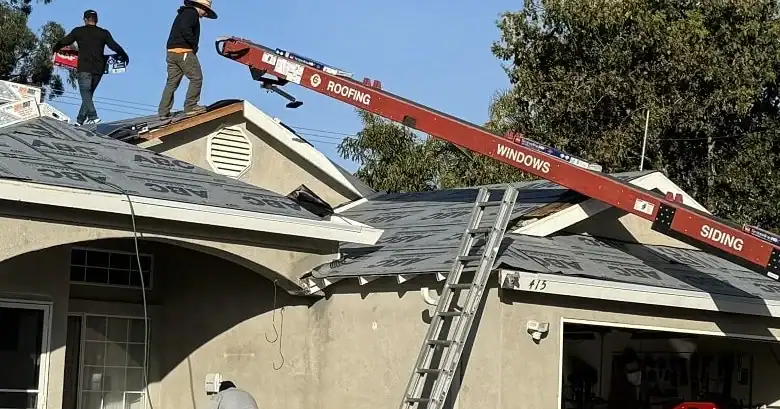
Taking the old roof off is the noisiest and messiest part of the job, and magnets and rakes pick up the nails that fall. Repairs to the deck happen now, before anything new is installed, because new material is only as good as what it is fastened to.
The Hidden Layers
Beneath every roof is a membrane that catches whatever the surface lets through, and it is easy to overlook. Drying in gives the crew a margin against surprise weather, and that is worth keeping in mind.
Small Metal Pieces, Large Consequences
Water finds the joints first, so flashing matters, and reusing old flashing under a new roof often comes back to bite. Vent boots and pipe collars are rubber or lead pieces that wear out before the roof does, so this is an easy step to ask about.
Attic Airflow
Attic heat is behind many worn roofs and many large cooling bills, and the details are worth a closer look. Adding vents at random may do little more than cut holes in the roof, and the answer should be part of the proposal.
Finishing the Job
When the last piece is installed, the cleanup begins, and that is part of the work, not an extra. Questions are easier to settle while the crew is still on site, and it pays to think it through.
Local Rules and Paper Trails
Rules about reroofing differ from one city to the next, because surprises at the counter slow everything down. Areas with wildfire exposure often have extra requirements for roofing materials and vents, and a roofer working in the area should already know them. A proposal that names its materials and steps is easier to compare, so compare any two side by side.
Protecting the House and Yard
A busy work site needs boundaries, and it is reasonable to ask how this will be done. Children and animals should stay clear of the yard while the work is underway, and it pays to think it through. The attic gets dusty during tear-off, and anything stored there will notice, and a sheet over stored boxes keeps the grit off.
Noise, Neighbors and Daily Life
A new roof usually takes a few days for an average house, though weather and size change that, so ask for the expected start and finish up front. Informing nearby households is a courtesy that pays off, and it is easy to overlook. Household routines bend a little while the work is under way, and the noise settles once the old roof is gone.
Questions Worth Asking Before You Agree
A sensible first question is what exactly is included in the scope, and anything left vague deserves a follow-up. Knowing exactly what is going on the house removes a common source of disputes, and take your time reading it. Surprises are normal, and a process for them is a sign of a well-run job, and it is better to know in advance.
Maintenance After the Job
A roof that is never looked at tends to fail when it is least convenient, and it is easy to overlook. Overhanging trees drop material that collects in corners and valleys, and it protects the investment you just made. A prompt visit after damage keeps a minor repair minor, and it is far easier to repair than to rebuild.
Spring, Summer or Fall
A roof replaced on purpose goes better than one replaced in a panic, and calling in spring avoids the rush. Early fall is popular because the weather is still dry and the heat has eased, and the best season is often the one that fits your calendar.
What the Crew Sees Inside the House
The attic is the roof as seen from below, and it often gives the clearest picture of how the roof has been performing, so ask the roofer to look inside as well.
Start the Conversation
Homeowners comparing New Roofs in Grover Beach California can simply pick up the phone, with 805-723-2381 ready whenever you are. The size of the project changes the schedule but not the principle, and an early conversation costs little. Putting off a roof question rarely makes it easier to answer, and it pays to think it through.
Verified

Verified
Verified
Verified






















